
Section
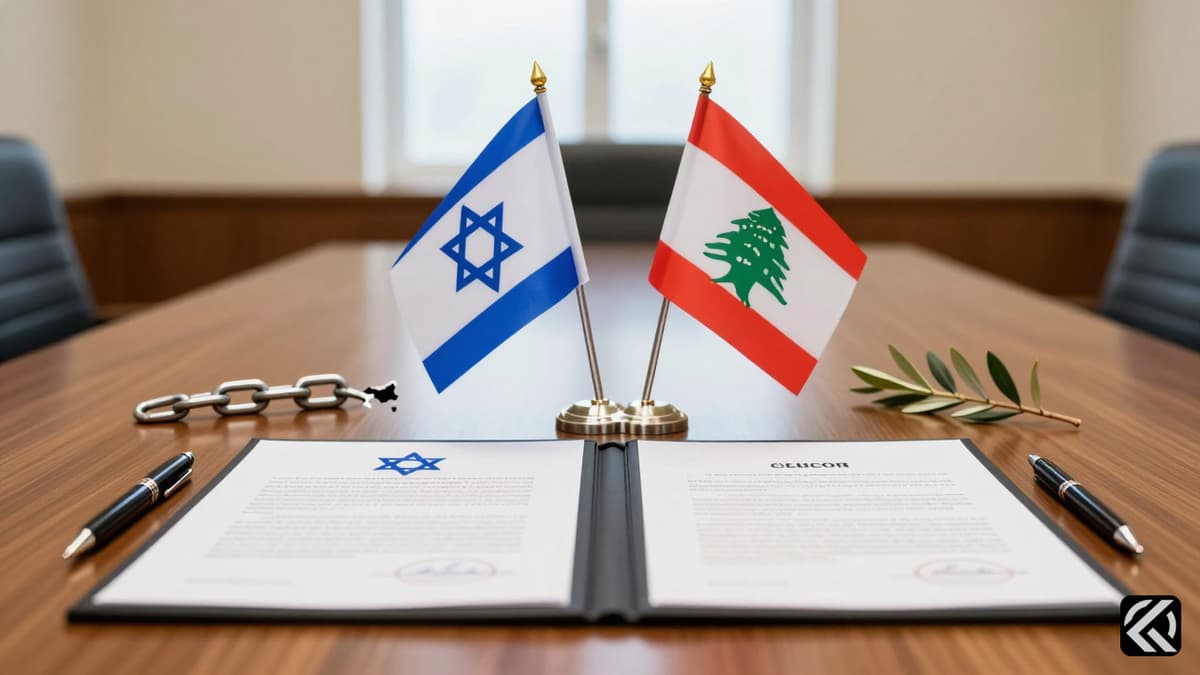
Amidst rising tensions in West Asia, Israel and Lebanon agree to a ceasefire framework, while President Trump clashes with Congress over executive war powers.
The geopolitical landscape in West Asia shifted dramatically on June 4, 2026, as diplomatic efforts in Washington yielded a tentative agreement between Israel and Lebanon, even as political friction escalated within the United States regarding executive war powers. The agreement, reached during U.S.-led talks, marks a significant, albeit fragile, step toward de-escalation in a region currently gripped by a multi-front conflict that has strained diplomatic relations and economic stability across the Middle East.
The joint statement released following the talks in Washington outlines a complex framework for peace that requires strict adherence from all parties involved. The two nations, which do not maintain formal diplomatic relations, agreed to establish "pilot zones" in southern Lebanon where the Lebanese armed forces would assume exclusive control over the territory, explicitly excluding all non-state actors. This military restructuring is a central pillar of the deal, aiming to remove the influence of militant groups that have been operating in the border regions. However, the agreement is not unconditional; the joint statement explicitly noted that the ceasefire is "contingent on a complete cessation" of fire by Iran-backed Hezbollah. Furthermore, the deal mandates the evacuation of all Hezbollah operatives from southern Lebanon, a demand that underscores the deep insecurity Israel feels regarding the group's persistent presence near its northern border.
This diplomatic breakthrough occurred against a backdrop of ongoing violence and mutual accusations. Despite the announcement, cross-border attacks have continued, highlighting the difficulty of enforcing any truce. Hezbollah stated that it has been targeting Israeli troops in response to ongoing aggression, while Israeli strikes have reportedly killed at least nine people in southern Lebanon. These continuing hostilities serve as a stark reminder of the fragility of the situation, raising questions about whether the parties are truly ready to lay down arms or are merely engaging in tactical pauses.
The political fallout from these events is also manifesting in the United States, where President Donald Trump has publicly clashed with Congress. Trump expressed strong disapproval of a U.S. House vote that approved a resolution seeking to curb his war powers. This legislative move comes at a critical juncture, as the administration is attempting to negotiate an end to the West Asia war. Trump voiced optimism about the potential for a broader resolution, telling reporters at the White House that a deal "could happen...over the weekend." His comments suggest a belief that the momentum from the Israel-Lebanon talks could be leveraged to address the wider conflict, despite the political headwinds he faces from his own government.
Tehran’s response to the developing situation has been one of stark warning and skepticism. Iranian Foreign Minister Abbas Araghchi insisted that the conflicts in Lebanon and with Iran are inextricably linked, rejecting any attempt to separate them. Araghchi warned that any attack on Beirut would trigger a "full-scale resumption" of war, signaling that Iran remains a pivotal actor whose actions will dictate the region's stability. He further stated that "no tangible progress" has been made in negotiations to end the West Asia war, citing fresh U.S. and Iranian strikes that have strained a fragile ceasefire. This perspective contrasts sharply with Trump’s optimism, illustrating the deep divide between the U.S. administration’s public stance and the reality on the ground as perceived by Tehran.
The economic markets reacted to these developments with a degree of cautious relief. Oil prices eased on Thursday, June 4, 2026, as the Israel and Lebanon ceasefire agreement boosted hopes for a broader deal to end the war in West Asia. This market response indicates that investors and global powers are closely watching the diplomatic track, viewing any reduction in regional hostilities as a positive indicator for economic stability. However, the continued presence of strikes and the unresolved tensions between the U.S. and Iran suggest that this relief may be temporary if the underlying political conflicts are not resolved.
The agreement between Israel and Lebanon represents a significant diplomatic milestone, yet its success depends entirely on the withdrawal of Hezbollah and the cessation of fire. If the Lebanese armed forces can successfully take control of the pilot zones without triggering a renewed violent backlash, it could pave the way for a broader regional de-escalation. However, the strong warnings from Iran and the ongoing political disputes within the U.S. government pose significant risks to this fragile peace. The continuation of cross-border attacks and the lack of progress in U.S.-Iran negotiations suggest that while a tactical pause may be achieved, a lasting strategic peace remains distant. The region now hangs in a delicate balance, where the implementation of this ceasefire will determine whether West Asia moves toward stability or deeper conflict.
Jun 11, 2026 17:21 UTC
Bangladesh Opposition Mobilizes Against India-Bangladesh Border Push-Ins and BSF Killings
Join 50,000+ readers getting the global briefing every morning.
No spam. Unsubscribe anytime.
Jun 11, 2026 17:40 UTC
Boelter Pleads Guilty in Minnesota Political Assassinations
Jun 11, 2026 17:21 UTC
Bangladesh Opposition Mobilizes Against India-Bangladesh Border Push-Ins and BSF Killings
Jun 11, 2026 17:21 UTC
John Healey Quits as UK Defence Secretary Over Funding Dispute
Jun 11, 2026 16:19 UTC
UK Defence Secretary John Healey Quits Over Funding Dispute


