
Section
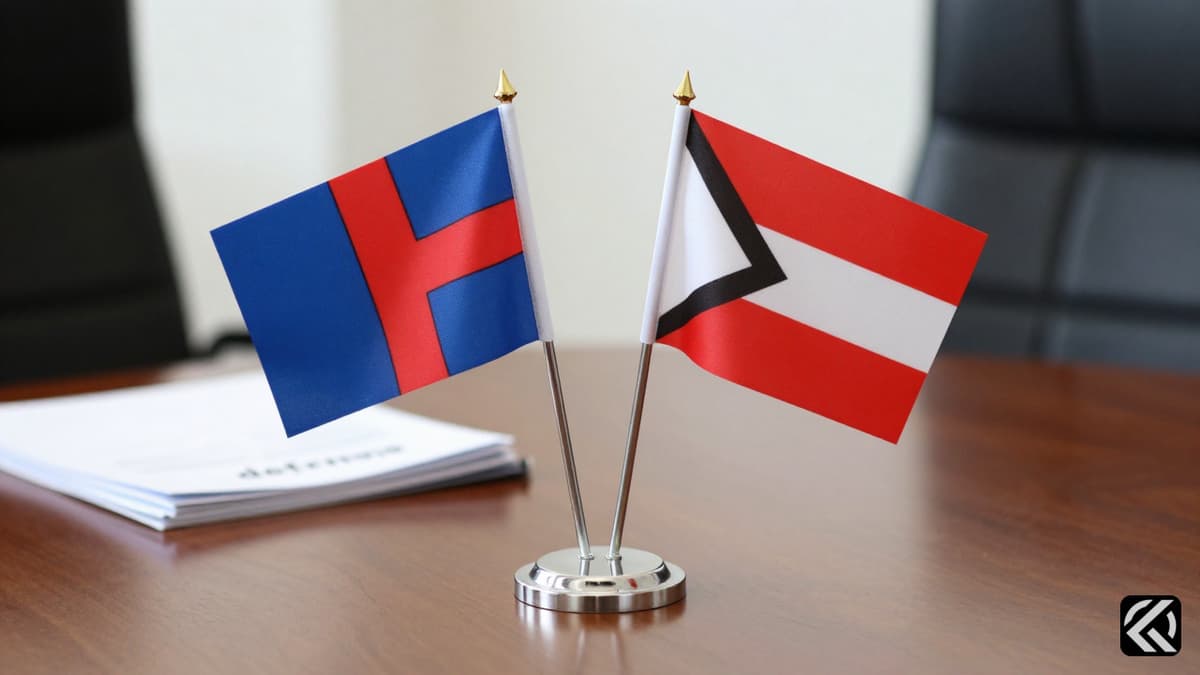
President Trump signals potential direct dialogue with Taiwan’s leader, marking a significant diplomatic departure as US-China tensions rise over pending arms deals.
US President Donald Trump has raised the prospect of speaking directly to Taiwan’s President Lai Ching-te, a move that would represent an unprecedented step for a US leader and a significant departure from long-standing diplomatic norms. For the first time since 1979, when Washington shifted its diplomatic recognition from Taipei to Beijing, US and Taiwanese presidents have not engaged in direct communication. The potential for such contact was revealed when Trump addressed reporters at Joint Base Andrews in Maryland on Wednesday, stating, “I’ll speak to him,” when asked if he would call Lai before deciding on a major Congress-approved arms sale to the island. Trump added, “I speak to everybody. We have that situation very well in hand,” and noted that “we’ll work on that Taiwan problem” before boarding Air Force One. However, it remains unclear whether the Trump administration has actively moved forward with concrete plans for this potential call.
This statement comes just days after Trump returned from a closely watched visit to Beijing, where Chinese leader Xi Jinping warned him directly that Taiwan could become a “very dangerous situation” if handled improperly. The ruling Chinese Communist Party (CCP) views Taiwan as part of its territory despite never having controlled it, having long vowed to reunify the island with the Chinese mainland by force if necessary. Under the “One China” policy, the US acknowledges China’s position that Taiwan is part of China but has never officially recognized the Communist Party’s claim to the island. Washington maintains robust unofficial relations with Taiwan and is bound by law under the Taiwan Relations Act to provide the self-governing island with defensive weapons. A 1982 US assurance to Taiwan specifies that Washington does not have a policy of consulting with Beijing on arms sales, a point of contention for Beijing.
How the US handles its unofficial relationship with Taiwan has long been a major point of contention for Beijing, which is now watching closely whether Trump will advance a $14 billion arms sales deal with the island. Congress approved the deal back in January, and following his visit to China, Trump told reporters aboard Air Force One that he and Xi Jinping discussed these sales “in great detail.” He stated he would make a decision about the arms sales “over the next early short period of time,” though he later described his meeting with Xi in Beijing as “amazing” while referring to Taiwan as a “problem.” A senior US official last week noted the administration’s record of arms sales to Taiwan, including more than $11 billion in sales last December-one of the largest in history-as a sign of US commitment to the self-governing island.
Taiwan has been ramping up military purchases in recent years as it faces increasing pressure from Beijing. Chinese aircraft and ships are present almost daily around Taiwan, along with regular large-scale exercises in and over the surrounding waters. Any call between Trump and Taiwan’s leader would likely anger Beijing and could risk driving a diplomatic wedge between the US and China. History shows the sensitivity of such moves; as President-elect in 2016, Trump had a phone call with Taiwan’s then President Tsai Ing-wen, which overturned decades of diplomatic protocol. China’s foreign ministry lodged a complaint at the time, urging the US to adhere to the ‘one China’ policy.
Taiwan President Lai, who marked two years in office on Wednesday, stated that communication channels between Taipei and Washington “were always open.” He said that if given the opportunity to speak directly to Trump, he would explain that his administration is maintaining the status quo in the Taiwan Strait. Lai asserted, “It is China that acts as a disruptor of peace and stability in the Taiwan Strait,” adding that “military procurement from the US” was necessary to safeguard Taiwan. “We hope these military efforts can continue,” Lai added. In response, China’s Defense Ministry spokesperson Jiang Bin accused Lai of being “indulged in the illusion of seeking ‘Taiwan independence’ through reliance on external forces” and “attempting to change the fundamental status quo that Taiwan belongs to China.” Lai has long maintained that Taiwan is a de facto sovereign nation that has no need to formally declare independence, a stance that continues to complicate relations with Beijing.
The potential for direct communication between the US President and Taiwan’s leader marks a critical juncture in trans-Pacific diplomacy. If Trump proceeds with a call to Lai Ching-te, it will likely trigger immediate diplomatic protests from Beijing, mirroring the reactions to previous breaches of protocol. The outcome of the pending $14 billion arms sale will serve as a tangible indicator of US resolve; rejecting the sale might be viewed as appeasement, while approving it could further strain the relationship Xi warned would become dangerous. Given the CCP’s stated willingness to use force for reunification and the frequent military encirclements of Taiwan, any perceived shift in Washington’s red lines could embolden Taipei’s defenses while simultaneously hardening Beijing’s military posture. The next few weeks will be pivotal in determining whether this diplomatic gesture results in a stabilized status quo or accelerates a geopolitical fracture between the two global powers.
Jun 11, 2026 17:21 UTC
Bangladesh Opposition Mobilizes Against India-Bangladesh Border Push-Ins and BSF Killings
Join 50,000+ readers getting the global briefing every morning.
No spam. Unsubscribe anytime.
Jun 11, 2026 17:40 UTC
Boelter Pleads Guilty in Minnesota Political Assassinations
Jun 11, 2026 17:21 UTC
Bangladesh Opposition Mobilizes Against India-Bangladesh Border Push-Ins and BSF Killings
Jun 11, 2026 17:21 UTC
John Healey Quits as UK Defence Secretary Over Funding Dispute
Jun 11, 2026 16:19 UTC
UK Defence Secretary John Healey Quits Over Funding Dispute


