
Section
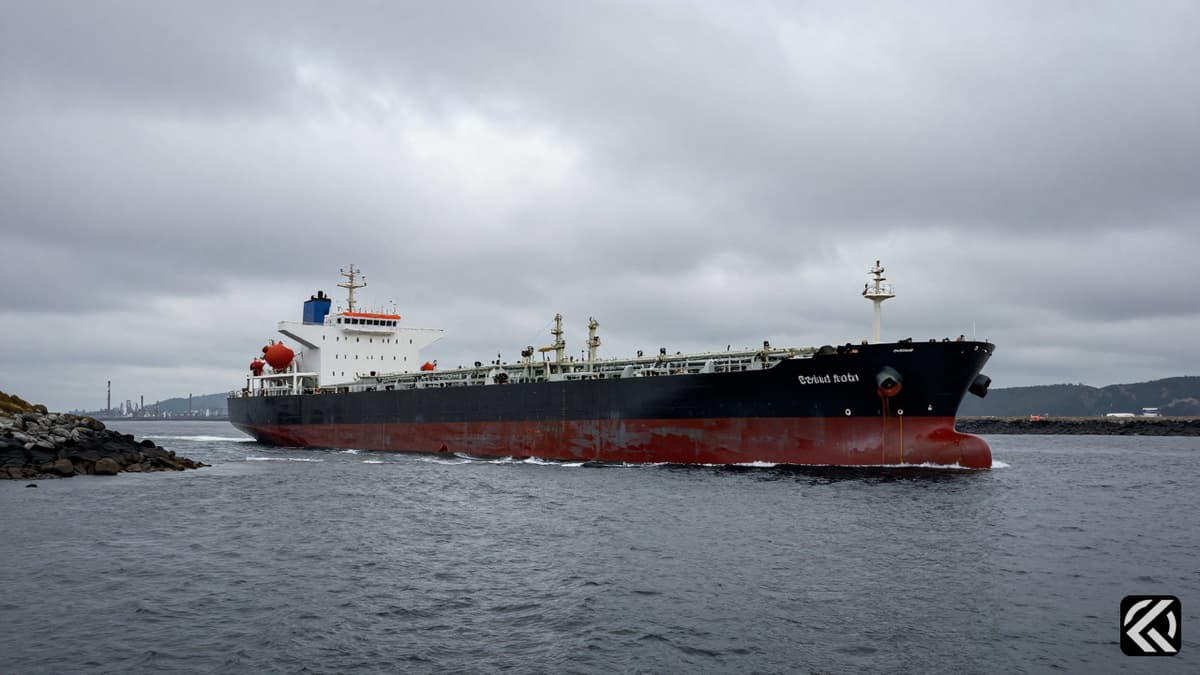
Oil markets react sharply as global benchmarks rise following President Trump's rejection of Iran's diplomatic response regarding the ongoing conflict and Strait of Hormuz transit.
Oil prices experienced a significant upward surge following President Donald Trump's stark dismissal of Iran's recent diplomatic efforts to conclude the ongoing conflict. The President characterized Tehran's response to US proposals aimed at ending the war as "totally unacceptable," a statement that immediately sent shockwaves through global financial markets. This political maneuvering coincides with a sharp rise in energy benchmarks, reflecting the deepening geopolitical tensions that continue to dictate global economic stability.
In early May 2026, specifically reported on May 11, the international community witnessed a tangible reaction to the stalled peace talks. International oil benchmark Brent Brent crude oil rose by 4.1% to reach $105.50 (£77.60) a barrel during Asian trade hours. Although the price dipped slightly after this initial spike, the trend highlighted the market's sensitivity to the diplomatic breakdown between Washington and Tehran. The primary catalyst for this volatility was the content of Iran's response, which was transmitted through Pakistan, a nation that has historically served as a mediator between the two opposing sides.
Iran's semi-official Tasnim news agency reported that Tehran's submission called for an immediate cessation of hostilities. Crucially, the proposal demanded binding guarantees that there would be no further attacks by the United States or Israel on Iranian territory. This demand was met with immediate and harsh rejection from the White House. President Trump took to social media to announce his review of the document sent by what he referred to as Iran's "so-called 'Representatives.'" His response was blunt and definitive, stating, "I don't like it - TOTALLY UNACCEPTABLE."
The conditions set forth by Washington, as detailed by US news outlet Axios, were stringent. The US terms required the full restoration of free transit through the critical maritime choke point known as the Strait of Hormuz. Additionally, the proposal mandated a complete suspension of Iranian nuclear enrichment activities. These requirements were non-negotiable for the Trump administration, framing the conflict not just as a military engagement but as a test of strategic leverage and regional control. The rejection of Iran's counter-proposal suggests that the administration remains committed to maximum pressure tactics rather than immediate diplomatic compromise.
The context of these negotiations is severely complicated by the physical realities on the ground and at sea. The conflict, which officially began on February 28, has led to a severe disruption in global energy supplies. The Strait of Hormuz, a vital artery for global commerce, has been effectively shut since shortly after the war started. Tehran has threatened to attack any vessels attempting to cross the strait in retaliation for US-Israeli strikes, making commercial navigation impossible in the region. Approximately one-fifth of global oil and gas shipments typically pass through this waterway, making its closure a catastrophic event for the global economy.
While a ceasefire was announced in early April to facilitate peace talks, it has been fragile. Despite occasional exchanges of fire, the truce has been mostly observed, providing a tenuous window for diplomatic maneuvering. On April 21, Trump extended this truce indefinitely, explicitly giving Iran more time to present a "unified proposal." However, the latest response has shattered any hope of near-term resolution. Israeli Prime Minister Benjamin Netanyahu also weighed in on the situation, emphasizing that the war would not end until Iran's enriched uranium stockpiles are physically removed, further narrowing the path to peace.
The economic ramifications of this prolonged conflict are already visible in the corporate sector. Major energy companies have seen their profits jump dramatically as the scarcity of supply drives prices higher. Brent crude has climbed back above the $100-a-barrel mark since the initial ceasefire took effect on April 8. This price ceiling has created a highly profitable environment for state-owned and private energy giants. Saudi Arabia's state-owned oil giant, Aramco, highlighted this trend by announcing that its earnings had jumped by more than 25% in the first three months of 2026 compared to the same period in 2025.
The market's reaction to the failed negotiations underscores the fragile nature of the current geopolitical landscape. Investors and traders are acutely aware that any further deterioration in diplomatic relations could lead to even higher energy costs. The effective closure of the Strait of Hormuz remains the primary risk factor. Without a guarantee of safe passage, the global supply chain remains under severe stress. The combination of military threats and diplomatic stalemate creates an environment where energy prices are likely to remain volatile and elevated for the foreseeable future.
The rejection of Iran's terms ensures that energy markets will continue to face intense volatility. With the Strait of Hormuz still effectively closed and no unified proposal accepted, supply constraints will likely persist. As major companies like Aramco report record profits, consumers and industries face the risk of sustained high energy costs. The indefinite extension of the truce may delay immediate escalation, but the fundamental disagreement over nuclear enrichment and maritime transit guarantees suggests that a long-term resolution is unlikely without significant changes in either party's strategic posture. The global economy must now brace for prolonged instability driven by these unresolved geopolitical conflicts.
Jun 11, 2026 12:59 UTC
US Strike on Settebello Kills Indian Sailors Amid Strait of Hormuz Tensions
Jun 11, 2026 12:49 UTC
Air India Flight 171 Crash Sparks Debate Over Boeing 787 Dreamliner Faults
Jun 11, 2026 08:51 UTC
US-Iran Conflict: Indian Seafarers Killed in Gulf Strike
Jun 11, 2026 18:04 UTC
Healey Quits Government Over Defence Spending Dispute


