
Section
Donald Trump describes Taiwan as a logistical challenge from afar while meeting Xi Jinping, raising questions about US policy and semiconductor history.
Donald Trump has sparked fresh debate regarding Washington’s long-standing support for Taiwan, describing the self-governing island as “a little bit of a difficult problem.” The US President cited the geographical and military disparity between the island and mainland China as the primary source of this difficulty. During an interview with Fox News after returning from China, Trump explained the strategic challenges inherent in US policy toward the region.
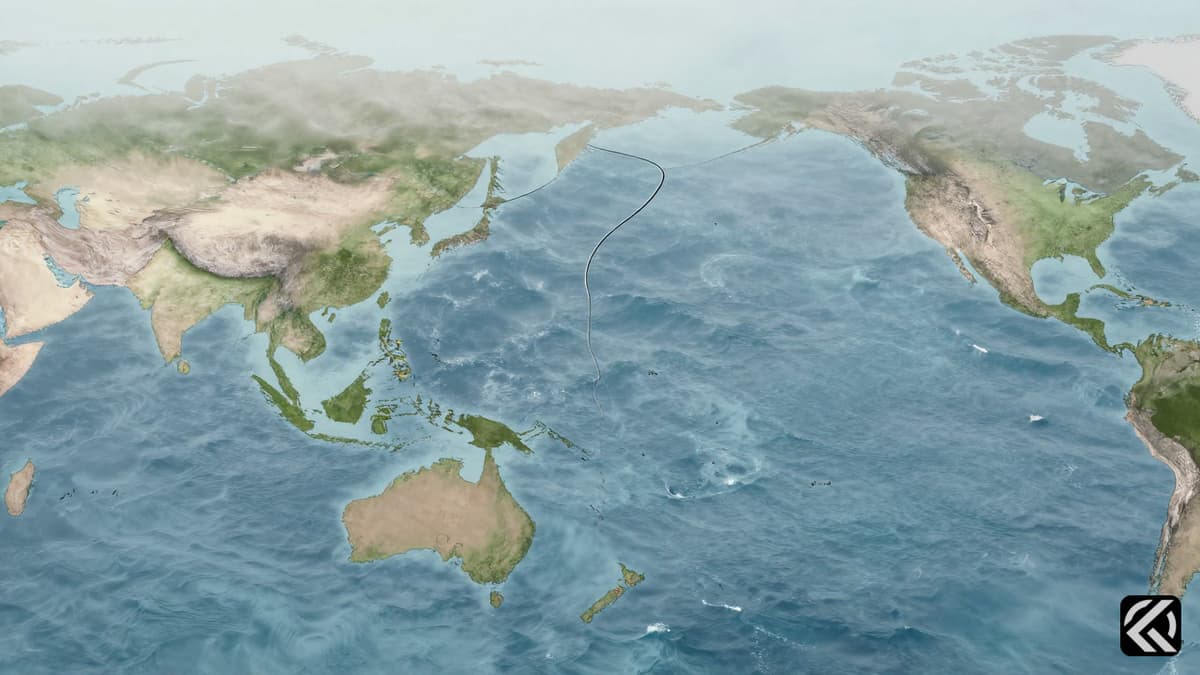
"When you look at the odds, China is a very, very powerful, big country. That’s a very small island," Trump stated. He emphasized the logistical hurdles facing Washington, noting, “Think of it; it’s 59 miles away. We’re 9,500 miles away. That’s a little bit of a difficult problem.” These remarks were made as he addressed the complex dynamics of the relationship between the two nations following his high-profile visit to Beijing.
The President’s comments came in the wake of a summit dominated by discussions on Taiwan, trade, and the conflict involving Iran. Upon returning to the US on Friday evening, Trump characterized his meeting with Chinese President Xi Jinping as a historic moment between “two great countries.” He referred to the potential partnership as “G-2,” suggesting it would be recorded as a very important moment in history. Despite praising Xi as a “great leader” and predicting a “fantastic future” for both nations, Trump’s reflections on Taiwan revealed underlying tensions in the diplomatic relationship.
During the visit, Trump largely avoided publicly discussing Taiwan, even though Beijing had issued repeated warnings regarding US support for the self-governing island. However, while aboard Air Force One, he acknowledged that Xi had strongly raised the issue during their private meetings. “President Xi and I talked a lot about Taiwan,” Trump said. He added that the Chinese leader “does not want to see a fight for independence because that would be a very strong confrontation,” indicating a mutual desire to avoid immediate escalation.
Trump also suggested that China was unlikely to take military action against the island while he remained in office. “I don’t think they’ll do anything when I’m here. When I’m not here. I think they might, to be honest with you,” he said. This comment highlights the uncertainty surrounding long-term security guarantees for the region. At the same time, Trump avoided directly committing to military intervention if China were to attack Taiwan. This stance maintains Washington’s long-standing policy of “strategic ambiguity,” leaving the details of potential defense responses open to interpretation.
Furthermore, the President revealed that he had not yet decided whether to move forward with a previously approved US arms package for Taipei. This hesitation comes after hearing Xi’s objections to the sale of weapons, adding another layer of complexity to the diplomatic negotiations. The arms deal decision remains pending, reflecting the delicate balance Washington must strike between supporting its partner in the region and managing relations with Beijing.
Beyond security concerns, Trump criticized past US administrations over the development of Taiwan’s semiconductor industry. “If you look at the history, Taiwan was developed because we had presidents that didn’t know what the hell they were doing. They stole our chip industry,” he said. This critique underscores the economic dimensions of the US-Taiwan relationship and the perceived loss of industrial advantage.
The summit marked a significant shift in diplomatic tone, with China describing the meeting as the beginning of a new phase of “strategic stability” in relations. While Trump focused heavily on trade, he stated that China could buy 200 aircraft from Boeing initially, with the possibility of hundreds more in the future, though no formal agreements were immediately announced. On the topic of Iran, Trump claimed progress had nearly been made on a nuclear agreement before talks broke down. He asserted that Xi agreed a nuclear-armed Iran would pose a serious threat and that the Chinese leader showed interest in helping resolve the conflict. Although China has not publicly confirmed such discussions, the President’s comments suggest a growing alignment on certain geopolitical threats. Looking ahead, the lack of a concrete arms deal and the ambiguous security commitment suggest that US policy toward Taiwan will likely remain in a state of flux. The emphasis on trade and the “G-2” framework indicates a prioritization of economic and diplomatic engagement over explicit military alliances. However, the President’s remark that military action might occur after his tenure introduces a variable of uncertainty for future regional stability. The long-term impact of this new phase of “strategic stability” will depend heavily on how these verbal assurances translate into tangible policy decisions regarding defense and trade.
Jun 11, 2026 17:21 UTC
Bangladesh Opposition Mobilizes Against India-Bangladesh Border Push-Ins and BSF Killings
Join 50,000+ readers getting the global briefing every morning.
No spam. Unsubscribe anytime.
Jun 11, 2026 17:40 UTC
Boelter Pleads Guilty in Minnesota Political Assassinations
Jun 11, 2026 17:21 UTC
Bangladesh Opposition Mobilizes Against India-Bangladesh Border Push-Ins and BSF Killings
Jun 11, 2026 17:21 UTC
John Healey Quits as UK Defence Secretary Over Funding Dispute
Jun 11, 2026 16:19 UTC
UK Defence Secretary John Healey Quits Over Funding Dispute


