
Section
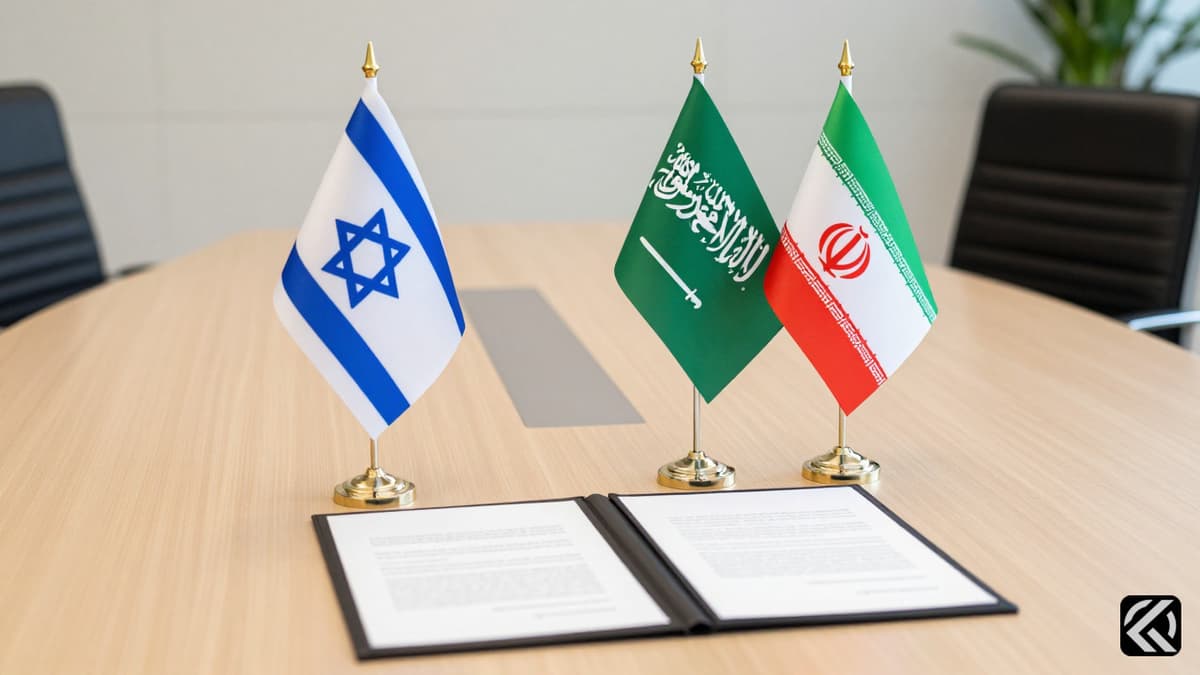
President Trump’s latest diplomatic push ties Abraham Accords participation to a broader peace deal with Iran, stirring significant controversy across the Middle East.
President Donald Trump dramatically escalated Middle East peace efforts by demanding that key Muslim allies join the Abraham Accords as a prerequisite for any regional settlement with Iran. This sweeping proposal, announced via Truth Social following a weekend conference call with Arab and Muslim leaders, has stunned diplomats and triggered immediate resistance from several nations.
The sudden mandate targets Saudi Arabia, Pakistan, Turkey, and Qatar, requiring them to normalize relations with Israel alongside other states like Egypt, Jordan, and Bahrain. Trump declared that countries refusing to sign would be excluded from the "Deal," framing the accords as essential to a historic regional reset. However, this ultimatum threatens to complicate already fragile US-Iran negotiations by introducing one of the most politically sensitive issues in the Islamic world: normalization with Israel.
According to accounts of the conference call, Trump’s insistence on tying normalization to a broader Iran settlement caused silence among the leaders, with Trump jokingly asking if they were still on the line. The proposal challenges long-standing positions held by key regional players. Saudi Arabia has consistently stated that formal recognition of Israel can only occur after an "irreversible pathway" toward an independent Palestinian state with East Jerusalem as its capital. This condition is flatly rejected by the Netanyahu government.
Pakistan’s opposition is even more categorical, as Islamabad has never recognized Israel and ties any normalization to the creation of a sovereign Palestinian state. Mushahid Hussain Syed, a former Pakistani senator, dismissed the proposal as rejected by the peoples of Pakistan, Saudi Arabia, and Qatar, calling it an attempt to reward Israel for actions in Gaza while bypassing the core conflict cause.
Yet, analysts note that Trump’s own post contained language suggesting flexibility, acknowledging that "one or two" countries might have reasons for not signing. This phrasing is seen as a nod toward the political realities facing Saudi Arabia and Pakistan. Nevertheless, Trump pressed ahead with maximalism, calling the accords "the most important Deal" these countries could sign and floating the extraordinary possibility of Iran eventually joining the framework if Tehran reaches an agreement with Washington.
The Abraham Accords, brokered during Trump’s first term in 2020, normalized relations between Israel and several Arab states, including the United Arab Emirates and Bahrain, later joined by Morocco and Sudan. While Washington hailed the agreements as a strategic breakthrough prioritizing economic cooperation over the Palestinian issue, critics argued they institutionalized an anti-Iran bloc.
The timing of Trump’s latest proposal is particularly sensitive. Anger across the Muslim world over the Gaza war has hardened public opinion against normalization. Even governments quietly interested in closer ties with Israel now face intense domestic political constraints. For Saudi Crown Prince Mohammed bin Salman, normalization without visible concessions on Palestine risks accusations of abandoning the Arab consensus. Pakistan faces similar pressures from Islamist parties and public sentiment.
Despite these hurdles, Trump appears convinced that a sweeping diplomatic reset remains possible. The proposal has won enthusiastic backing from Trump allies, particularly Republican hawks who see Arab-Israeli normalization as the cornerstone of a new regional order. Senator Lindsey Graham called the initiative "one of the most consequential" diplomatic efforts in Middle Eastern history, warning Gulf states that refusal would have severe repercussions for future relationships.
The integration of Abraham Accords participation into US-Iran negotiations represents a high-stakes gamble that could either reshape regional alliances or derail peace efforts. While Trump aims to cement his legacy as a dealmaker and potentially secure a Nobel Peace Prize, the conflation of separate diplomatic tracks risks overwhelming the political will of key stakeholders. The future of these talks will likely depend on whether Washington can navigate the delicate balance between asserting maximalist demands and accommodating the irreversible political constraints facing Saudi Arabia, Pakistan, and other Islamic nations.
Jun 11, 2026 17:21 UTC
Bangladesh Opposition Mobilizes Against India-Bangladesh Border Push-Ins and BSF Killings
Join 50,000+ readers getting the global briefing every morning.
No spam. Unsubscribe anytime.
Jun 11, 2026 17:40 UTC
Boelter Pleads Guilty in Minnesota Political Assassinations
Jun 11, 2026 17:21 UTC
Bangladesh Opposition Mobilizes Against India-Bangladesh Border Push-Ins and BSF Killings
Jun 11, 2026 17:21 UTC
John Healey Quits as UK Defence Secretary Over Funding Dispute
Jun 11, 2026 16:19 UTC
UK Defence Secretary John Healey Quits Over Funding Dispute


