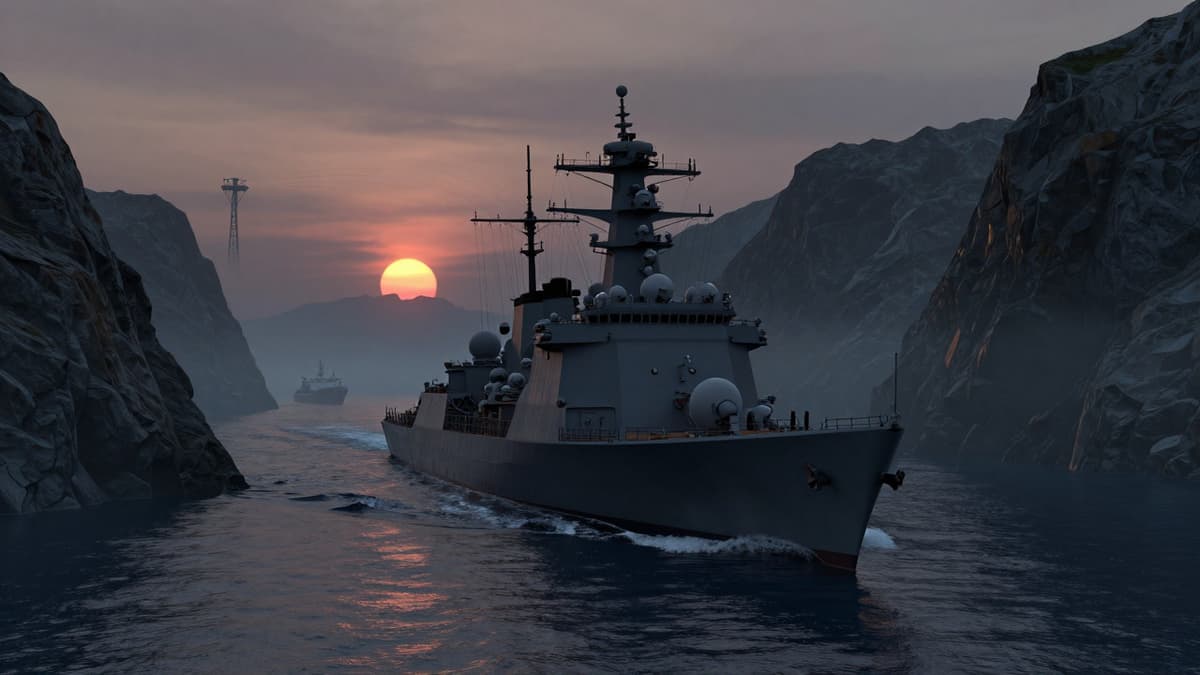
President Trump delays striking Iranian energy plants, citing ongoing talks, as military operations surge, casualties mount in Lebanon, and global powers seek to reopen the vital shipping lane.
US President Donald Trump has extended the deadline for Iran to open the Strait of Hormuz to April 6, pausing a planned assault on energy plants following a request from Tehran. This diplomatic shift comes as the Iran-Israel conflict intensifies, with thousands of US troops moving toward the region and military operations running significantly ahead of the projected timeline. While US Secretary of State Marco Rubio criticized NATO's lack of support during crises, diplomatic efforts are underway to stabilize the volatile Middle East, including international calls to resume shipping through the chokepoint.
The delay in striking Iranian energy facilities was announced by President Trump on his Truth Social platform, marking a temporary halt to the destruction he had previously threatened. "As per Iranian Government request, please let this statement serve to represent that I am pausing the period of Energy Plant destruction by 10 Days to Monday, April 6, 2026," Trump stated. He characterized ongoing talks as proceeding "very well," dismissing negative reports from media outlets as erroneous. The President also noted that the US military is "extremely, really, a lot ahead of schedule," having achieved significant progress in just 26 days against an original four-to-six-week projection.
Amidst the pause in airstrikes, Secretary of State Marco Rubio used the opportunity to address the geopolitical dynamics surrounding US military engagements. He articulated a sense of frustration regarding alliances, stating that while the US is constantly asked to assist in wars, positive responses to US requests are lacking. "A couple leaders said that Iran was not Europe's war. Well, Ukraine isn't our war, yet we've contributed more to that fight than anyone," Rubio said, highlighting a disparity in support. This sentiment echoes the growing international concern over the conflict, with the UK High Commissioner, Lindy Cameron, emphasizing the need for de-escalation to prevent economic harm from rising oil prices.
The situation on the ground remains volatile despite the diplomatic pause. Heavy strikes were reported in Tehran and other Iranian cities, with sirens warning of incoming missile barrages. While Gulf nations worked to intercept the fire, debris from these interceptions tragically caused civilian casualties. In Abu Dhabi, debris from an intercepted missile killed two people, including an Indian and a Pakistani national, injuring three others, according to the Abu Dhabi Media Office. Meanwhile, in northern Israel, a rocket fired from Lebanon killed a man, while emergency services treated another in serious condition.
The intensity of the fighting has been particularly acute in southern Lebanon. The Israeli army reported the death of Sergeant Aviaad Elchanan Volansky, 21, from Jerusalem, in combat. He is the fourth Israeli soldier killed since Hezbollah began its rocket attacks on March 2. Lebanese state media confirmed that Israeli strikes killed at least five people in the Nabatieh and Bint Jbeil areas. In response, Lebanese Prime Minister Nawaf Salam ordered the immediate filing of a complaint with the UN Security Council, deeming Israel's actions a threat to the country's sovereignty and the rights of its people.
Negotiation efforts are being bolstered by US Special Envoy Steve Witkoff, who revealed that the United States has presented a "15-point action list" to Iran as a basis for ending the current conflict. Witkoff indicated there are signs that Tehran is interested in making a deal. President Trump also confirmed that Iran had allowed 10 oil tankers to pass through the strategic waterway, describing the movement as a "present" to demonstrate the Islamic republic's seriousness about negotiations. The President suggested that taking control of Iran's oil is an option, drawing a parallel to the US administration's handling of Venezuela's reserves after the removal of Nicolas Maduro.
As diplomatic channels remain open with a new deadline set for April 6, the international community, led by France, is coordinating a defensive effort to ensure the resumption of shipping through the Strait of Hormuz once hostilities cease. France's Armed forces chief recently held a video conference with representatives from 35 countries to organize this resumption, emphasizing that the initiative is strictly defensive and independent of ongoing military operations. The US and its allies face a complex future where the conflict's duration and the potential for further escalation remain unpredictable, especially as Iran maintains a tight grip on the waterway and continues to challenge the status quo. The immediate hope is that the 10-point pause allows for a successful resolution, preventing the economic shock of a prolonged closure of the vital oil artery that has already prompted global leaders to urge a return to de-escalation to safeguard their economies and regional allies.
Jun 8, 2026 02:17 UTC
Magnitude 7.8 Quake Shakes Philippines, Urging Immediate Evacuations
Jun 8, 2026 00:51 UTC
Trump Claims Iran Nuclear Deal Imminent Despite Diplomatic Fractures
Jun 8, 2026 00:47 UTC
Iran Fires Missiles at Israel After Beirut Strike
Jun 7, 2026 22:00 UTC
US, Iran Peace Hops Fade 100 Days Into War
Jun 8, 2026 04:15 UTC
Trump Urges Netanyahu to Halt Iran Strike for Peace


