
Section
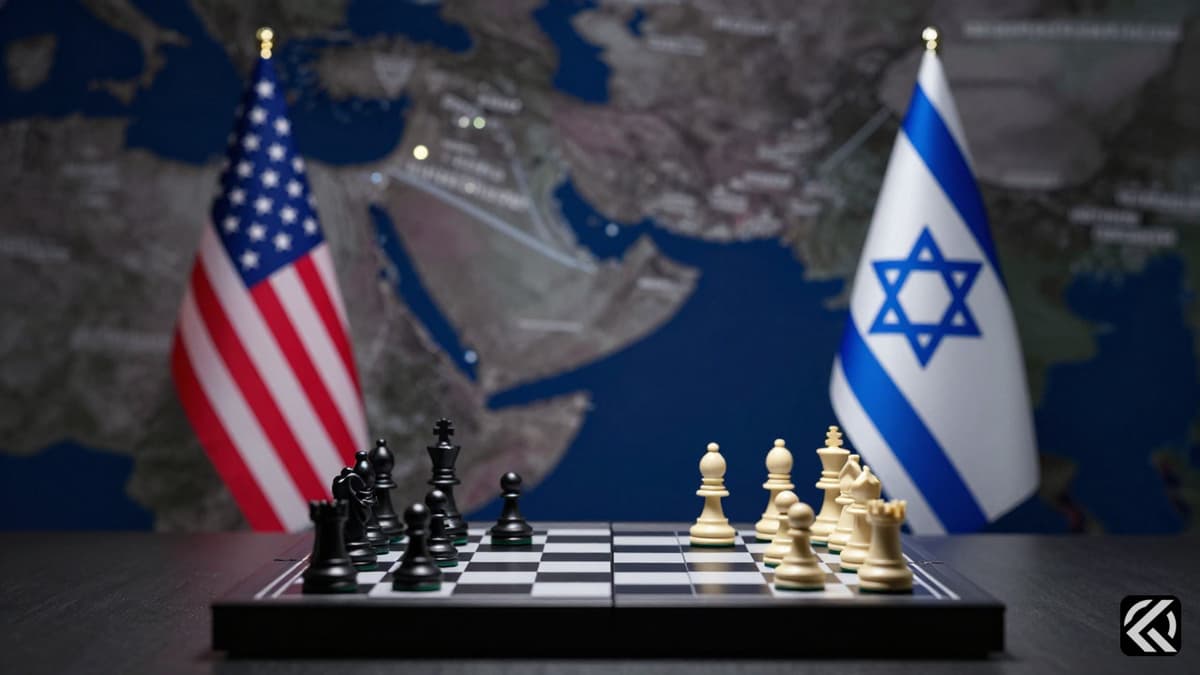
President Trump admits using strong language toward Netanyahu over Lebanon strikes, yet insists the US-Israel partnership remains vital for global stability.
President Donald Trump has publicly confirmed that he used expletive-laden language toward Israeli Prime Minister Benjamin Netanyahu during a recent phone call, specifically describing him as "f***ing crazy" due to Israel’s military operations in Lebanon. This admission, revealed in an exclusive interview with The New York Post’s Miranda Devine for her program "Pod Force One," sheds new light on the internal diplomatic tensions within the US-Israel alliance. While the President acknowledged being "perturbed" by the constant fighting in Lebanon, he simultaneously insisted that his personal rapport with Netanyahu remains strong and that the two leaders continue to work very well together. The remarks highlight the delicate balance Washington is attempting to strike between supporting an ally and managing broader regional crises, particularly those involving Iran nuclear negotiations.
The friction between the two leaders centers on Israel’s military escalation in Lebanon, which Trump argued is complicating broader diplomatic efforts. In the interview, Trump stated, “I was a little bit perturbed at his constantly fighting with Lebanon.” However, he worked to contextualize the harsh language by framing both leaders as leaders under extreme wartime pressure. “I’m a wartime president,” Trump said. “He’s a wartime prime minister.” Despite the frustration, Trump maintained that he expected a resolution to these broader regional tensions "fairly quickly," emphasizing that despite the heated exchanges, the foundational working relationship between the White House and the Israeli Prime Minister’s office remains intact.
This specific confrontation is not an isolated incident but part of a broader pattern of tension regarding regional strategy. According to reports, approximately two weeks prior, Trump and Netanyahu engaged in another tense phone call focused on efforts to revive diplomacy with Iran. At that time, US media suggested sharp differences existed between the two leaders regarding whether to continue negotiations with Tehran or escalate military pressure. Axios reported that the discussion included a revised peace proposal drafted by regional mediators, aimed at narrowing the gaps between Washington and Tehran. The intensity of that previous disagreement was such that one source described Netanyahu’s reaction after the call by saying his “hair was on fire.”
The current unrest in Lebanon is directly tied to wider geopolitical negotiations involving Iran. Trump explicitly linked the Lebanon conflict to the potential reopening of the Strait of Hormuz, a critical global energy route. He suggested that escalation risks undermining discussions regarding a potential memorandum of understanding between the US and Iran. According to the interview, such an agreement could potentially reopen the Strait of Hormuz in the coming days, though Trump cautioned that timelines for this development remained uncertain. This diplomatic layer adds significant weight to the conflict, as stability in the region is crucial for global energy markets.
Despite earlier warnings of major disruption to energy supplies, Trump noted that global markets have remained more stable than predicted. He pointed out that oil prices have not surged to the extreme levels forecast by critics. This economic stability may provide a slight buffer for diplomatic efforts, even as civilian casualties and regional spillovers from the Israel-Hezbollah conflict increase pressure on US diplomacy. The Trump administration has framed the broader conflict not merely as a bilateral issue but as part of its attempt to secure a wider regional settlement involving Iran, Lebanon, and Israel.
The admission of strained relations between Trump and Netanyahu underscores the fragility of the US-led diplomatic framework in the Middle East. As civilian casualties rise and regional spillovers intensify, the ability of Washington to maintain a unified front with Tel Aviv becomes increasingly critical for the success of any agreement with Tehran. If the military escalation in Lebanon continues to disrupt diplomatic progress, the potential memorandum regarding the Strait of Hormuz could face significant delays or failure. The administration’s optimism regarding a quick resolution now hinges on whether Netanyahu can restrain military operations to allow political channels to function. If the two leaders can reconcile their differences, as Trump claims, the pathway to a broader regional settlement remains open. However, the recurring "wartime" rhetoric and sharp exchanges suggest that the window for de-escalation is narrowing. Future stability in global energy markets and regional peace will depend heavily on whether diplomatic negotiations can outpace military actions in the coming weeks, particularly as mediators work to finalize the revised peace proposals between the US and Iran.
Jun 11, 2026 17:21 UTC
Bangladesh Opposition Mobilizes Against India-Bangladesh Border Push-Ins and BSF Killings
Join 50,000+ readers getting the global briefing every morning.
No spam. Unsubscribe anytime.
Jun 11, 2026 17:40 UTC
Boelter Pleads Guilty in Minnesota Political Assassinations
Jun 11, 2026 17:21 UTC
Bangladesh Opposition Mobilizes Against India-Bangladesh Border Push-Ins and BSF Killings
Jun 11, 2026 17:21 UTC
John Healey Quits as UK Defence Secretary Over Funding Dispute
Jun 11, 2026 16:19 UTC
UK Defence Secretary John Healey Quits Over Funding Dispute


