
Section
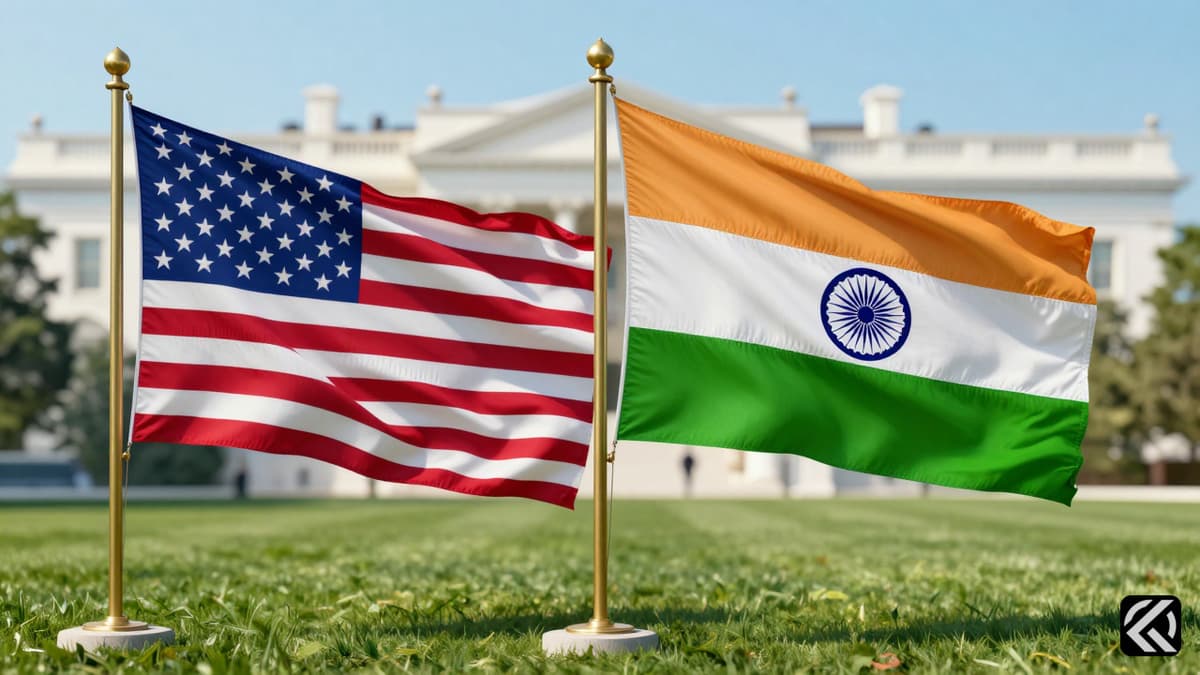
President Trump asserts a strong personal rapport with Prime Minister Modi, signaling imminent progress in bilateral trade talks following intense negotiations in New Delhi.
President Donald Trump stated on Thursday that he is a good friend of Prime Minister Narendra Modi and expressed confidence that the United States and India would reach a comprehensive trade agreement. Speaking to reporters inside the Oval Office, the US President emphasized that his personal liking for the Indian leader would be instrumental in finalizing the pact. “We will get to a deal because I like your prime minister a lot. He is a good friend of mine. We get along great, and we are gonna make a deal,” Mr. Trump declared. This assertion comes as both nations navigate complex economic negotiations aimed at strengthening their bilateral ties.
The comments followed the conclusion of intense diplomatic efforts earlier that week. A US delegation had traveled to India, where they engaged in four days of negotiations. These talks culminated on Thursday, June 4, 2026, with the completion of discussions regarding an interim bilateral agreement. The timing of Mr. Trump’s remarks suggests a strategic effort to publicly affirm the progress made and the positive diplomatic atmosphere surrounding the ongoing dialogue.
Addressing the specific grievances that had previously hindered trade relations, Mr. Trump pointed to historical trade imbalances and tariff structures. Responding to inquiries about the deal, he asserted that India had exploited US policies for years. He specifically highlighted the disparity in tariff applications between the two nations. “They charged tremendous amounts of tariffs to our companies, and we didn't charge them anything,” Mr. Trump said. This statement reflects the US administration’s perspective on the economic friction that has characterized parts of the bilateral relationship in the past, framing the current negotiations as a correction of long-standing inequities.
In contrast to the US President’s framing of tariff disparities, the Indian government presented a more cooperative narrative regarding the recent diplomatic interactions. The India Commerce Ministry issued a statement describing the trade talks as being marked by a “spirit of cooperation and pragmatism.” The Ministry noted that both sides had reaffirmed their commitment to concluding an agreement that would be mutually beneficial. This official response aims to project stability and shared intent, emphasizing the goal of strengthening bilateral trade and economic ties rather than focusing on the previous grievances highlighted by the US side.
The convergence of these narratives highlights the delicate balance required in US-India economic diplomacy. While President Trump leverages personal relationships to push for specific economic outcomes, the Indian administration focuses on the structural and pragmatic aspects of the agreement. The completion of the four-day negotiation phase by the US delegation indicates that substantive progress has been made, even if public statements emphasize different aspects of the deal’s significance. The interim nature of the agreement under discussion suggests that both parties are taking incremental steps toward a broader, long-term economic framework.
The immediate future of US-India economic relations hinges on the successful ratification of the interim agreement concluded by the US delegation. Given President Trump’s explicit statement that he will get to a deal due to his friendship with Prime Minister Narendra Modi, the personal diplomatic channel appears to be a critical accelerant for the negotiations. The US administration’s focus on correcting tariff imbalances suggests that any final US-India trade agreement will likely include significant concessions from India regarding market access for US companies. Conversely, India’s emphasis on pragmatism indicates that it will continue to seek protections for its domestic industries while opening new avenues for export growth. The long-term impact of this interim step could redefine the economic architecture between the two democracies, setting a precedent for future trade negotiations in the Indo-Pacific region. If the interim deal holds, it may lead to a more robust and comprehensive pact that addresses not just tariffs, but also services, digital trade, and investment flows, ultimately deepening the strategic partnership between Washington and New Delhi.
Jun 11, 2026 17:21 UTC
Bangladesh Opposition Mobilizes Against India-Bangladesh Border Push-Ins and BSF Killings
Join 50,000+ readers getting the global briefing every morning.
No spam. Unsubscribe anytime.
Jun 11, 2026 17:40 UTC
Boelter Pleads Guilty in Minnesota Political Assassinations
Jun 11, 2026 17:21 UTC
Bangladesh Opposition Mobilizes Against India-Bangladesh Border Push-Ins and BSF Killings
Jun 11, 2026 17:21 UTC
John Healey Quits as UK Defence Secretary Over Funding Dispute
Jun 11, 2026 16:19 UTC
UK Defence Secretary John Healey Quits Over Funding Dispute


