
Section
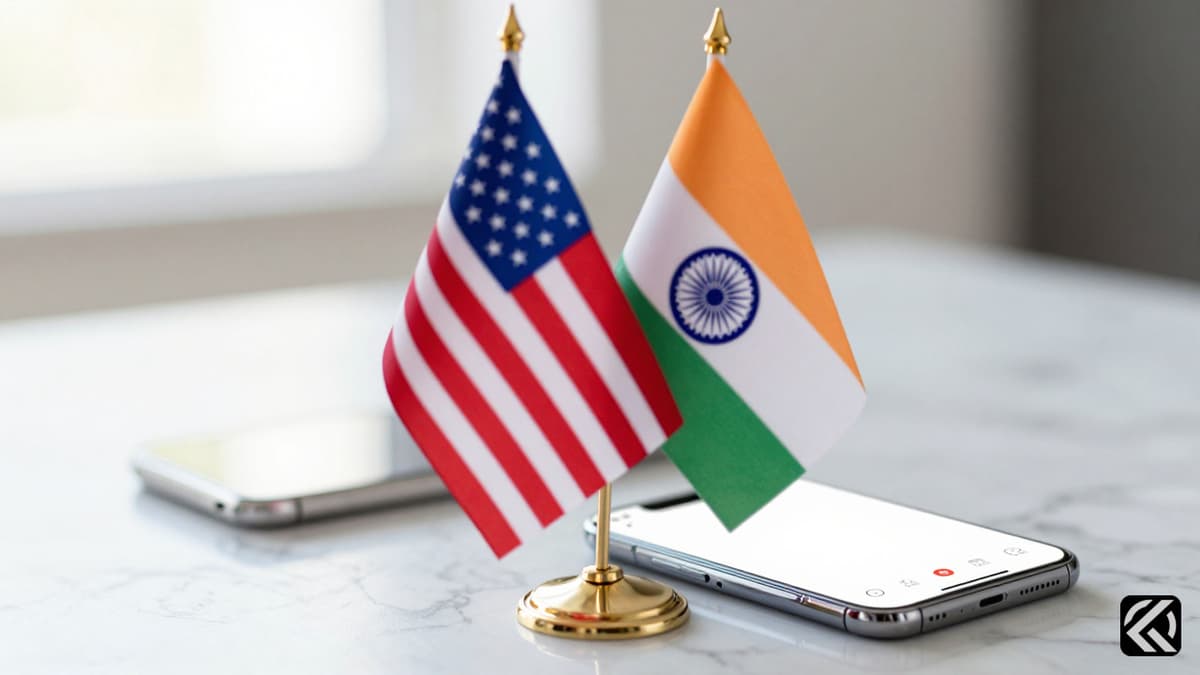
President Trump made a surprise audio call praising PM Modi, while Secretary of State Marco Rubio visited Delhi, highlighting the deepening diplomatic ties.
US President Donald Trump disrupted the routine of a major diplomatic gathering with an unannounced audio intervention that underscored the personal nature of contemporary transatlantic relations. During the United States Embassy’s 250th Independence Day celebrations in New Delhi, Trump initiated a live call to US Ambassador to India Sergio Gor, bypassing standard ceremonial protocols to deliver a message of high personal regard. This unexpected communication served as a pivotal moment in the event, signaling to all attendees the prioritized status of the bilateral relationship in Washington’s foreign policy agenda. The call was not merely a formality but a substantive declaration of support that set the tone for the subsequent addresses by high-ranking officials. By speaking directly to the Ambassador in front of Indian and American dignitaries, the President aimed to project unity and strength to both nations' populations simultaneously. The decision to intervene live demonstrated a preference for direct, personalized diplomatic channels over traditional, scripted exchanges, marking a distinct shift in the visual and auditory landscape of the ceremony.
The content of the President’s message was characterized by overt personal affection and strong economic assertions. Trump could be heard stating, "I just want to say hello to everybody. I love the Prime Minister. Modi is great. He's my friend," explicitly framing the relationship in personal terms. He expanded this sentiment by asserting that the two nations had never been closer, assuring India that it could "count on me 100% and our country." The President further emphasized India's reliability, stating, "If they ever need help, they know who they call. They call right here." This assurance was paired with a robust defense of the US economic status, where Trump claimed, "We're doing well. We're setting records. We have a record economy, a record stock market." He concluded his initial remarks by reiterating his admiration, adding, "And I'm a big, big fan of Prime Minister Modi." These comments were delivered with a casual yet emphatic tone, reinforcing the narrative of an alliance built on mutual respect and shared prosperity.
Following the President's call, US Ambassador to India Sergio Gor provided context to these high-level remarks, detailing the tangible developments that underpin the political warmth. Gor described the US-India partnership as the foundation of "a new era," noting that both nations are "actively delivering on the promise of our cooperation." He highlighted significant recent milestones, including the announcement of an interim trade deal that he hoped would be signed "in the next few weeks." Additionally, Gor noted that India had "been invited, accepted and joined Pax Silica," signaling deeper integration into US-led strategic frameworks. He characterized the current state of commercial diplomacy as being at a "record high level," pointing to the economic efficacy of the diplomatic mission. Gor expressed specific pride in the performance of the US embassy in New Delhi, stating it had ranked number one in the world for bringing investment into the United States, securing $20.5 billion in new investments since his arrival five months prior. He framed the evening not just as a historical celebration, but as a look toward a future of "shared success driven by the extraordinary momentum in the US-India partnership."
The diplomatic festivities were further elevated by the presence and address of US Secretary of State Marco Rubio, who was on a four-day official visit to India. Rubio utilized this platform to praise External Affairs Minister S Jaishankar, acknowledging the hospitality and the deepening personal rapport between the two statesmen. "I thank you for both the welcome and the hospitality that we've gotten from everybody here in India and all of your government leaders, and in particular, the Foreign Minister, who's become someone I've gotten to know very well," Rubio said. He recalled his first diplomatic interactions through the Quad grouping, where he first met Jaishankar, linking the current warm relations to established multilateral frameworks. Rubio emphasized that the visit was intended to "reinforce how important this relationship is, how exciting it is, and how many opportunities we have to do things together." He highlighted shared values and common interests as the bedrock of the growing strategic partnership, discussing areas such as defense, trade, and energy cooperation during his stay.
Indian External Affairs Minister S Jaishankar responded to the diplomatic overtures by contextualizing them within the broader global landscape. He noted that Rubio’s visit, his first in the role, "highlights the significance of our ties in contemporary times." Jaishankar pointed to the collaborative value of the Quad and the "beneficial contribution" it offers. He referenced a critical milestone from the previous year, stating, "A year ago, Prime Minister Modi and President Trump set out a pathway for the further development of our enduring partnership." Jaishankar argued that the current celebration allowed both nations to "reaffirm our commitment to that vision." His address served to anchor the personal warmth expressed by Trump and Rubio in a structured, long-term strategic framework, ensuring that the goodwill generated during the event translated into continued policy alignment.
In a separate but related diplomatic engagement, Rubio addressed concerns regarding social tensions within the United States. When asked about racist remarks targeting Indian Americans online and domestically, the Secretary of State responded with a mix of realism and reassurance. He acknowledged the existence of such behavior, stating, "Every country in the world has stupid people... there are stupid people in the United States who make dumb comments all of the time." However, he maintained that the US remains an inclusive nation enriched by immigrants from across the globe. To illustrate this point, Rubio referred to his own family history, noting that his parents had migrated to the US from Cuba in 1956. He assured that such comments would be taken seriously, attempting to balance the acknowledgment of societal flaws with the enduring strength of America’s immigrant heritage and the broader strategic relationship with India.
The convergence of high-level political praise, economic metrics, and diplomatic visits signals a deepening alignment between Washington and New Delhi. The explicit personal endorsement from President Trump, combined with Rubio’s strategic focus and Gor’s economic data, creates a robust narrative of unwavering support. This alignment suggests that future policy decisions will likely prioritize deeper integration in defense and trade, potentially accelerating the implementation of the interim trade deal and expanding cooperation within frameworks like Pax Silica. As both nations continue to leverage their shared values and economic momentum, the US-India partnership is poised to become an even more central pillar in addressing global challenges, influencing trade dynamics and security architectures well into the future.
Jun 11, 2026 17:21 UTC
Bangladesh Opposition Mobilizes Against India-Bangladesh Border Push-Ins and BSF Killings
Join 50,000+ readers getting the global briefing every morning.
No spam. Unsubscribe anytime.
Jun 11, 2026 17:40 UTC
Boelter Pleads Guilty in Minnesota Political Assassinations
Jun 11, 2026 17:21 UTC
Bangladesh Opposition Mobilizes Against India-Bangladesh Border Push-Ins and BSF Killings
Jun 11, 2026 17:21 UTC
John Healey Quits as UK Defence Secretary Over Funding Dispute
Jun 11, 2026 16:19 UTC
UK Defence Secretary John Healey Quits Over Funding Dispute


