
Section
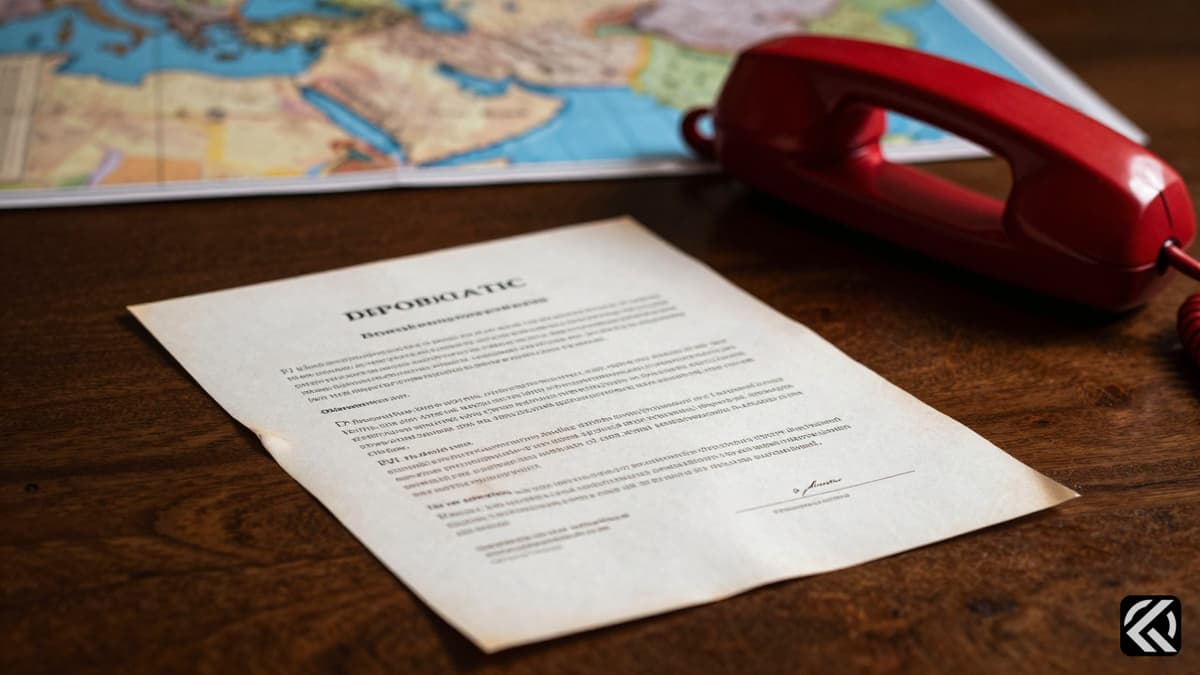
President Trump labels the Iran ceasefire critically weak after rejecting Tehran's peace proposal, signaling continued military pressure and uncertainty for the region.
U.S. President Donald Trump declared on Monday that the fragile truce between Washington and Tehran is effectively on "massive life support," following the outright rejection of a peace proposal from Iran.
Speaking from the Oval Office, Trump dismissed Tehran’s latest diplomatic overture as a "piece of garbage," marking a significant escalation in rhetorical hostility just a day after he deemed the offer "totally unacceptable." The comments come as the U.S.-Iran War, which began on February 28, continues to cast a long shadow over global energy markets and regional stability. The President made these remarks during a visit to a Maternal Healthcare event at the White House, where he briefly asked participants to shorten their speeches before addressing a group of generals regarding the Iranian situation.
The deterioration of diplomatic channels accelerated rapidly over the weekend. On Sunday, May 10, 2026, Iran submitted a formal proposal aimed at ending the months-long conflict that has disrupted the key sea route for global oil supplies, leading to fuel shortages in several nations. Trump took to his Truth Social platform to announce his rejection of the document, stating, "I have just read the response from Iran’s so-called Representatives. I don't like it."
By Monday, the President’s language had hardened. He told reporters that he would not even waste time finishing the document, describing it as "piece of garbage." "I didn't even finish reading it," Trump stated, emphasizing his disdain for the terms proposed by Tehran. He rejected the notion that he was under any external pressure, asserting, "They think that I’ll get tired of this, or I’ll get bored, or I’ll have some pressure, but there’s no pressure; there’s no pressure at all."
Trump insisted that the United States is positioned for a "complete victory," claiming that Iran has already been "defeated militarily." He suggested that while Iran retains some military capabilities built up during the conflict, the U.S. could neutralize them within a day. Central to this stance is the U.S. demand that Iran must never acquire a nuclear weapon, which Trump described as "very dangerous" and "very volatile."
The conflict has already caused significant global disruption. The war, initiated on February 28, 2026, led to a blockade of the Strait of Hormuz, a critical chokepoint for one-fifth of the world's crude oil supplies. Although the warring sides agreed to a pause in attacks on April 8, a permanent resolution has remained elusive. Negotiations have been fraught with difficulties, including a round of direct talks hosted by Pakistan on April 11, which failed to produce an agreement.
The core sticking points remain unresolved. The U.S. continues to insist that Iran provide a clear commitment to end its uranium enrichment program. In exchange, Washington has offered the lifting of sanctions and the release of billions of dollars in frozen Iranian funds. Additionally, both sides are expected to lift the blockade on the Strait of Hormuz to restore normalcy to global energy supplies.
During his recent comments, Trump acknowledged the complexity of the military situation. He noted that Iranian leaders had claimed the U.S. would have to "dig out the nuclear dust" at its facilities because it is buried so deeply that current operations cannot reach it. Trump admitted he did not currently know how the U.S. would proceed with removal, stating it was "a matter for further negotiation." However, he maintained that he possesses "the best plan ever," relying on the premise that Iran's military defeat is already a done deal.
The President’s dismissal of the ceasefire as "unbelievably weak" suggests that the window for diplomatic resolution may be closing. With Trump expressing certainty in a military solution and dismissing diplomatic efforts as garbage, the likelihood of a negotiated peace diminishes. The rejection of the proposal signals a shift toward a harder line, potentially prolonging the conflict or escalating military actions in the region. As fuel shortages persist and global markets react to the instability, the world watches to see if the U.S. will pursue its "complete victory" through force or if a new diplomatic path will emerge from the ashes of this failed proposal.
The rejection of Iran's proposal and the labeling of the ceasefire as non-functional indicates a high probability of renewed military engagement. With the U.S. maintaining that Iran is militarily defeated and refusing to engage with what it terms "garbage" diplomatic terms, the path forward relies heavily on unilateral U.S. action. If the administration proceeds with its stated "simple plan" to dismantle remaining Iranian capabilities, the conflict could intensify significantly. This escalation risks further disruption to the Strait of Hormuz, potentially worsening global fuel shortages and triggering broader regional instability. The failure of recent talks, including those mediated by Pakistan, leaves little room for de-escalation, suggesting that prolonged hostilities may become the new normal until a decisive military or diplomatic resolution is forced upon Tehran.
Jun 11, 2026 12:59 UTC
US Strike on Settebello Kills Indian Sailors Amid Strait of Hormuz Tensions
Jun 11, 2026 12:49 UTC
Air India Flight 171 Crash Sparks Debate Over Boeing 787 Dreamliner Faults
Jun 11, 2026 08:51 UTC
US-Iran Conflict: Indian Seafarers Killed in Gulf Strike
Jun 11, 2026 18:04 UTC
Healey Quits Government Over Defence Spending Dispute


