
Section
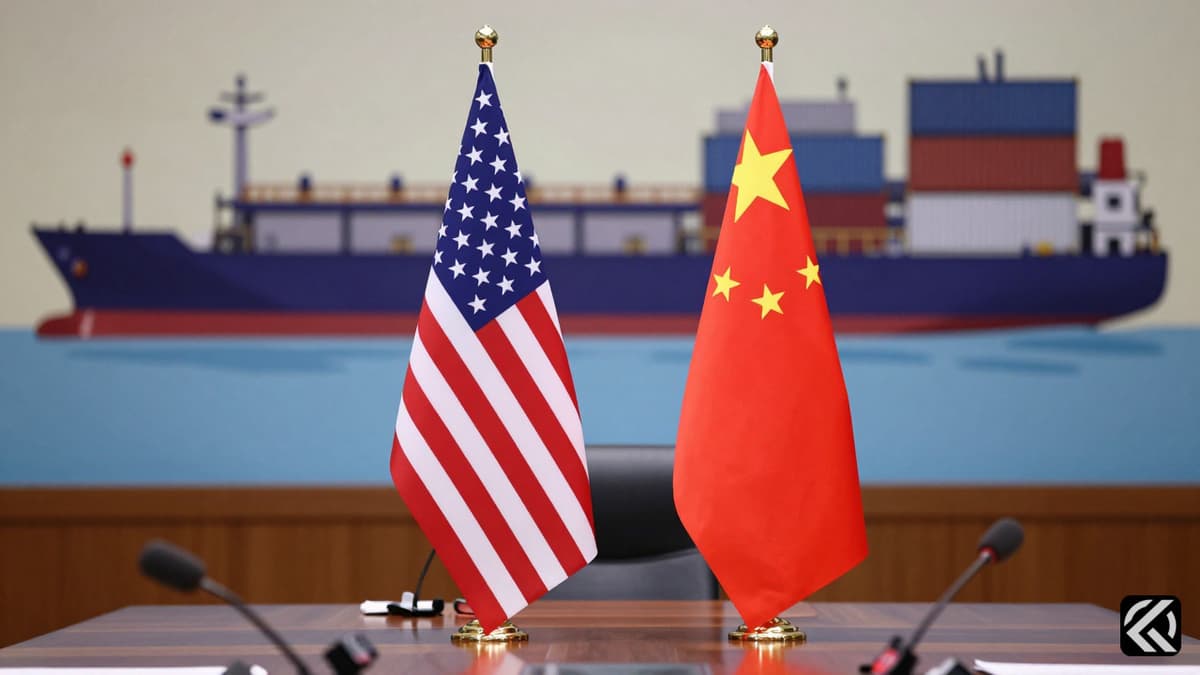
Amid a fragile ceasefire, President Donald Trump discusses the Iran war with Xi Jinping, while global economies brace for adverse scenarios and shifting trade dynamics.
President Donald Trump stated that his military campaign against Iran is “to be continued!” just before arriving in Beijing for a summit with Chinese leader Xi Jinping. The comment, made via Truth Social, highlights the fragile nature of the current ceasefire and the ongoing tensions surrounding the conflict.
Trump’s post also criticized suggestions of US decline, pointing to stock market highs and military victories during his administration. This comes as Vice President JD Vance notes progress in talks, though concerns remain about Iran meeting nuclear red lines.
The International Monetary Fund (IMF) has highlighted the gravity of the current global situation, describing the world economy as facing an “adverse scenario.” In a report released in April, the IMF outlined several economic paths, including a reference forecast with the least downturn and a severe scenario with persistent issues. Since then, stalled US-Iran talks and disrupted global supply chains have led to a bleaker outlook.
IMF spokesperson Julie Kozack confirmed during a Thursday press conference that the global economy is shifting from the reference scenario toward the adverse one. “Yes, we are moving into the adverse scenario,” Kozack stated, though she noted that inflation expectations remain well-anchored and financial conditions are still accommodative. She added that an updated, more thorough assessment will be provided in July.
Kozack emphasized the importance of the dialogue between the world’s two largest economies. She welcomed the constructive engagement between the US and China, noting that any reduction in trade tensions and uncertainty is beneficial for both nations and the global economy. The summit between Donald Trump and Xi Jinping is viewed as a critical moment for easing these rising economic anxieties.
Prior to the US delegation's departure for China, White House officials received serious warnings regarding cybersecurity risks. According to sources speaking to CNN, officials, including those from the Secret Service, were issued burner phones and devices with new numbers. They were advised that even this hardware could potentially be compromised while in the country.
Most US officials chose to leave their personal devices at home or turned them off and placed them in protected bags on government planes. Several officials created new profiles for encrypted apps, devoid of personal details or chat history, to communicate securely on the ground. One official noted that they were briefed to presume any communications within China could be compromised.
This caution is standard for high-level travel, with most major US companies providing “clean” devices to executives visiting China. However, the use of such devices complicates even routine logistical planning for the delegation, which includes America’s top business leaders accompanying President Trump.
The Iran war was a significant topic during the talks between Trump and Xi Jinping. China, a close ally of Iran and its largest oil consumer, has largely avoided the direct economic impact of the Middle East conflict due to diversified energy supplies, large stockpiles, and strong overseas demand for its electronics and machinery.
Despite US sanctions, so-called “teapot refineries” in China are processing Iranian crude into fuel and petrochemicals, helping sustain Tehran’s economy. However, Trump reported that Xi offered help to resolve the conflict and vowed not to provide military equipment to Iran. Xi also expressed a desire to see the Strait of Hormuz reopened, aligning with US concerns about the militarization of the strait and any imposed tolls.
Meanwhile, US Central Command Commander Adm. Brad Cooper told lawmakers that Iran retains a moderate capability to strike oil infrastructure and US partners in the region. A coalition of 26 countries, including Britain, France, and Japan, has called for the Strait of Hormuz to return to normal operations under an independent multinational mission. Iran claims around 30 vessels have passed through the strait since Wednesday night with its permission, including several Chinese ships operating under its management protocols.
Chinese electric vehicle manufacturers are closely watching the summit, as US restrictions effectively block their entry into the American market despite surging global demand. China dominates the global EV sector, with BYD leading production, and exports surged 78% year-on-year in the first quarter. The US has maintained hefty tariffs on Chinese cars and banned Chinese-connected software in new vehicles, citing national security.
Although Trump previously suggested openness to allowing Chinese automakers to build plants in the US, over 70 American lawmakers warned against lowering barriers. Chinese automakers like Geely remain focused on other markets, including Brazil and South Korea, noting that China does not strictly need US access as its affordable EVs lead globally.
China’s economy has demonstrated significant resilience, posting a record $1.2 trillion trade surplus last year despite US tariffs. In April, exports grew by 11.3% compared to the previous year, driven by demand for chips, electric vehicles, and green technology products. This growth followed a robust 5% expansion in the first quarter, helping China weather the disruptions caused by the Iran war.
The latest trade figures are expected to strengthen Xi Jinping’s position as he negotiates with Trump on trade and tariffs. The stronger-than-expected export growth underscores China’s ability to withstand global disruptions, though economists warn that prolonged conflict could weaken global demand. As the summit concludes, the interplay between military tensions in the Middle East and economic strategies will continue to shape international relations and market stability.
Jun 11, 2026 12:59 UTC
US Strike on Settebello Kills Indian Sailors Amid Strait of Hormuz Tensions
Jun 11, 2026 12:49 UTC
Air India Flight 171 Crash Sparks Debate Over Boeing 787 Dreamliner Faults
Jun 11, 2026 08:51 UTC
US-Iran Conflict: Indian Seafarers Killed in Gulf Strike
Jun 11, 2026 18:04 UTC
Healey Quits Government Over Defence Spending Dispute


