
Section
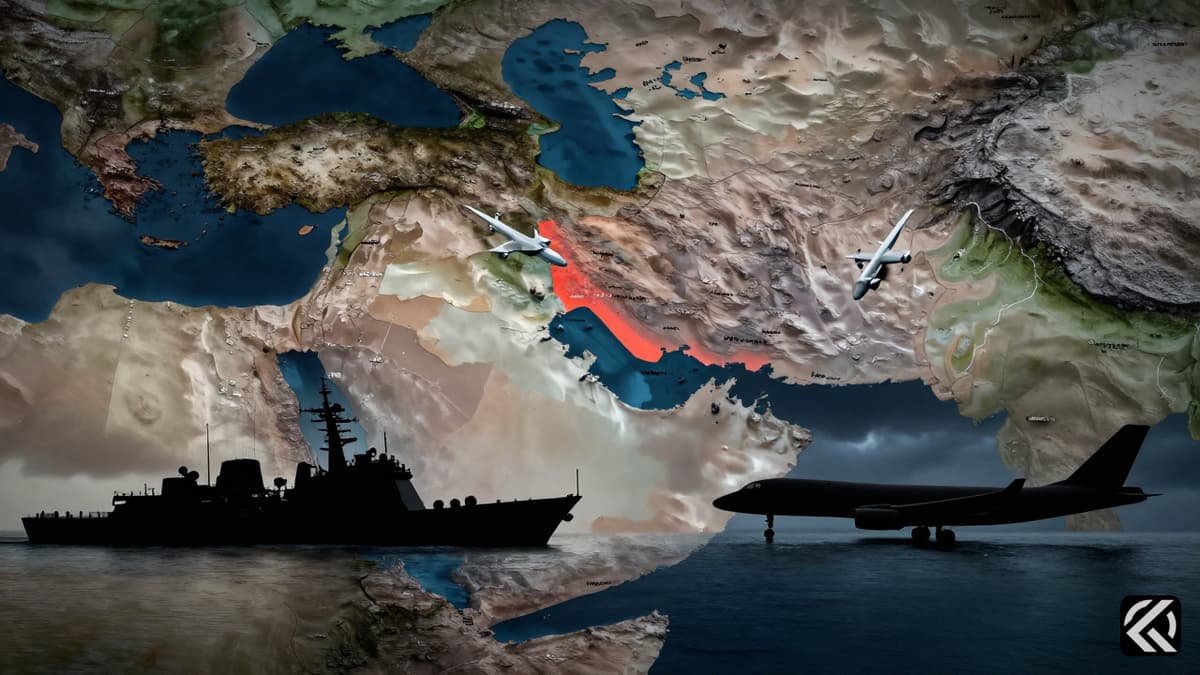
Escalating hostilities mark a critical moment as Donald Trump and Iranian officials exchange new threats following recent military exchanges, raising fears of further regional instability.
The conflict between the United States and Iran has entered a volatile new phase, with both nations exchanging severe threats following a series of military strikes. US President Donald Trump and Iranian senior officials have engaged in a sharp exchange of rhetoric, signaling that the diplomatic process is fracturing under the weight of renewed hostility. This escalation comes shortly after a ceasefire was agreed upon, raising serious concerns about the sustainability of peace in the region.
The immediate trigger for this latest round of tension involved the downing of a US Army Apache helicopter in the Strait of Hormuz, a critical shipping channel that has been effectively closed since the conflict began in late February. The US military identified the incident as a pivotal moment that necessitated a response. In reaction, US forces struck Iranian sites on Tuesday, including Iranian defense systems, ground control stations, and radar sites near the Strait of Hormuz. The US military Central Command (Centcom) described these strikes as a "proportional response" to the helicopter incident.
In the wake of the US strikes, Iran’s Islamic Revolutionary Guard Corps (IRGC) announced it had launched strikes on 21 targets at US bases in the region, including locations in Bahrain and Jordan. Kuwait's army also reported intercepting an attack. Reuters cited a US official stating that nearly all Iranian missiles and drones launched at US bases were intercepted, with no reported casualties. However, the IRGC described the US actions as "vicious," claiming they targeted the cities of Jask and Sirik, as well as Qeshm Island, damaging a telecommunications tower and two water tanks.
The rhetoric from the highest levels of both governments has grown increasingly hostile. President Trump took to his social media platform, Truth Social, to declare that Iran’s military was in "complete and total mess." He asserted that much of Iran’s Navy and Air Force "doesn’t even exist anymore" and claimed they had been "completely defeated." Trump added, "They’ve taken too long to negotiate a deal that would have been great for them, now they will have to pay the price!!!" These comments marked a stark contrast to his statements on Tuesday, where he had told journalists the US and Iran were "in the final throes of what will be a very, very good deal."
Iranian officials have pushed back firmly against these assertions. Foreign Minister Abbas Araghchi warned that Iran would "leave no attack or threat unanswered," asserting that the US had suffered "defeats on the battlefield." Iran’s foreign ministry spokesman, Esmaeil Baqai, accused the US of damaging the diplomatic process through "contradictory messages," "repeated shifts in positions," and "repeated violations of the ceasefire." Baqai emphasized that any diplomatic process requires a minimum of stability, which he argued was absent.
The incident involving the Apache helicopter remains a point of contention regarding the specifics of the engagement. Trump stated the helicopter was "shot down" while patrolling the Strait of Hormuz. Fox News reported that an Iranian drone had hit the helicopter but did not explode as it flew "very low." Trump confirmed that the two crew members survived and were rescued by an American sea drone. However, the clarity of the situation remains obscure. According to US officials, Iran used a drone to launch the attack, but an unnamed US official told CBS News it is not clear whether the drone had deliberately attacked the aircraft. Furthermore, the semi-official Iranian Mehr News Agency reported that Iran had not claimed responsibility for the downed aircraft, despite the IRGC's broader claims of retaliation.
The current crisis is rooted in a broader conflict that began on February 28, after the US and Israel launched wide-ranging strikes on Iran that killed the country’s supreme leader. Iran responded by launching attacks on Israel and US-allied states in the Gulf. The fighting escalated quickly, drawing Lebanon into the conflict in March. In April, the US and Iran agreed to a ceasefire that was initially meant to last for two weeks. The recent exchanges of strikes and threats suggest that this fragile truce is crumbling, with both sides preparing for potential further action.
The implications of this escalation are profound for global security and energy markets. The Strait of Hormuz, a vital artery for global oil supply, has already been effectively closed since the start of the conflict. Any further disruption to this waterway could have severe economic repercussions worldwide. As both sides dig in their heels, with Trump insisting on paying a "price" and Iran vowing to respond to every threat, the window for diplomatic resolution appears to be narrowing rapidly.
As diplomatic channels fracture and military posturing intensifies, the region faces a precarious future. The failure of the initial ceasefire suggests that without immediate de-escalation, the conflict could expand further, potentially involving more regional actors. The closure of the Strait of Hormuz will likely persist, causing sustained disruptions to global energy supplies. Continued hostility risks drawing in additional nations, deepening the humanitarian and economic crisis in the Middle East and complicating future diplomatic efforts significantly.
Jun 11, 2026 17:21 UTC
Bangladesh Opposition Mobilizes Against India-Bangladesh Border Push-Ins and BSF Killings
Join 50,000+ readers getting the global briefing every morning.
No spam. Unsubscribe anytime.
Jun 11, 2026 17:40 UTC
Boelter Pleads Guilty in Minnesota Political Assassinations
Jun 11, 2026 17:21 UTC
Bangladesh Opposition Mobilizes Against India-Bangladesh Border Push-Ins and BSF Killings
Jun 11, 2026 17:21 UTC
John Healey Quits as UK Defence Secretary Over Funding Dispute
Jun 11, 2026 16:19 UTC
UK Defence Secretary John Healey Quits Over Funding Dispute


