
Section
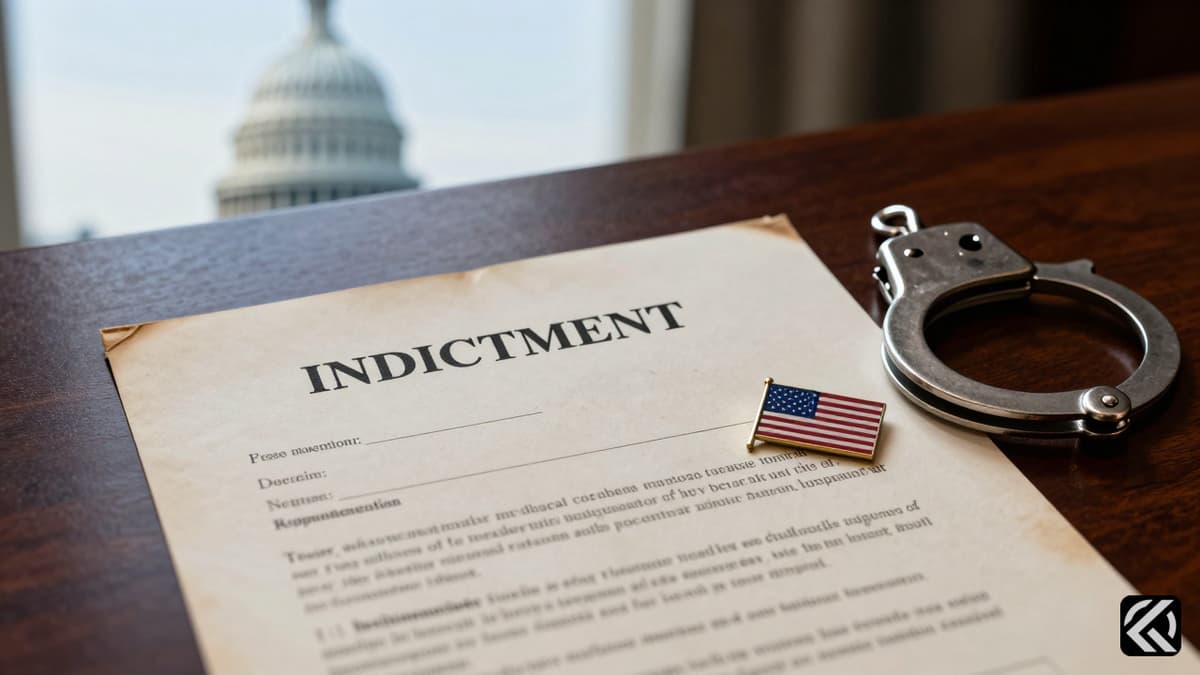
Federal prosecutors have unsealed an indictment against former Cuban leader Raul Castro for the 1996 downing of civilian planes, signaling a sharp escalation in US pressure against Havana.
United States federal prosecutors have unsealed an indictment against Cuba’s former President Raul Castro, charging him with involvement in the 1996 downing of civilian aircraft. This legal action represents one of the most significant escalations in tensions between Washington and Havana in recent years. The indictment targets Castro for his role as defense minister during the incident, which resulted in the deaths of four Americans.
Acting Attorney General Todd Blanche announced the charges at Miami’s Freedom Tower, describing the event as a targeted attack on unarmed civilians engaged in humanitarian missions. The US Department of Justice alleges that Castro played a leading role in the decision to have Cuban fighter jets shoot down two planes operated by the Miami-based group Brothers to the Rescue. The group, founded in 1991 by Jose Basulto, aimed to locate Cuban refugees crossing the Florida Straits and alert the US Coast Guard.
The indictment charges Castro with one count of conspiracy to kill US nationals, four counts of murder, and two counts of destroying an aircraft. Five additional co-defendants were also named in the legal filings. Blanche emphasized that the United States will pursue accountability regardless of time passed or official title held. He stated, “For nearly 30 years, the families of four murdered Americans have waited for justice,” affirming that the Trump administration does not forget its citizens.
The four men killed in the February 24, 1996, attack were identified as Carlos Costa, Armando Alejandre Jr., Mario de la Pena, and Pablo Morales. US officials and international investigators maintained that the aircraft were attacked over international waters, while Cuba claimed the planes had violated or approached its airspace. Former President Fidel Castro later denied giving a direct order to shoot down the planes, a statement that contrasts with the new federal allegations.
Cuba’s current leader, Miguel Diaz-Canel, immediately dismissed the charges as an act of political theater. In a social media post, he accused the Trump administration of lying and manipulating historical events to justify military aggression against Cuba. Diaz-Canel described the indictment as a political maneuver devoid of legal basis, intended to pad a fabricated dossier for potential military action. Deputy Foreign Minister Carlos de Cossio added that the move caters to the anti-Cuban minority in South Florida, accusing the administration of being pressured by their votes.
The timing of the Raul Castro indictment has drawn analysis from political experts who view it within a broader US pressure campaign against Havana. Orlando Perez, a political science professor at the University of North Texas at Dallas, suggested the move is linked to recent diplomatic and intelligence activities. He pointed to a visit by CIA Director John Ratcliffe to Havana, which occurred amidst ongoing negotiations between the Trump administration and Cuba’s communist government.
Perez noted that Washington appears to be running two simultaneous tracks: a backchannel negotiation with the Castro family network and a public pressure campaign. This dual approach follows reports that Cuba had explored drone and asymmetric warfare capabilities, including potential attacks on the US naval base at Guantanamo Bay and Key West. The professor indicated that the indictment fits within this architectural pressure strategy.
Despite the legal charges, experts warn that the move could backfire politically. Perez argued that the indictment strengthens hardliners within Cuba by reinforcing the regime’s siege narrative. He stated that the Castro clan is unlikely to surrender Raul Castro, viewing him as a legitimacy anchor for the government. The move may also stifle domestic opposition rather than weaken the regime’s support base.
Domestic US politics may also play a role in the timing of the announcement. Trump’s Republican Party faces a heated midterm election in November, with recent polls showing the president’s approval ratings at their lowest since he returned to office. A Reuters and Ipsos poll indicated that only 34 percent of respondents approved of his job performance, partly due to public backlash regarding other international issues.
William Leogrande, a Latin American politics specialist at American University, acknowledged that the indictment serves as a political gift to Cuban Americans in South Florida, a key Republican voting base. However, he warned that the move is likely to end any hope for a diplomatic agreement. Leogrande suggested the administration may be laying groundwork for military action, a prospect that experts warn would likely be unpopular among the general American public, including most Republicans.
The unsealing of the indictment on May 20 was marked by heavy symbolic significance. This date commemorates Cuba’s declaration of independence and the establishment of the republic in 1902, following the Spanish-American War. The White House issued a statement calling the current Cuban leadership a betrayal of the founding patriots, while Cuba’s Foreign Minister Bruno Rodriguez Parrilla responded by criticizing the message as superficial and rooted in neocolonial nostalgia.
Blanche highlighted the role of the Cuban exile community in Miami during his announcement, stating that they understand the history of the regime better than anyone. He emphasized that the community knows the cost of oppression, using their experiences as evidence of the Cuban government’s violence. The administration’s remarks underscored the deep ties between US foreign policy toward Cuba and domestic political considerations in South Florida.
The unsealing of the Raul Castro indictment has effectively stalled ongoing negotiations between the two governments, replacing diplomatic channels with public legal confrontations. Experts suggest that while the Trump administration may hope this pressure leads to a compromise or an "acceptable deal," the outcome is unlikely. The move cements a hardline stance that prioritizes political theater and domestic voter appeal over immediate diplomatic resolution. As tensions rise, the US government continues to threaten military action, though such a scenario remains improbable due to widespread public opposition. The long-term impact will likely be a deepening of hostilities and a further deterioration of any remaining diplomatic ties, leaving the Cuban regime fortified against external pressure but isolated internationally.
Jun 11, 2026 12:59 UTC
US Strike on Settebello Kills Indian Sailors Amid Strait of Hormuz Tensions
Jun 11, 2026 12:49 UTC
Air India Flight 171 Crash Sparks Debate Over Boeing 787 Dreamliner Faults
Jun 11, 2026 08:51 UTC
US-Iran Conflict: Indian Seafarers Killed in Gulf Strike
Jun 11, 2026 18:04 UTC
Healey Quits Government Over Defence Spending Dispute


