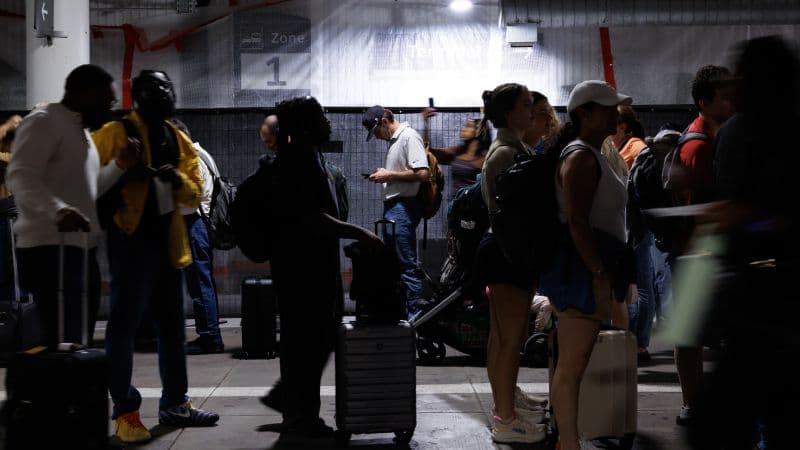
The Department of Homeland Security announces the restoration of Global Entry services, ending a partial shutdown-induced halt that drew bipartisan criticism.
The Trump administration has officially announced plans to restore the Global Entry program this Wednesday morning. This decision comes after a partial shutdown of the Department of Homeland Security caused significant disruptions last month. A DHS spokesperson confirmed that operations will reactivate on March 11th at 5:00 AM ET. The move aims to alleviate travel disruptions caused by the ongoing funding standoff which has now entered its fourth week. This announcement addresses concerns raised by travelers regarding the uncertainty during the political impasse.
Prior to this restoration, the department announced on February 22 that it would stop processing Global Entry travelers at participating airports. This halt occurred after funding lapsed on February 14 when lawmakers failed to reach agreement on a spending bill. At the time, then-Homeland Security Secretary Kristi Noem stated personnel would be reassigned to focus on the general traveling population at airports and ports of entry. She called it a necessary reallocation of resources during the crisis. Interestingly, a similar decision to suspend the domestic program TSA PreCheck was quickly reversed shortly after this initial announcement. This contrast highlights the varying approaches to domestic versus international security protocols.
The underlying funding lapse stems from a broader dispute over immigration enforcement policies. Democrats in Congress have sought new restrictions on Immigration and Customs Enforcement agents. These proposals include requiring judicial warrants for certain home arrests, mandating visible identification, and limiting face coverings during operations. Republicans have opposed these specific proposals, arguing that such changes would hinder effective enforcement capabilities. This political gridlock directly impacted the operational status of trusted traveler programs. Consequently, the lack of consensus delayed essential operational funding for weeks.
The suspension drew swift criticism from Democratic lawmakers and industry groups. Sen. Chuck Schumer of New York accused the administration of using bully tactics by targeting airport operations during the standoff. Rep. Bennie Thompson of Mississippi, ranking Democrat on the House Homeland Security Committee, said the move appeared designed to punish the American people. Meanwhile, the US Travel Association urged the department to reverse course immediately. They argued that suspending the program would swell standard inspection lines and strain border officers. These accusations highlight the deep partisan divide regarding border security measures.

Industry experts emphasized that Global Entry is far more than a convenience for frequent international travelers. The association noted its members undergo rigorous background checks, interviews, and vetting processes. Suspending it does not just slow lines; it increases costs and strips away a layer of security infrastructure that took years to build. Operated by US Customs and Border Protection, the program allows preapproved citizens and lawful permanent residents returning from abroad to bypass standard passport-control lines using automated kiosks. Applicants pay a fee, undergo background checks and interviews, and receive the benefit for up to five years if approved. The program's design prioritizes efficiency without compromising the thoroughness required for international entry.
The restoration marks a significant step to mitigate airport disruptions following the political deadlock. While the program offers significant time-saving benefits, its suspension highlighted the fragility of funding agreements during partisan disputes. The Trump administration's decision signals a shift back to prioritizing traveler convenience after the shutdown period ended. Ultimately, the resolution underscores the complex relationship between immigration policy debates and essential travel infrastructure maintenance.
May 1, 2026 03:50 UTC
Trump Administration Declares Iran Conflict Terminated
Join 50,000+ readers getting the global briefing every morning.
No spam. Unsubscribe anytime.
May 1, 2026 03:50 UTC
Trump Administration Declares Iran Conflict Terminated
Apr 25, 2026 01:38 UTC
Iranian FM Araghchi Heads to Islamabad for Critical US-Iran Talks
Apr 25, 2026 01:13 UTC
Calm Suspect in Delhi Rape-Murder Case Faces Mental Evaluation
Apr 24, 2026 23:24 UTC
Raghav Chadha joins BJP, Shaking AAP’s Rajya Sabha Strength