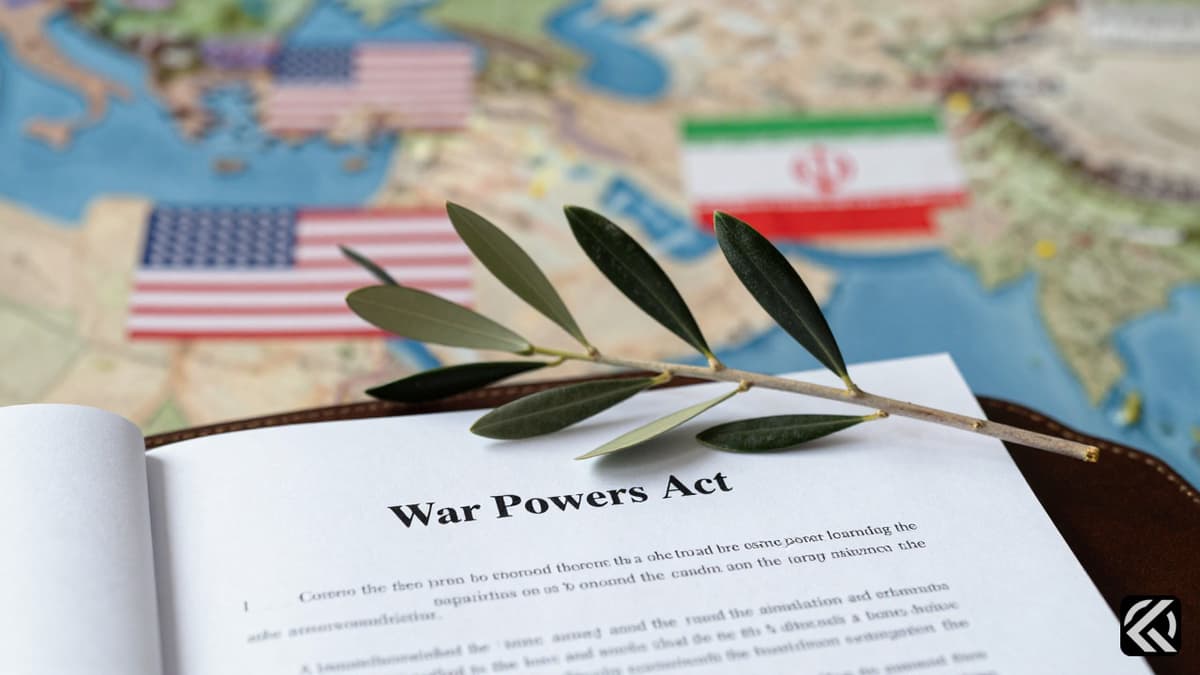
The Trump administration asserts the Iran conflict has ended, using an April truce to sidestep legal mandates for congressional approval before the statutory deadline expires.
The Trump administration has officially declared that the war in Iran has been terminated, a strategic interpretation designed to circumvent statutory requirements for congressional approval. This declaration comes as the administration navigates complex diplomatic landscapes in the Middle East, including efforts to stabilize relations between Israel and Lebanon.
The announcement relies on the assertion that the hostilities, which began on February 28, ceased with the onset of a ceasefire in early April. By defining the conflict as terminated, the White House aims to avoid the legal necessity of seeking formal permission from Congress under the War Powers Act Iran framework, which mandates approval for military actions extending beyond 60 days. This legal maneuvering occurs amid heightened regional tensions and ongoing diplomatic efforts to prevent further escalation.
In a statement provided to the press, a senior administration official, speaking on condition of anonymity, clarified the administration’s position. The official stated that for the purposes of the relevant law, "the hostilities that began on Saturday, Feb 28 have terminated." The official further explained that neither the U.S. military nor Iran has exchanged fire since the beginning of the two-week ceasefire on April 7. This interpretation was reinforced earlier on Thursday by Defense Secretary Pete Hegseth during Senate testimony. Hegseth argued that the ceasefire effectively paused the war, thereby removing the immediate need for the administration to seek formal congressional authorization before the deadline passed.
While the legal battle over the duration of the conflict with Iran unfolds in Washington, diplomatic efforts are intensifying across the Middle East. The U.S. Embassy in Lebanon issued an urgent call on Thursday for a meeting between Lebanese and Israeli leaders. This push for direct negotiations comes despite ongoing violence, with the Lebanese Health Ministry reporting that Israeli strikes in the country’s south have killed at least 17 people. These casualties persist even as an U.S.-Lebanon ceasefire remains nominally in place, highlighting the fragile nature of the current truce.
The push for dialogue is not without precedent. Israeli and Lebanese representatives have met twice in Washington this month, marking the first such high-level interactions in decades. These meetings were precipitated by events starting on March 2, when the Iran-backed Hezbollah group drew Lebanon into the broader Middle East war, triggering heavy Israeli strikes and a subsequent ground invasion.
President Donald Trump has expressed hope to host both Lebanese President Joseph Aoun and Israeli Prime Minister Benjamin Netanyahu "over the next couple of weeks" to facilitate these direct negotiations. The administration is actively working to stabilize the region while simultaneously managing the legal and political implications of its military engagements.
Simultaneously, the administration is addressing diplomatic friction in the Indian Ocean. The U.S. has sought clarification from the Maldives following sharp criticism from President Mohammad Muizzu regarding the war with Iran. The issue was addressed on Wednesday during a call between U.S. special envoy Sergio Gor and Deputy Assistant Secretary of State Bethany Morrison with Maldivian Foreign Minister Iruthisham Adam.
President Muizzu has been vocal in his condemnation of U.S. and Israeli actions, asserting that he would not permit the use of any Maldivian territory to aid the war effort. When Envoy Gor visited Male in March, Muizzu refused to meet with him. In response to the recent diplomatic outreach, the U.S. Bureau of South and Central Asian Affairs posted on X, stating, "On the call, the Foreign Minister helped clarify recent statements by the Maldivian President. The Minister reiterated that the President of Maldives wanted a positive relationship. We look forward to future engagements."
The administration’s narrative regarding the Trump Maldives Iran dispute underscores a broader effort to manage global perceptions of the conflict. By asserting that the war has ended, the White House attempts to diminish the justification for allied or neutral nations to criticize American military conduct. However, the continued violence in Lebanon and the diplomatic pushback from nations like the Maldives suggest that the administration’s legal definition of "terminated" does not fully align with the on-the-ground reality or international sentiment.
As the 60-day deadline looms, the administration’s reliance on the April ceasefire as the endpoint of hostilities remains a central point of legal and political contention. Whether Congress will accept this interpretation or demand further justification will likely define the next phase of U.S. foreign policy in the region.
The administration’s claim that the Iran conflict has ended presents significant challenges for long-term regional stability. By defining the war as terminated without congressional approval, the White House may set a precedent that allows future presidents to bypass legislative oversight in military engagements. This legal interpretation could embolden continued military operations under the guise of ceases in hostilities, potentially prolonging conflicts rather than resolving them. Furthermore, the ongoing violence in Lebanon, despite the declared ceasefire, indicates that diplomatic efforts may be insufficient to achieve lasting peace. The tension between legal technicalities and the realities of ground warfare in the Middle East suggests that the administration’s strategy may face scrutiny from both domestic lawmakers and international partners in the coming months.
May 1, 2026 03:50 UTC
Trump Administration Declares Iran Conflict Terminated
Join 50,000+ readers getting the global briefing every morning.
No spam. Unsubscribe anytime.
Apr 25, 2026 01:38 UTC
Iranian FM Araghchi Heads to Islamabad for Critical US-Iran Talks
Apr 25, 2026 01:13 UTC
Calm Suspect in Delhi Rape-Murder Case Faces Mental Evaluation
Apr 24, 2026 23:24 UTC
Raghav Chadha joins BJP, Shaking AAP’s Rajya Sabha Strength
Apr 24, 2026 21:29 UTC
USF Doctoral Student Found Dead; Roommate Hisham Abugharbieh Arrested


