Section
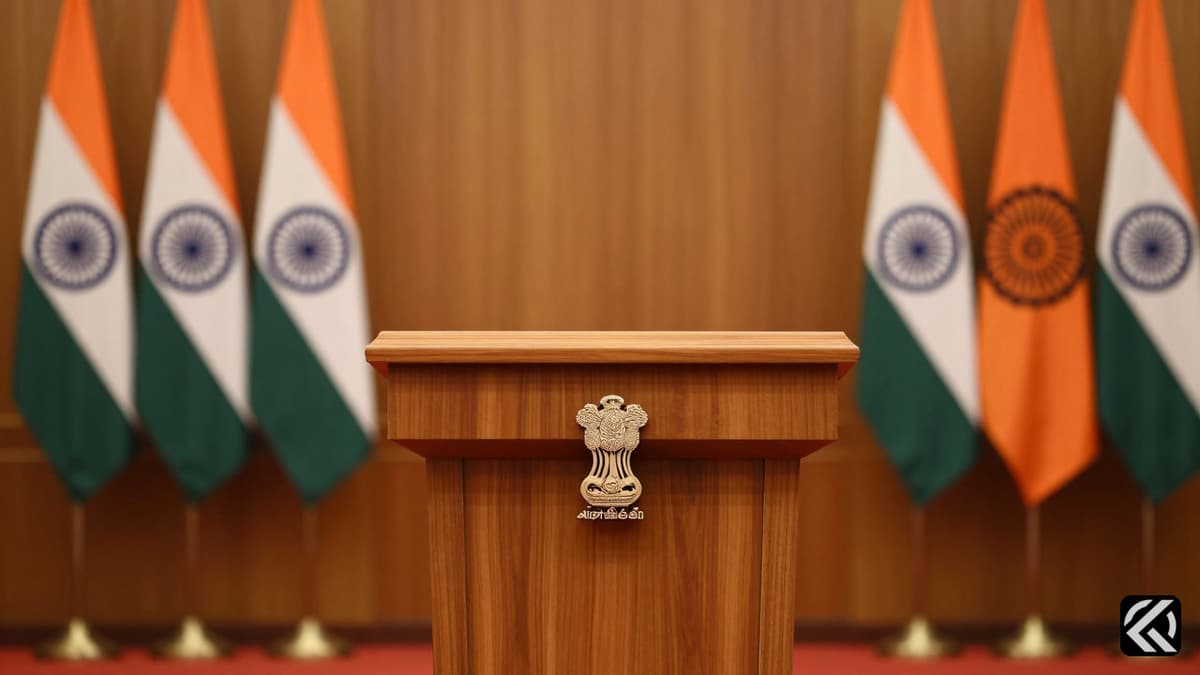
Tamil Nadu Chief Minister C. Joseph Vijay has sworn in 23 additional ministers, including two Congress leaders, cementing a new coalition era in the Dravidian state's governance structure.
Tamil Nadu Chief Minister C. Joseph Vijay officially expanded his state cabinet on Thursday, May 21, 2026, by swearing in 23 additional legislators as ministers. This significant administrative move includes the induction of two representatives from the Congress party, marking a pivotal moment in the region's political history. The expansion occurred as the Chief Minister sought to consolidate his administration's strength following the assembly elections.
The inclusion of Congress leaders S. Rajesh Kumar, who represents the Killiyoor constituency, and P. Viswanathan, who hails from the Melur segment, signifies a major strategic shift. The Congress party, which previously won five Assembly seats in the alliance led by the DMK, had positioned itself as an early supporter. They rushed to aid Mr. Vijay after it became apparent that the Tamilaga Vettri Kazhagam (TVK) leader fell short of the majority mark required to govern alone. This collaboration ends a period where the Congress remained out of power in Tamil Nadu for 59 years, ushering in a distinct coalition era for the Dravidian state.
Prior to the final swearing-in, the political landscape in Tamil Nadu was actively being shaped by diplomatic maneuvers. A day earlier, on May 20, the TVK had publicly extended invitations to other potential coalition partners. Minister for Public Works and Sports Development Aadhav Arjuna addressed reporters in Chennai, confirming that the TVK leadership had conveyed invitations to the Viduthalai Chirutha Katchi (VCK) and the Indian Union Muslim League (IUML). Aadhav Arjuna stated, "We invite VCK leader Thol. Thirumavalavan to be part of the Council of Ministers. This is the wish of the Chief Minister as well. Similarly, the IUML should also join the Council of Ministers." While the VCK and IUML were invited, the immediate focus remained on the consolidation of the core coalition partners.
The induction of the Congress party highlights a complex realignment in Dravidian politics. By joining the C. Joseph Vijay-led government, the Congress party has integrated into the executive branch, despite their historical electoral alliances. This move suggests a pragmatic approach by both parties, prioritizing governance and administrative stability over previous ideological or electoral distances. The Congress's decision to join the cabinet so swiftly indicates a calculated political strategy to influence policy and maintain relevance in the state's legislative processes.
The expanded cabinet now includes a diverse array of legislators from various backgrounds, reflecting the coalition nature of the new government. The addition of 23 ministers is not merely a numbers game but a structural necessity to manage the diverse portfolios required to run the state's administration effectively. The TVK, having formed the government, has demonstrated a willingness to share power and responsibility, which is essential for the longevity of any coalition regime.
The presence of the Congress in the cabinet also sends ripples through the broader national political spectrum. The partnership between the regional TVK and the national Congress party may reshape political dynamics across India, particularly in southern states where regional parties hold significant sway. The emerging political narrative points towards a collaborative model of governance, where multiple parties work in tandem to address state-specific issues while maintaining their distinct identities.
As the new ministers settle into their roles, the focus shifts to implementation. The expanded cabinet must now address the immediate needs of the constituents, from public infrastructure to social welfare schemes. The synergy between the TVK, the Congress, and potentially other invited partners will be tested in the coming months. The success of this coalition will depend on the ability of these diverse political entities to find common ground on legislative priorities and administrative decisions.
The political community in Tamil Nadu watches closely as this new phase of governance begins. The swearing-in of 23 new ministers is a clear signal that the government is ready to operate with a broad mandate. The inclusion of the Congress adds a layer of federal connection to the state administration, potentially facilitating better coordination with the central government on various national programs.
The induction of 23 new ministers, including Congress representatives, solidifies the governing structure under the TVK leadership. This coalition era is expected to lead to more inclusive policy-making, balancing regional aspirations with national interests. Future administrations may need to anticipate similar coalition models as political fragmentation increases, ensuring that governance remains stable and representative of diverse political voices in the Dravidian state.
Jun 11, 2026 17:21 UTC
Bangladesh Opposition Mobilizes Against India-Bangladesh Border Push-Ins and BSF Killings
Join 50,000+ readers getting the global briefing every morning.
No spam. Unsubscribe anytime.
Jun 11, 2026 17:40 UTC
Boelter Pleads Guilty in Minnesota Political Assassinations
Jun 11, 2026 17:21 UTC
Bangladesh Opposition Mobilizes Against India-Bangladesh Border Push-Ins and BSF Killings
Jun 11, 2026 17:21 UTC
John Healey Quits as UK Defence Secretary Over Funding Dispute
Jun 11, 2026 16:19 UTC
UK Defence Secretary John Healey Quits Over Funding Dispute