A deep dive into the financial battles shaping Illinois politics, from billionaire governor backing to crypto industry spending in the 2026 primaries.
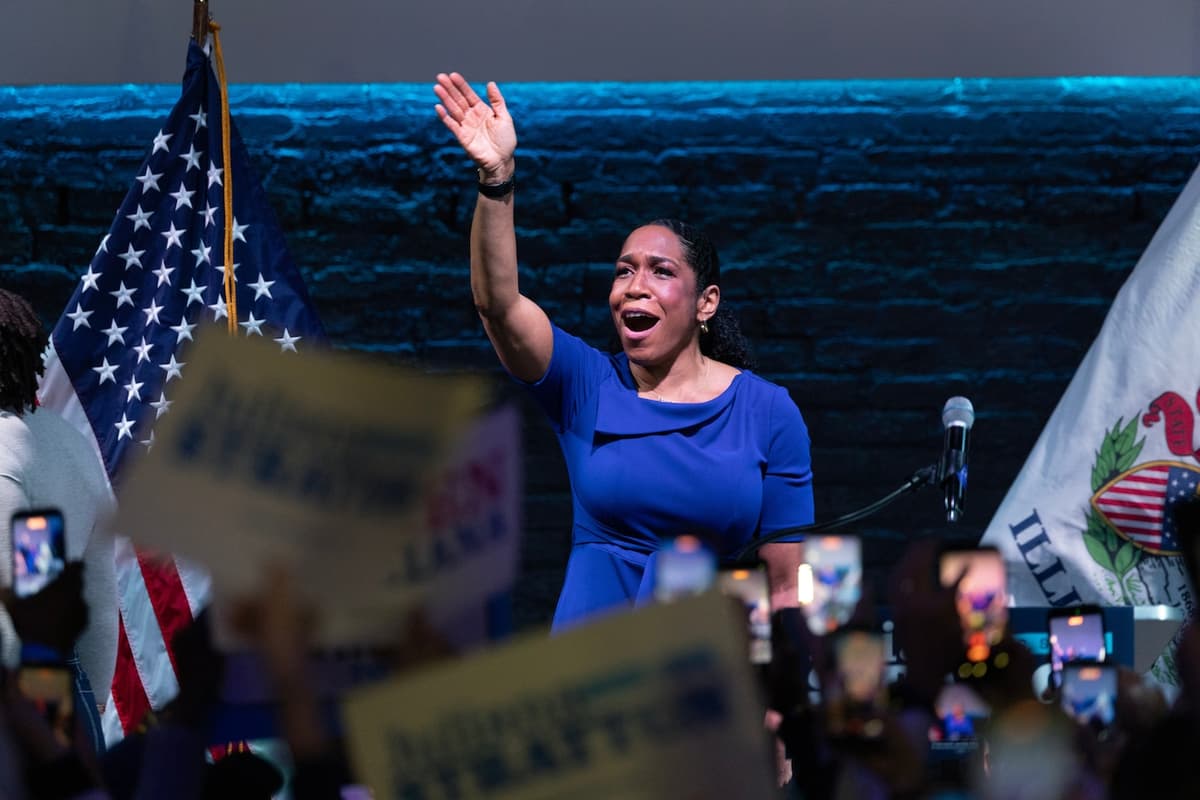
The landscape of Illinois politics shifted dramatically following Tuesday night’s primary results, as Lt. Gov. Juliana Stratton secured a decisive victory in the Democratic primary for a rare open Senate seat. Her win effectively secures her election to succeed retiring Sen. Dick Durbin, a move that serves as a significant political endorsement for Illinois Gov. JB Pritzker. While Stratton led Rep. Raja Krishnamoorthi by single digits when the Associated Press called the race, the financial dynamics behind the scenes revealed a complex web of influence involving billionaires, crypto interests, and established political action committees.
Stratton’s path to the Senate was heavily paved by the resources of Gov. JB Pritzker, a billionaire and potential 2028 presidential candidate. Pritzker officially endorsed Stratton, who has served as his lieutenant governor since he took office in 2019. Beyond the verbal support, Pritzker contributed at least $5 million to a super PAC dedicated to supporting Stratton’s campaign. The full scope of this financial backing may remain partially obscured until April, when the super PAC files its next disclosure, but the impact on the primary landscape was immediate.
With Durbin, the No. 2 Democrat in Senate leadership, retiring after five terms, Stratton is poised to become the sixth Black woman to serve in the Senate if she prevails in November. This historic milestone follows the legacy of Carol Moseley Braun, the first Black woman elected to the U.S. Senate from Illinois in 1992. Stratton will face Don Tracy, the former Illinois Republican Party chairman, who secured the Republican nomination.
The primary results delivered a notable blow to the crypto industry, which had invested heavily in the race. A super PAC funded by crypto interests, known as Fairshake, spent nearly $10 million on advertisements opposing Stratton. This expenditure was intended to offset a blitz of ads attacking Krishnamoorthi run by Illinois Future PAC, the super PAC funded by Pritzker.
Crypto companies and investors have emerged as a powerful political force, seeking to influence Washington’s regulations on digital currencies like bitcoin. Fairshake’s donor list includes major entities such as Coinbase and Ripple Labs, alongside venture capital investors Marc Andreessen and Ben Horowitz. As of Jan. 31, the super PAC held more than $191 million in cash, providing it with enormous financial firepower heading into the midterms.
Sen. Tammy Duckworth, who endorsed Stratton, was sharply critical of the industry’s backing of Krishnamoorthi. She expressed deep concern that Senator Durbin could be replaced by someone compromised by these interests. Krishnamoorthi, who voted for the Genius Act and the Clarity Act supported by crypto interests, rejected the notion that he would be indebted to the industry. He argued that Stratton’s support relied on a single billionaire patron rather than broad industry alignment. Stratton countered by stating her priority would be ensuring equitable access to crypto and standing up for everyday Americans.
The influence of the American Israel Public Affairs Committee (AIPAC) was also scrutinized during the primaries. Two Democrats backed by super PACs linked to the group won their primaries, though the results were mixed. A super PAC tied to AIPAC called Elect Chicago Women spent nearly $4 million supporting former congresswoman Melissa Bean, who defeated seven other Democrats to succeed Krishnamoorthi. Another AIPAC-linked group, Affordable Chicago Now, spent more than $4 million backing Donna Miller.
However, the group faced setbacks in other races. Elect Chicago Women spent $5.7 million to support state Sen. Laura Fine, but she lost the primary to succeed Rep. Jan Schakowsky. Similarly, a super PAC funded by AIPAC spent more than $5 million supporting Chicago treasurer Melissa Conyears-Ervin, yet she was defeated by state Rep. La Shawn Ford. These results raise questions about the group’s influence in Democratic primaries, especially following a recent defeat in a New Jersey special election.
Beyond the Senate race, Democrats fought for four open, safely Democratic House seats in Chicago and its suburbs. Former congresswoman Melissa Bean, who lost her suburban seat to a Republican in 2010, won the primary to succeed Krishnamoorthi. Her victory included defeating Junaid Ahmed, who had the support of Sen. Bernie Sanders and Rep. Alexandria Ocasio-Cortez.
In another notable contest, Donna Miller, a Cook County commissioner, defeated former congressman Jesse L. Jackson Jr. Jackson, who resigned his House seat in 2012 and later went to prison after pleading guilty to corruption charges, is the son of civil rights leader Jesse L. Jackson Sr. Miller’s win ensures a former lawmaker returns to Washington, while Jackson’s defeat marks a difficult night for the legacy of his father, who died last month.
Looking ahead to the general election, Gov. Pritzker will face Darren Bailey, a former state senator who won the Republican nomination. This sets up a rematch of the 2022 governor’s race, where Pritzker defeated Bailey by nearly 13 points. Pritzker would become the first Illinois governor to win a third term since Republican Jim Thompson left office in 1991. He remains heavily favored in the solidly Democratic state.
The Illinois primaries highlighted a complex interplay of money, influence, and political legacy. While Gov. Pritzker’s backing proved crucial for Stratton’s Senate bid, the crypto industry’s massive spending failed to alter the outcome. Simultaneously, AIPAC-linked groups faced challenges in securing victories across multiple House races. As the state moves toward the general election, the focus remains on whether Pritzker can secure a historic third term and how the new Senate and House members will navigate the regulatory and legislative challenges awaiting them.
May 2, 2026 17:04 UTC
Germany Prepares for Trump-Linked US Troop Withdrawal
Join 50,000+ readers getting the global briefing every morning.
No spam. Unsubscribe anytime.
May 2, 2026 17:38 UTC
Ten Dead in Bargi Dam Tragedy as Family Shares Final Call
May 2, 2026 17:04 UTC
Germany Prepares for Trump-Linked US Troop Withdrawal
May 2, 2026 15:16 UTC
Mamata Banerjee Denounces Exit Poll Manipulation in West Bengal
May 2, 2026 13:20 UTC
India Launches Cell Broadcast Disaster Alert System Trial