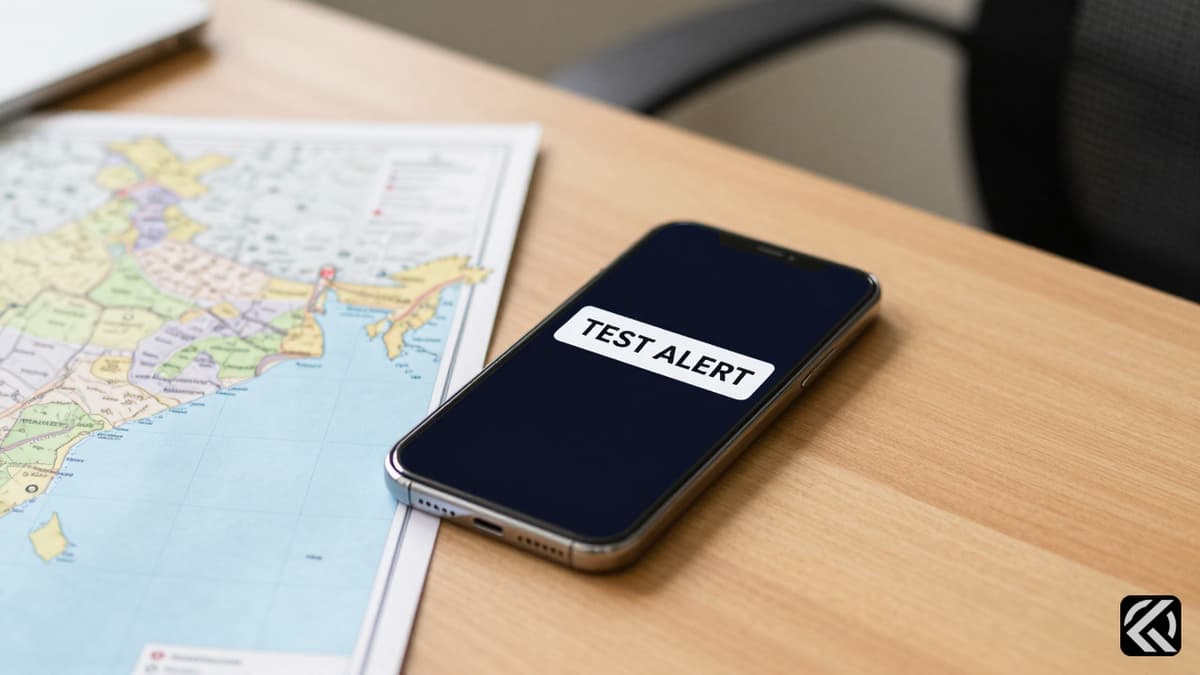
India has initiated nationwide testing of its new emergency alert infrastructure, sending test messages to mobile phones across all states as part of a critical safety trial.
India has officially commenced a comprehensive nationwide testing phase for its mobile-based disaster communication infrastructure, with citizens across the country receiving test notifications on their mobile devices. This strategic rollout represents a significant enhancement to the nation's disaster preparedness framework, aiming to bolster public safety through rapid information dissemination.
The Department of Telecommunications (DoT), operating in coordination with the National Disaster Management Authority (NDMA), has clarified that these alerts are strictly part of a trial phase and do not indicate any actual emergency or imminent danger. The government issued a formal statement urging the public to remain calm, explaining that the system is being evaluated for performance and reliability before its formal inauguration. Officials explicitly stated that recipients should not take any action upon receiving these notifications, as they are merely diagnostic tests of the underlying network infrastructure.
The core of this new capability is the Integrated Alert System, known as SACHET, which was successfully operationalized by the Centre for Development of Telematics (C-DOT). C-DOT serves as the premier research and development centre for the Department of Telecommunications and has been entrusted with the indigenous development of this public emergency alert system. The architecture of SACHET is based on the Common Alerting Protocol (CAP), a standard recommended by the International Telecommunication Union, ensuring international compatibility and standardized data exchange for emergency information.
Currently, the system is operational across all 36 States and Union Territories of India. It functions by delivering disaster and emergency-related alerts via Short Message Service (SMS) to mobile users within specific, geo-targeted areas. The efficacy of this approach is already evident in the system's historical performance; officials noted that it has played a major role in public safety communication, enabling the dissemination of over 134 billion SMS alerts. These alerts have been disseminated in more than 19 Indian languages, covering a wide spectrum of incidents including natural disasters, weather warnings, and cyclonic events.
To further improve response times in critical, time-sensitive situations, authorities have introduced advanced technology alongside traditional SMS alerts. This includes the integration of Cell Broadcast capabilities, which allow alerts to be transmitted simultaneously to all mobile devices within a defined geographic area. This technology ensures near real-time delivery, which is crucial for scenarios such as earthquakes, tsunamis, lightning strikes, gas leaks, or chemical hazards where every second counts. The introduction of this technology marks a shift from individual address-based messaging to area-based broadcasting, ensuring that no device within the impact zone is missed.
During this pan-India rollout and the launch of the Cell Broadcast facility, nationwide testing and trials are actively being conducted. The primary objective of these trials is to assess the system’s performance and reliability across the entire mobile network infrastructure. As part of this process, members of the public may receive multiple test messages on their mobile handsets. These notifications are generated to ensure proper functioning and connectivity checks across diverse network providers and device types.
Authorities have provided specific guidance for users who wish to manage these notifications. The test messages will only be received on mobile devices with Cell Broadcast test channels enabled. Users can control this feature through their device settings by navigating to the following menu path: Settings → Safety and emergency → Wireless emergency alerts → Test alerts. This allows individuals to enable or disable alerts based on their preferences, although officials emphasize that the system is designed to be universally accessible during an actual crisis.
The official message contained in these test alerts reads: “This is a TEST Cell Broadcast message sent by the National Disaster Management Authority in coordination with the Department of Telecommunications (DoT), Government of India, as part of testing the Cell Broadcast solution for disseminating alerts. During the testing of the Cell Broadcast solution, you may receive this message multiple times on your mobile handset. Please ignore these message(s); no action is required at your end." This standardized text ensures that users immediately recognize the nature of the alert, distinguishing it from genuine emergency warnings.
The inclusion of the term Disaster Alert System in official communications underscores the government's commitment to creating a robust, fail-safe network. By leveraging indigenous technology and international standards, India is positioning itself with a state-of-the-art emergency response framework. The extensive testing phase is critical to identifying any potential glitches or coverage gaps before the system is fully dedicated to the nation.
The current nationwide testing of India's mobile-based emergency alert mechanism serves as a critical milestone in the country's digital public infrastructure. By rigorously validating the SACHET system and Cell Broadcast capabilities across all 36 states and union territories, authorities are ensuring that the infrastructure can handle high-volume data transmission without failure. The transition from SMS-only to geo-targeted Cell Broadcast alerts represents a significant technological upgrade, promising faster delivery times for life-saving information during catastrophes like tsunamis or earthquakes. As these trials conclude, the full activation of this system will likely redefine public safety communication, reducing reaction times and potentially saving thousands of lives by ensuring that critical warnings reach every device within an affected zone instantly and reliably.
May 1, 2026 23:50 UTC
Trump Signals US Troops Withdrawal Europe Amid Iran War Tensions
May 1, 2026 21:53 UTC
Iran Devastates 16 US Military Sites Across Middle East
May 1, 2026 21:14 UTC
Trump Imposes 25% Tariffs on EU Cars, Escalating Trade War
May 1, 2026 17:36 UTC
Trump Rejects Iran Proposal as Strait of Hormuz Crisis Worsens
May 2, 2026 11:39 UTC
Bargi Dam Tragedy: Miracle Child Turns 1


