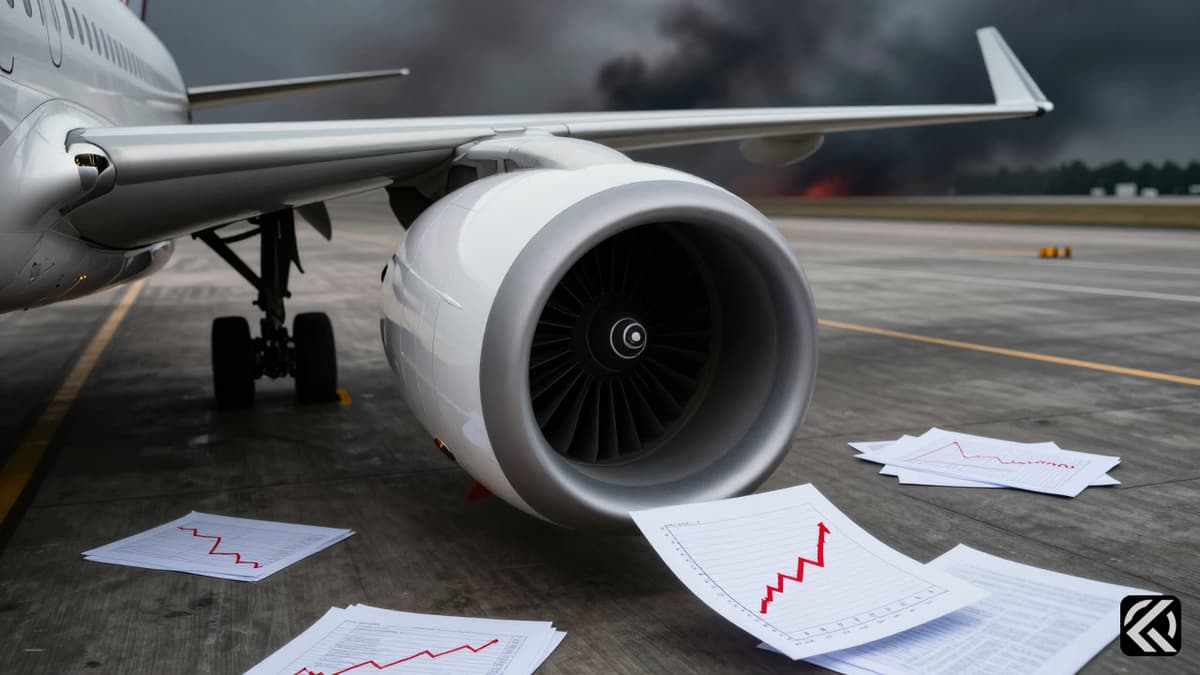
Spirit Airlines has officially shut down, becoming the first major U.S. carrier to fall victim to the economic shockwaves of the Iran war and surging oil costs.
Bankrupt discount carrier Spirit Airlines officially ceased operations on Saturday, marking the first major casualty of the Iran war within the aviation industry. The airline's collapse occurred after it failed to secure crucial creditor support for a U.S. government bailout plan, leaving the carrier unable to continue its business model. This event represents a significant disruption in the U.S. travel market, as Spirit had previously accounted for 5% of all U.S. flights and was instrumental in keeping fares lower in markets where it competed against major carriers.
The financial pressure on the airline intensified dramatically due to a doubling in jet fuel prices during the two-month-old conflict. Spirit's restructuring plan had assumed jet fuel costs of approximately $2.24 a gallon in 2026 and $2.14 in 2027. However, prices had climbed to around $4.51 a gallon by the end of April, completely upending the carrier's cost projections. This surge left the company unable to survive without fresh financing, leading to an "orderly wind-down of operations" as announced in a company statement.
President Donald Trump had proposed a $500 million financing package to help Spirit keep operating through bankruptcy. The White House had given Spirit and its creditors a final rescue proposal on Friday after talks hit an impasse. Sources indicated the administration proposed this financing in exchange for warrants equivalent to 90% of Spirit's equity. However, the proposal faced significant political headwinds. Trump stated, "If we can help them, we will, but we have to come first," and added, "If we could do it, we'd do it, but only if it's a good deal."
The bailout plan also encountered internal resistance within the Trump administration. The Wall Street Journal reported that there were disagreements inside the administration over whether and how to fund the rescue. Despite Trump's earlier assertion that his administration was looking to buy the embattled carrier at the "right price," opposition from some of his closest advisers and many Republicans in Congress ultimately hindered the effort.
Transportation Secretary Sean Duffy revealed that the government had attempted to facilitate a private sector rescue by approaching other airlines to purchase Spirit. However, Duffy told Reuters he found no takers for the acquisition. "What would someone buy?" Duffy asked, highlighting the lack of interest. "If no one else wants to buy them, why would we buy them?" This sentiment was echoed by a creditor close to the deal, who noted, "The Trump administration made an extraordinary effort to try and save Spirit, but you can’t breathe life into a corpse."
The market reaction to Spirit's collapse was immediate and stark. Spirit's volatile over-the-counter stock plunged 25% on Friday. In contrast, shares of rival Frontier Airlines rose 10%, while JetBlue Airways gained 4%, suggesting investors viewed the exit as a consolidation opportunity for competitors. The shutdown affects thousands of jobs and disrupts travel plans for many passengers. According to data from Cirium, Spirit had 4,119 domestic flights scheduled between May 1 and May 15, offering 809,638 seats.
The failure of Spirit highlights the vulnerability of weaker airlines to geopolitical shocks. This was not the first time Spirit faced financial hurdles; the carrier had reached a deal with lenders to emerge from its second bankruptcy by late spring or early summer. However, the war-triggered spike in oil prices derailed those plans, complicating its bankruptcy exit. Spirit had initially hoped to stabilize its finances, but the material increase in oil prices and other business pressures significantly impacted its financial outlook, making survival impossible without external intervention that never materialized.
The industry is now grappling with the aftermath of this collapse. Spirit helped keep fares lower in markets where it competed against major carriers, and its absence may lead to fare increases in those specific routes. The event serves as a stark warning to other airlines about the financial risks posed by geopolitical instability and commodity price volatility. The collapse of a carrier of Spirit's size is a rare event, with no U.S. carrier of similar magnitude having liquidated in two decades.
The shutdown of Spirit Airlines underscores the severe economic fragility exposed by the Iran war. With jet fuel prices having more than doubled from projected levels, the aviation sector faces a prolonged period of uncertainty. Airlines that do not secure robust hedging strategies or government support may face similar liquidity crises. The failure of the $500 million bailout suggests a political reluctance to intervene in market failures, potentially accelerating industry consolidation. As rival carriers absorb Spirit's market share, the competitive landscape will shift, possibly leading to reduced consumer choice and higher ticket prices across the U.S. travel network in the coming months.
May 1, 2026 23:50 UTC
Trump Signals US Troops Withdrawal Europe Amid Iran War Tensions
May 1, 2026 21:53 UTC
Iran Devastates 16 US Military Sites Across Middle East
May 1, 2026 21:14 UTC
Trump Imposes 25% Tariffs on EU Cars, Escalating Trade War
May 1, 2026 17:36 UTC
Trump Rejects Iran Proposal as Strait of Hormuz Crisis Worsens
May 2, 2026 09:30 UTC
Crew Abandoned Bargi Dam Cruise Before Sinking: 9 Dead in Madhya Pradesh Boat Capsize


