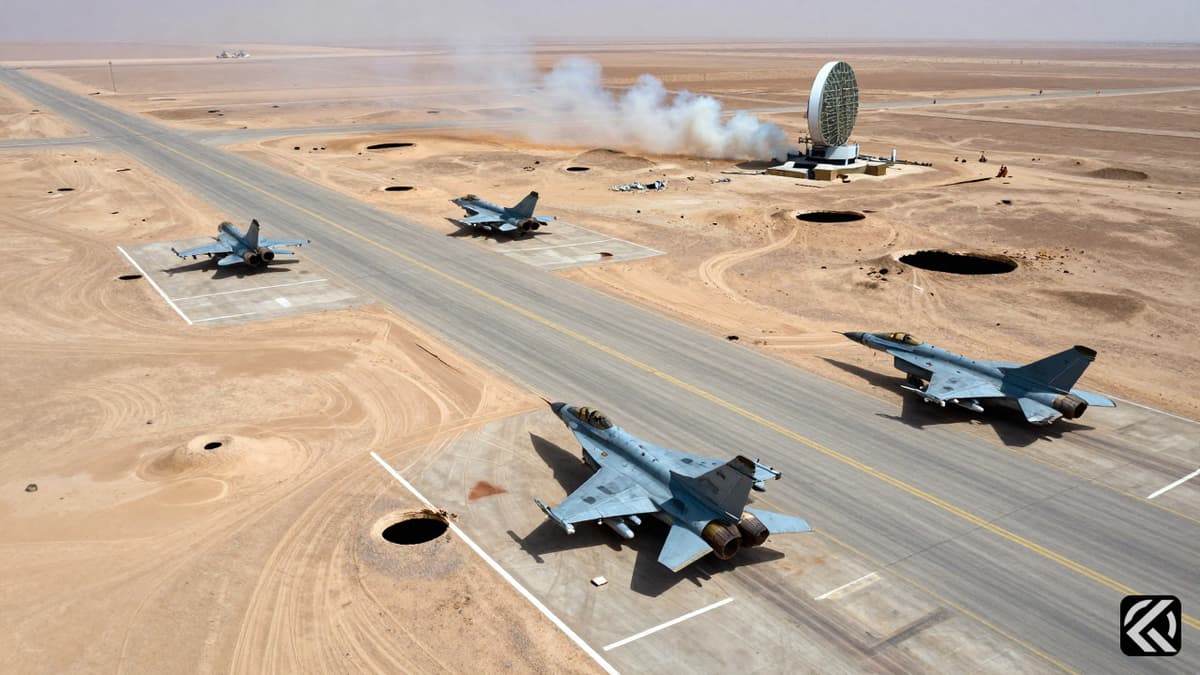
A startling new report details how Iran and its allies have severely damaged at least 16 US military installations across the Middle East, raising alarms about alliance stability.
In a startling assessment of the ongoing conflict, Iran and its allied forces have inflicted significant damage on at least 16 United States military installations across eight different countries in the Middle East. This widespread destruction, documented through satellite imagery and official interviews, underscores the severe strategic challenge posed by the hostilities that began on February 28.
The conflict ignited when Washington launched a series of joint military strikes with Tel Aviv against Tehran, escalating tensions to unprecedented levels. According to a comprehensive investigation by CNN, which cited its own extensive research, the Iranian forces have left numerous facilities severely degraded and partially unusable. These targeted sites constitute a significant share of the total US military positions in the region, marking a critical turning point in the geopolitical landscape.
“Never seen anything like this before,” one US source described the scale of the devastation, highlighting the severity of the losses. The specific nature of the damage reveals a calculated strategy. Satellite imagery reviewed in the investigation indicates that Iranian forces primarily targeted advanced radar installations, communications infrastructure, and aircraft. These systems are not only costly to replace but are described as both difficult and critical to maintain operational superiority.
A congressional aide familiar with the damage assessments noted the precision of these attacks. “It’s notable they really identified those facilities as the most cost-effective targets to hit,” the aide said. The aide further emphasized the strategic value of the lost assets, stating, “Our radar systems (are) our most expensive and our most limited resources in the region.” The destruction of these specific elements suggests a deliberate effort to degrade US command and control capabilities, rendering the Iran US Military Strikes particularly effective in their impact.
The financial toll of this conflict is staggering and continues to climb. The Pentagon’s comptroller, Jules “Jay” Hurst III, told lawmakers on Wednesday that the conflict with Iran has so far cost the US $25 billion. However, the true extent of the financial damage appears far greater than publicly acknowledged. A source familiar with the matter told CNN that internal estimates place the figure closer to $40 to 50 billion, suggesting a significant gap between official reporting and internal reality.
The impact extends beyond the immediate military and financial spheres to the diplomatic relationships within the region. US allies in the Gulf, who host many of these military facilities, have reportedly been heavily affected by the strikes. They have privately expressed profound concern over Washington’s handling of the conflict and the security of their own territories. One Saudi source told CNN, “The war showed us that the alliance with the US cannot be exclusive and it is not impregnable.” This sentiment reflects a growing anxiety among Gulf monarchies about their vulnerability despite hosting US bases.
The degradation of infrastructure has led to varied responses within the US government. According to a congressional aide, “There has been a spectrum of assessments.” This range spans from those who argue that “the whole facility is destroyed and needs to be shut down” to leaders who contend “these things are worth repairing due to the strategic benefit they give the US.” This divergence in assessment highlights the complexity of deciding which damaged sites are worth the immense cost and effort to rebuild amidst an active conflict.
While the immediate military damage is severe, the broader implications of the conflict are shaping new geopolitical strategies. The report also highlighted a significant development in the region's energy infrastructure, noting the ‘STEEL ROUTE STRIKE!’: Iran-China Rail Oil Plan Shakes U.S. Hormuz Blockade Strategy. This alternative logistical route suggests that Iran is not only focusing on military targets but also attempting to circumvent traditional US naval blockade strategies through land-based alliances. This move further complicates the US position in the region, as it faces both direct military challenges and economic workarounds via the Iran China Rail Oil Plan.
Furthermore, the conflict has provoked strong rhetorical responses. Iran has issued chilling warnings to Gulf monarchies hosting US bases, with reports indicating statements such as ‘Will Burn Arab Rulers’ Palaces’. This threat adds a layer of domestic instability to the already tense international situation, forcing Gulf rulers to reconsider their security partnerships and internal stability measures.
The combination of military degradation, financial strain, and diplomatic erosion presents a multifaceted crisis for the United States. The targeting of advanced radar and communications systems specifically undermines the US ability to project power effectively in the Middle East. If these systems remain damaged or difficult to replace, the US may find its strategic reach significantly curtailed for the foreseeable future.
The widespread damage to military infrastructure has fundamentally altered the perspective of key US partners in the Middle East. As Gulf states host the majority of the affected facilities, the physical vulnerability of these bases has translated into political hesitation. The expressed concern over Washington’s handling of the conflict indicates a potential shift in regional alignment. If the US cannot guarantee the impregnability of its bases, allies may seek more diversified security partnerships. This erosion of trust could lead to a long-term restructuring of defense agreements in the region, reducing US influence and increasing the leverage of other global powers like China. The conflict has demonstrated that the US alliance network is not as robust as previously assumed, potentially emboldening adversaries and destabilizing the regional balance of power for years to come.
May 1, 2026 21:53 UTC
Iran Devastates 16 US Military Sites Across Middle East
May 1, 2026 21:14 UTC
Trump Imposes 25% Tariffs on EU Cars, Escalating Trade War
May 1, 2026 17:36 UTC
Trump Rejects Iran Proposal as Strait of Hormuz Crisis Worsens
May 1, 2026 03:53 UTC
Hegseth Defends Iran War Actions Amid Stockpile and Legal Fears
May 1, 2026 23:50 UTC
Trump Signals US Troops Withdrawal Europe Amid Iran War Tensions


