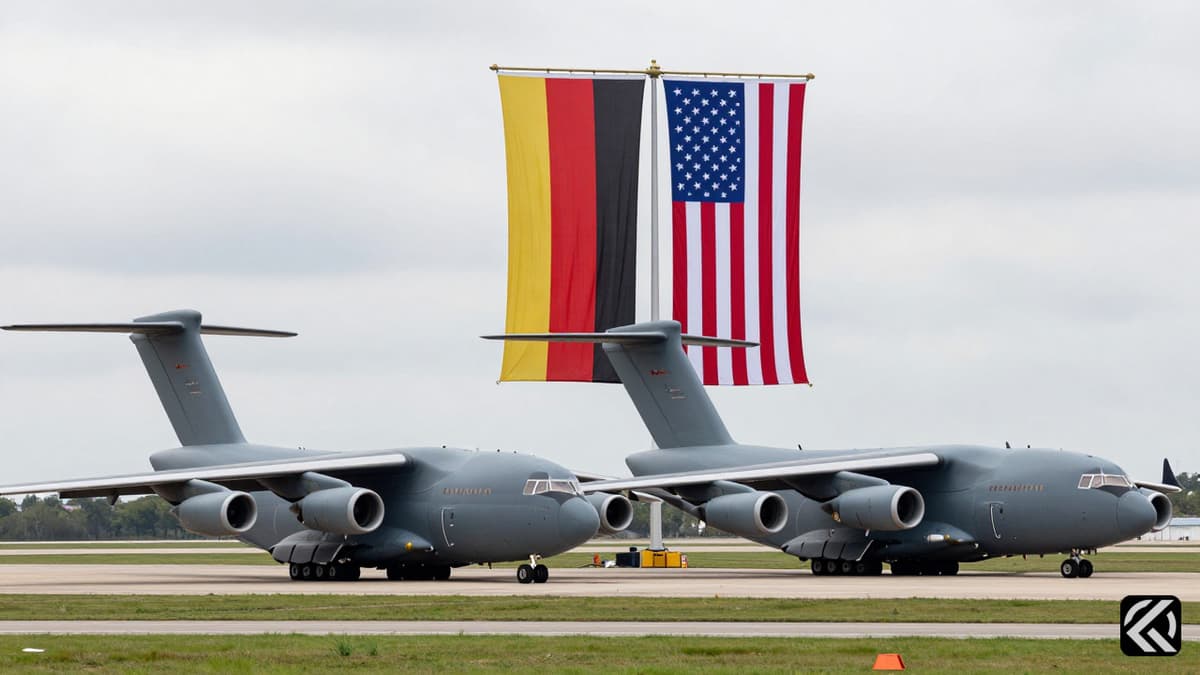
Germany’s defense minister predicts the imminent pullback of American forces, citing strategic shifts and diplomatic friction as primary drivers for the ongoing military reduction.
The German Defence Minister has declared the US troop withdrawal from Germany as a "foreseeable" development, while the North Atlantic Treaty Organization (Nato) is actively seeking detailed clarification from Washington regarding the strategic move. This announcement comes amidst heightened diplomatic tensions between Berlin and the White House, specifically following criticisms from President Donald Trump directed at German Chancellor Friedrich Merz.
The political friction between the two nations escalated rapidly after Chancellor Friedrich Merz made comments regarding ongoing negotiations with Iran. Speaking to university students, Merz stated that the Americans appeared to lack a coherent strategy, noting that Iranian negotiators were skilled at avoiding productive dialogue. He described the situation as humiliating for the entire nation, as US delegates traveled to Islamabad only to return without any tangible results. In response, President Trump took to his social media platform, Truth Social, accusing Merz of being unaware of the situation and suggesting that the German leader was indifferent to Iran acquiring nuclear capabilities. This verbal spat was quickly followed by the official announcement of military reductions.
Nato has responded to the developing situation by emphasizing the need for European allies to take greater responsibility for their own security. Nato spokeswoman Allison Hart stated that the alliance is working with the US to understand the specifics of their decision. In a public post on X, Hart noted that the US decision underscores the necessity for Europe to continue investing in defense capabilities. She pointed to recent progress, citing the alliance’s agreement to invest 5% of GDP at the Nato summit in The Hague the previous year. Despite these assurances, there is growing unease within the 32-member alliance. Polish Prime Minister Donald Tusk warned that the greatest threat to the transatlantic community is not external enemies, but the "disintegration of our alliance," urging all members to reverse this "disastrous trend."
The scale of the US military presence in Germany is substantial, currently numbering more than 36,000 active-duty troops, which remains the largest US deployment in Europe compared to approximately 12,000 in Italy and 10,000 in the UK. German Defence Minister Boris Pistorius emphasized that the presence of American soldiers remains in the mutual interest of both countries. However, he acknowledged that Europe must assume greater responsibility for its security. Pistorius highlighted that Germany is on the right track, pointing to significant increases in military spending under the Merz government. This marks a radical shift from previous years when Trump had accused Germany of being "delinquent" for failing to meet the 2% of GDP defense spending target.
Germany’s defense expenditure is projected to reach €105.8bn (£91bn) in 2027, with overall spending set to hit 3.1% of GDP when accounting for other defense funds, including continued aid to Ukraine in its conflict with Russian troops. This financial commitment reflects a strategic pivot away from the criticisms leveled by the previous administration. Meanwhile, within the US political sphere, two senior Republican lawmakers expressed deep concern over the decision. Senator Roger Wicker and Representative Mike Rogers, chairs of the Senate and House armed services committees respectively, stated that maintaining a strong deterrent in Europe serves US interests better than withdrawing forces entirely.
President Trump has also hinted at potential withdrawals from other European nations, suggesting the removal of troops from Italy and Spain. This move aligns with a broader strategic shift previously observed under Trump’s plan to reorient US military commitment from Europe toward the Indo-Pacific region. Last year, Washington had already decided to reduce its troop presence in Romania as part of this realignment. The current reduction involves the withdrawal of a US brigade from Germany, a move that has sparked debate among allies and US politicians alike regarding the long-term stability of the transatlantic partnership.
As NATO seeks clarity on the specifics of the American military retreat, Germany is accelerating its domestic defense buildup to fill the perceived security gap. The country’s projected spending increase to 3.1% of GDP signals a definitive break from past fiscal constraints, aiming to bolster European security independently of US guarantees. However, the simultaneous rhetoric from President Trump and the strategic pullback create an uncertain future for transatlantic relations. If the trend of reduced US engagement in Europe continues, the alliance may face increased fragmentation, forcing member states to either accelerate their own military capabilities or seek new security architectures to counter external threats.
May 2, 2026 17:04 UTC
Germany Prepares for Trump-Linked US Troop Withdrawal
Join 50,000+ readers getting the global briefing every morning.
No spam. Unsubscribe anytime.
May 2, 2026 17:38 UTC
Ten Dead in Bargi Dam Tragedy as Family Shares Final Call
May 2, 2026 15:16 UTC
Mamata Banerjee Denounces Exit Poll Manipulation in West Bengal
May 2, 2026 13:20 UTC
India Launches Cell Broadcast Disaster Alert System Trial
May 2, 2026 11:39 UTC
Bargi Dam Tragedy: Miracle Child Turns 1


