Section
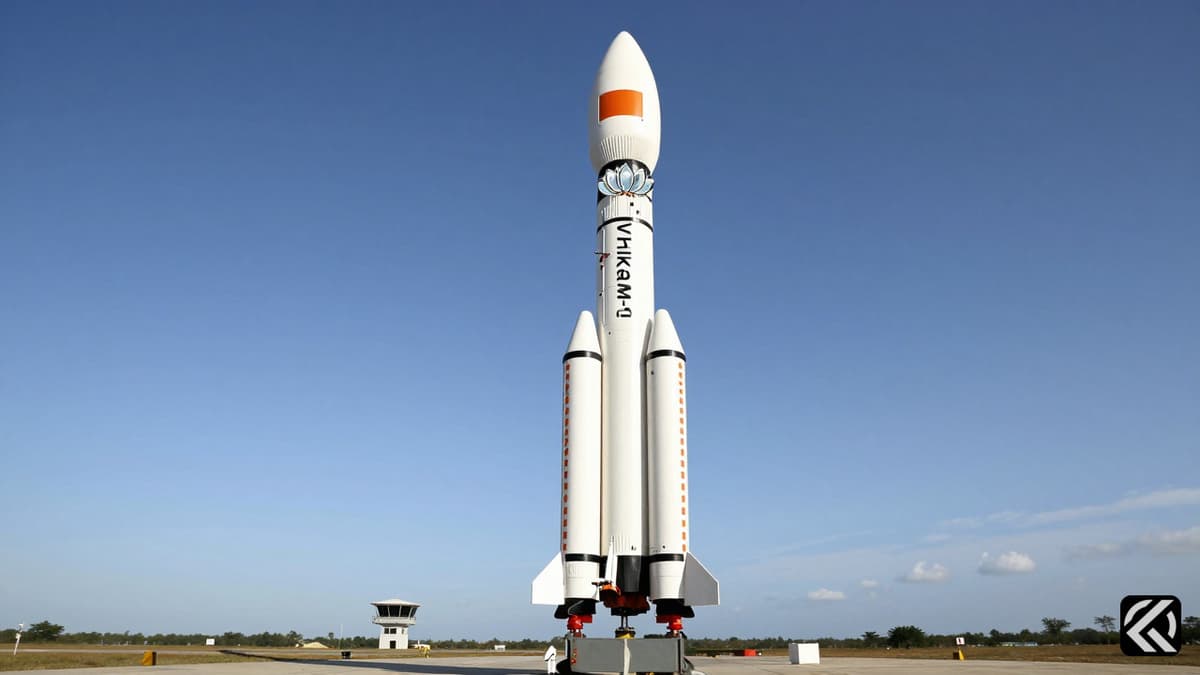
India’s private space sector reaches a historic milestone as Skyroot launches Vikram-1, introducing a flexible 'cab service to space' for global satellite operators.
The Indian private aerospace sector achieved a monumental breakthrough on Saturday with the successful orbital launch of Vikram-1, marking a new era for national space exploration. Skyroot Aerospace became the first Indian private entity to place a rocket into orbit, positioning India as only the third nation globally, alongside the United States and China, to host a private company capable of such a feat. This achievement underscores the rapid maturation of India’s commercial space infrastructure and signals a significant shift in the country’s approach to orbital access.
The launch of Vikram-1, named in honor of Vikram Sarabhai, widely recognized as the father of India’s space programme, serves as more than just a technical victory. It is the foundational step toward Skyroot’s ambitious vision of providing a "cab service to space." This concept aims to revolutionize how satellite operators access the cosmos by offering tailored launch opportunities rather than forcing clients to wait for fixed schedules on larger rockets. The successful flight validates Skyroot’s ability to deliver precision orbital deployment services to a global market.
Skyroot co-founder and CEO Pawan Kumar Chandana articulated the necessity for such innovation before the launch. He highlighted that access to space has historically been a "major bottleneck," leaving satellite operators waiting for months or even years for available launch windows. By introducing a booking system similar to a ride-hailing app, Skyroot intends to eliminate these delays. "If you want to just go to a friend's house, you don't need a train, you book a cab, an Uber," Chandana explained. This cab service to space allows companies to hire rockets for unique orbital locations, providing flexibility for placing satellites or visiting space stations. The small-sized rocket has a payload capacity of up to 350kg, designed for efficiency and responsiveness in the commercial launch market.
Beyond the technical specifications, the payload of this historic mission carried deep symbolic weight for the Indian nation. The rocket transported two unique items that generated significant buzz domestically. One was a lotus crafted from lab-grown diamonds, developed by Cosmos Diamonds and named "Cosmic Bloom." This artistic tribute celebrates India’s creativity and references the nursery rhyme "Twinkle, Twinkle." The second payload was a tiny gold rocket featuring micro-sculptures of three of India’s most renowned scientists. Chandana stated that these items represent Skyroot’s gratitude to the visionaries who shaped the nation’s space program. "We exist because of the Indian space programme, we stand on the shoulders of our early visionaries and this is our way of paying tribute to three great scientists," he noted.
The journey to this milestone began in 2018 when Chandana and Naga Bharath Daka, former colleagues at the Indian Space Research Organisation (Isro), resigned from their government positions. They co-founded the space-tech startup with the initial goal of building rocket components for satellites. The strategic landscape for Indian private enterprise shifted dramatically in 2020 when the government opened the space sector to private firms. This regulatory change allowed private entities to build rockets and satellites and utilize Isro’s launch facilities. The government’s objective is clear: to increase India’s share in the global business market from the current 2% to 10% by 2030.
Since the sector opened, the Indian government reports that more than 400 space startups have been established across the country. Amidst this growing ecosystem, Skyroot has emerged as the most successful venture and the only unicorn in the sector. The company has demonstrated robust industrial capacity, with Chandana stating that their factory in Hyderabad can build one rocket every month. This scalability is crucial for meeting the growing demand from satellite operators who require reliable and frequent launch options.
The successful test flight on Saturday is just the first of two planned test launches for the year. Skyroot intends to use the remaining test flight to further validate the system before initiating commercial operations next year. The focus will remain on refining the reliability of the Vikram-1 rocket and expanding its utility for commercial clients. The company’s ability to produce rockets at a monthly rate positions it to compete effectively in the increasingly crowded global launch market.
The significance of Skyroot’s achievement extends beyond corporate success. It validates the Indian government’s strategy of fostering private participation in space activities. By allowing private firms to leverage public infrastructure, India is cultivating a robust domestic industry that can compete internationally. The "cab service" model offers a compelling value proposition for small to medium-sized satellite operators who cannot afford the cost or delay of traditional large-scale launches. This democratization of space access could lead to a surge in satellite deployments for Earth observation, communications, and scientific research.
The successful Vikram-1 launch establishes Skyroot as the pioneer of India’s private orbital industry, directly addressing historical bottlenecks in satellite deployment. As the sector continues to grow toward the 2030 target, Skyroot’s scalable production model and flexible service offerings will likely drive down costs and increase launch frequency. This shift will not only solidify India’s position in the global space economy but also empower a new generation of Indian startups to utilize affordable access to orbit for commercial and scientific innovation.
Oct 3, 2026 04:08 UTC
FlyDubai Co-Pilot Banned in Oman Over Extremism Concerns
Oct 3, 2026 00:50 UTC
Israel-Mumbai Campaign Honors Captain Smit After Flydubai Incident
Oct 2, 2026 18:13 UTC
Captain Smit Machchhar’s Courage Saves Flydubai Flight FZ1073 From Disaster
Oct 2, 2026 16:45 UTC
Captain Smit Machchhar Saves Plane Mid-Fall
Sep 23, 2026 04:49 UTC
Macron Warns Against Jungle Law, Pushes Open-Source AI at UN