Section
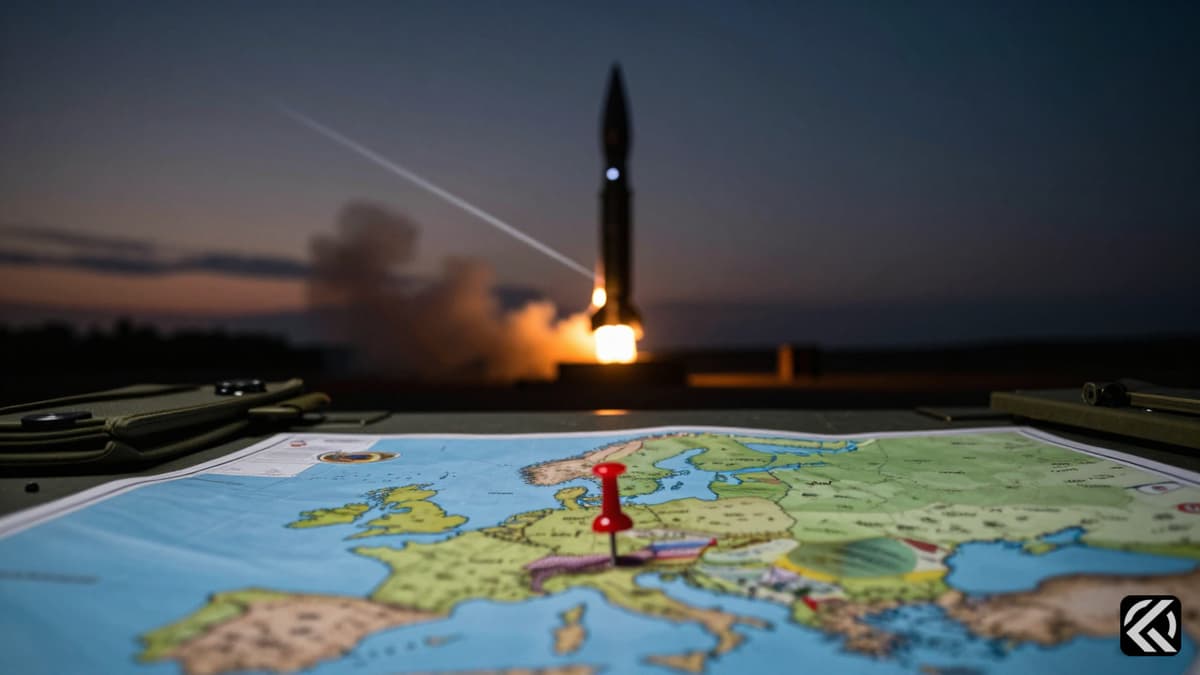
Ukraine claims a new 'Pelican' weapon struck Russian infrastructure. Military analysts debate whether it is a drone or ballistic missile amid escalating conflicts.
Ukrainian President Volodymyr Zelenskyy confirmed that Sunday’s large-scale strike on Russia included the use of a "Pelican" for the first time. This deployment marks a significant escalation in Kyiv’s long-range attack capabilities against Moscow’s region.
The attack, which coincided with the final day of voting in Russia’s parliamentary elections, resulted in at least three fatalities. Moscow’s Mayor Sergei Sobyanin reported that more than 1,600 drones were intercepted, with 450 specifically targeting the capital. Despite the high interception rate, Zelenskyy stated the strike had a "very significant impact" on key facilities.
In a post on X, the Ukrainian leader detailed the arsenal employed, listing weapons such as the FP-1, RZ-100, MICH-2000, Palianytsia, Vendetta, Liutyi, Bars, Flamingo, Sichen, and the newly introduced Pelican. He emphasized that hits on Russia’s oil industry and logistics facilities represent billions of dollars in damage to the "war machine."
The identity of the Pelican has sparked intense interest among military analysts, who are divided on whether it is a tactical ballistic missile or an aircraft-type drone. This ambiguity stems from conflicting reports within Ukrainian media and defense circles.
On Sunday, The New Voice of Ukraine reported that Fire Point, the Ukrainian firm behind the FP-5 Flamingo cruise missile, had applied to register the Pelican trademark earlier this year. However, RBC-Ukraine cited unnamed sources claiming the Pelican was an aircraft-type drone. Al Jazeera could not independently verify these conflicting Ukrainian media reports.
Conversely, evidence suggests a ballistic nature. Iryna Terekh, CEO of Fire Point, spoke at the 34th International Defence Industry Exhibition in Poland last week about the potential deployment of the FP-7 tactical ballistic missile. She described the FP-7 as ground-launched, capable of striking targets 200km away with a 150kg warhead, and traveling at 1,500 meters per second. Fire Point founder Denys Shtilerman previously noted the system is cheaper than the US-made ATACMS missiles.
While there is no official confirmation that the FP-7 is the Pelican, Ukrainian media outlets like The Kyiv Post have linked the two. President Zelenskyy had previously indicated that Ukraine expected to use its first domestically produced ballistic missile as early as autumn, further fueling speculation.
The introduction of complex weapons like the Pelican highlights the rapid expansion of the Ukraine defense industry. In February, Ukraine’s defence ministry announced "unprecedented growth," with production capacity increasing 50-fold to a value of $50bn. Consequently, domestic manufacturers now meet over half of the Defence Forces’ needs for weapons and military equipment.
This industrial scaling is evident in other domains as well. On Saturday, Zelenskyy announced that the military counterintelligence unit at the Security Service of Ukraine had successfully deployed a new interceptor drone against Iranian-made Shahed drones. These interceptors proved crucial in February, with former Commander-in-Chief Oleksandr Syrskyi stating that more than 70% of Shahed-type attack drones were destroyed using them.
The success of these domestic interceptors has even attracted interest from Gulf states, which are also targets of Iranian drones and missiles. Zelenskyy thanked developers and manufacturers for their daily work in scaling up necessary weaponry, noting that they are "step by step" moving toward greater protection for Ukraine.
The nature of the Pelican, whether it is a Pelican missile or a sophisticated drone, matters significantly for the strategic balance of the conflict. If it is indeed the FP-7 ballistic missile, its range and speed offer Ukraine a potent tool for deep strikes. If it is a drone, it indicates advanced stealth or electronic warfare capabilities that can penetrate Russian air defenses more effectively.
Both Russia and Ukraine have intensified attacks on each other’s infrastructure, targeting oil facilities and logistics hubs. Ukraine has repeatedly struck warehouses belonging to Russia’s Wildberries e-commerce giant since July, aiming to hurt the Russian economy and disrupt supply chains.
However, this strategy faces external pressure. On Monday, the Financial Times reported that US President Donald Trump spoke to Zelenskyy on Sunday, urging him to stop attacking Russian refineries. Trump cited concerns that these strikes were worsening the global shortage of diesel and causing fuel prices to increase globally. This diplomatic intervention adds a layer of complexity to Ukraine’s military strategy, balancing the need to degrade Russian logistics against the risk of exacerbating global economic instability.
As Ukraine continues to leverage its growing domestic industrial base and diverse arsenal, the conflict remains a critical test of Western support and global supply chain resilience. The coming weeks will likely see further debates over the efficacy and classification of Ukraine’s new weapons systems.
The ambiguity surrounding the Pelican weapon underscores the rapid evolution of Ukraine’s military technology. As domestic production scales and new systems like the FP-7 enter the fray, Kyiv gains more options for asymmetric warfare. However, international pressure regarding global fuel markets may constrain future strikes on energy infrastructure, forcing a shift toward other logistical targets.
Oct 3, 2026 04:08 UTC
FlyDubai Co-Pilot Banned in Oman Over Extremism Concerns
Oct 3, 2026 00:50 UTC
Israel-Mumbai Campaign Honors Captain Smit After Flydubai Incident
Oct 2, 2026 18:13 UTC
Captain Smit Machchhar’s Courage Saves Flydubai Flight FZ1073 From Disaster
Oct 2, 2026 16:45 UTC
Captain Smit Machchhar Saves Plane Mid-Fall
Oct 3, 2026 10:04 UTC
UAE Official: Flydubai Co-Pilot’s Attack Was Terror Act