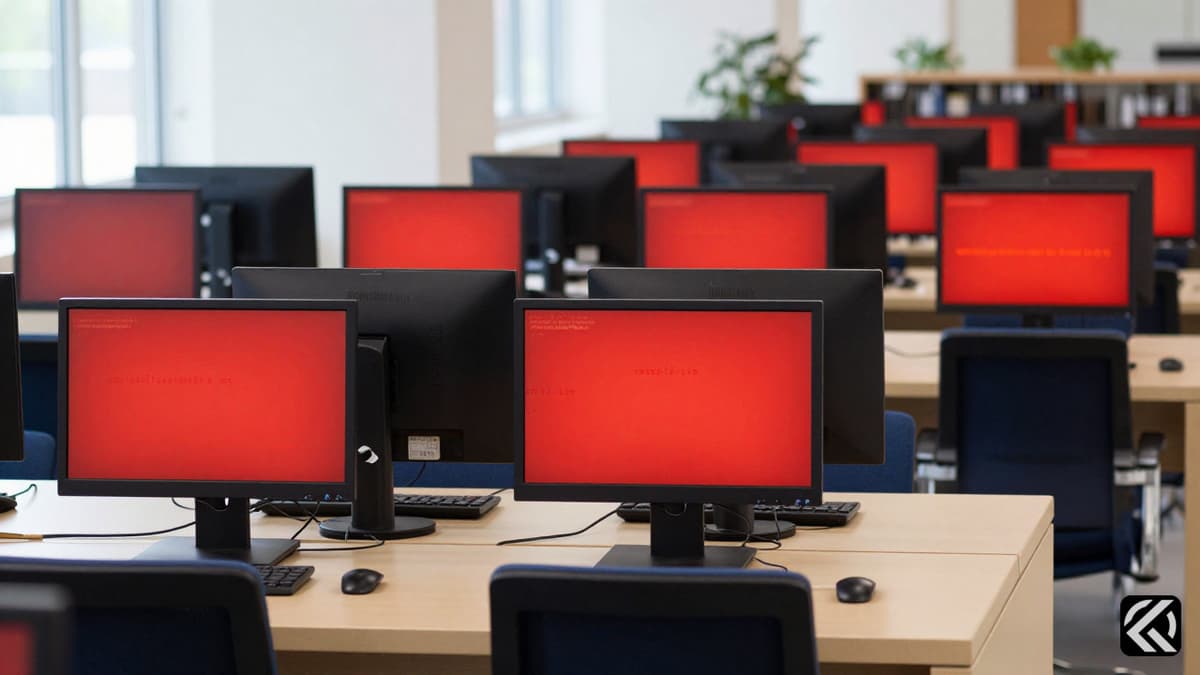
A devastating cyber attack by ShinyHunters has plunged Canvas into chaos, severely impacting academic operations across institutions in the US, Canada, and Australia.
The US, Canada, and Australia experienced widespread chaos as a cyber attack disrupted the Canvas academic software, halting coursework and examinations during a critical end-of-year period.
The hacking group ShinyHunters reportedly claimed responsibility for the incident, which rendered the Canvas platform inaccessible to thousands of educational institutions. By late Thursday, Instructure, the parent company of Canvas, announced that the system was "available for most users." However, reports of continued outages persisted into Friday, leaving many students and faculty members in the dark regarding their academic responsibilities.
The University of Sydney issued urgent instructions to students on Friday, stating that Canvas was "unavailable" and advising them not to attempt logging in. The institution highlighted the scale of the issue, noting it is one of approximately 9,000 global institutions impacted. "We are still waiting for advice from Instructure," the university wrote in an official announcement, acknowledging the profound disruption to students' coursework and examinations at a vital time in the semester.
Penn State University echoed the severity of the situation in a Thursday message to its community, declaring that "no one has access" to the platform. The university warned that a resolution was unlikely within the next 24 hours and subsequently cancelled exams scheduled for Thursday and Friday. Similarly, the University of British Columbia in Vancouver informed students of a cyber breach affecting its parent company, Instructure, and advised immediate logout to mitigate potential risks.
The impact was felt acutely across North America. The University of Toronto confirmed it was among the affected institutions, while the University of Chicago temporarily disabled its Canvas page after reports of targeting. At the University of California Los Angeles, students struggled to submit assignments online, illustrating the immediate friction caused by the outage.
The Chicago Maroon, the student-led newspaper, posted a screenshot of a message from ShinyHunters that appeared to seek a ransom. The message encouraged the university to contact the group privately to negotiate a settlement and avoid the "release of their data." This suggests a targeted extortion strategy rather than simple disruption.
Luke Connolly, a threat analyst at the cyber security firm Emisoft, provided additional context to the Associated Press. He noted that targeted threats from the group began on Sunday, with specific deadlines set for Thursday and May 12. This timeline indicates a prolonged period of pressure leading up to the widespread outage.
The timing of the attack coincides with heightened political concern regarding digital security. On the same day as the Thursday attacks, US Senate Democrat Chuck Schumer sent a letter to the Trump administration. The letter urged the administration to implement stronger defenses against cyber risks, specifically in the context of rapidly developing artificial intelligence technologies. This juxtaposition highlights the growing intersection of educational infrastructure vulnerability and national security policy.
The restoration efforts led by Instructure have been uneven, creating a fragmented experience for the global academic community. While the company stated that Canvas was available for most users by late Thursday, the reality on the ground told a different story. The University of Sydney’s insistence that they were still waiting for official advice underscores the lack of clear communication from the platform owner to its largest clients.
For students in the midst of final assessments, the ambiguity is not just an inconvenience; it is an academic crisis. The cancellation of exams at Penn State and the disabling of pages at the University of Chicago are direct responses to the inability to verify student identity or submit work securely. The ShinyHunters group’s use of ransom notes, as reported by the Chicago Maroon, adds a layer of criminal intent to the technical failure. The demand to "negotiate a settlement" implies that the breach may have already compromised data, raising serious privacy concerns for millions of students and staff.
The involvement of approximately 9,000 institutions suggests a massive scale of operations for the hackers. The geographic spread across the US, Canada, and Australia indicates that the group is targeting Western educational systems specifically, possibly due to the high value of the data held within these academic records. The fact that the University of British Columbia had to advise immediate logouts suggests that active exploitation of user accounts may still be occurring, even as the main platform is being partially restored.
The response from political leaders like Chuck Schumer indicates that this event is being viewed not just as a technical glitch, but as a significant national security issue. The reference to the "age of rapidly developing AI" in Schumer's letter to the Trump administration suggests that lawmakers are beginning to recognize how automated tools could facilitate large-scale cyber attacks on critical infrastructure, including education.
The ShinyHunters breach serves as a stark warning for educational institutions worldwide. As universities increasingly rely on centralized platforms like Canvas, they become single points of failure. The disruption of exams and assignments during the high-stakes end-of-year season will likely have lasting academic consequences for thousands of students, potentially affecting their graduation timelines and mental health.
The ransom demands and the threat of data release highlight the urgent need for robust cybersecurity measures. Institutions will likely need to reassess their data protection strategies and incident response protocols. The political attention garnered by this event may lead to stricter regulations or increased funding for educational cybersecurity. As AI tools become more accessible to threat actors, the frequency and sophistication of such attacks are expected to rise. Educational leaders must prioritize digital resilience to prevent future disruptions that could compromise the integrity of academic assessments and the privacy of student data. The coming months will be critical in determining how the sector adapts to this new era of digital vulnerability.
May 8, 2026 19:28 UTC
Iran Transforms Destroyed B1 Bridge Into Symbol of Resistance
Join 50,000+ readers getting the global briefing every morning.
No spam. Unsubscribe anytime.
May 9, 2026 01:12 UTC
Suvendu Adhikari to Assume Office as Bengal's 9th Chief Minister
May 8, 2026 21:27 UTC
Trump Orders Pentagon to Release First UFO Files
May 8, 2026 21:20 UTC
Trump Issues Veiled Nuclear Threat Amid US-Iran Tensions
May 8, 2026 19:28 UTC
Iran Transforms Destroyed B1 Bridge Into Symbol of Resistance


