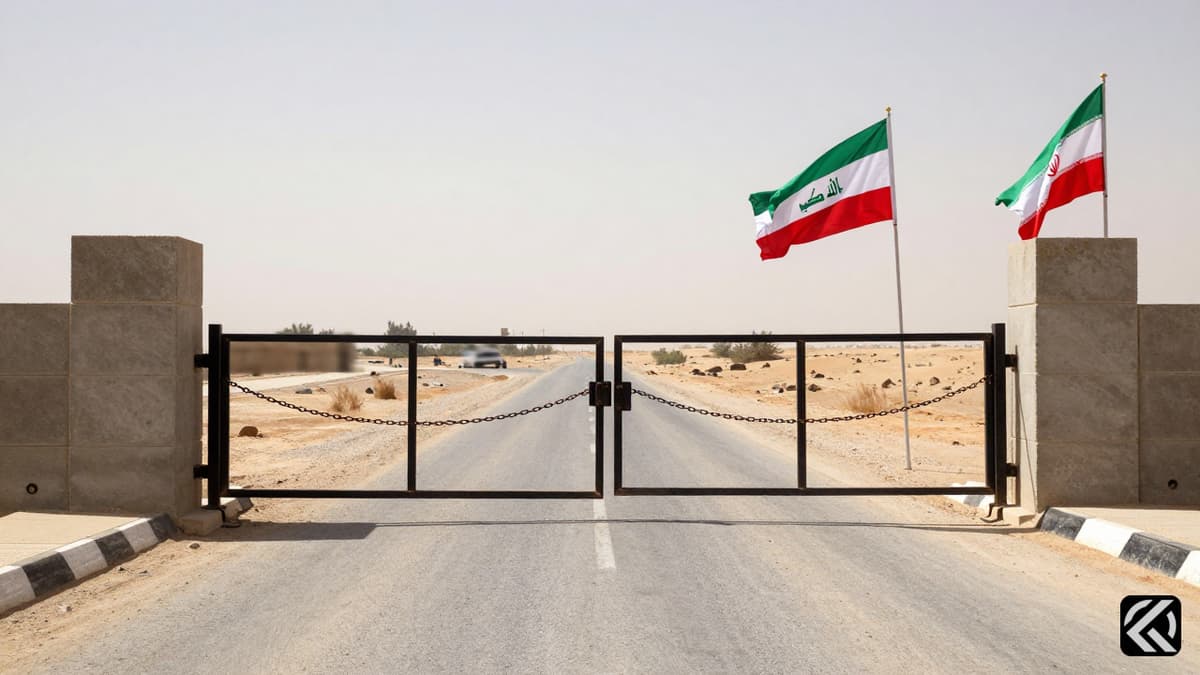
The Shalamcheh crossing has closed following a deadly airstrike on Iran's nuclear facility that killed an Iraqi citizen, intensifying tensions between the nations.
Security sources confirmed that Iraq closed the Shalamcheh border crossing with Iran on Saturday, April 4, 2026, following a deadly incident involving an airstrike on the Iranian side of the border. The decision was made after an attack resulted in the death of an Iraqi citizen and left at least five others seriously wounded in a passenger reception area. This closure marks a significant escalation in the ongoing hostilities, directly impacting the physical boundary between the two nations.
The strike, which occurred earlier on Saturday, targeted the Iranian side of the border and specifically hit a passenger reception area. The violence has deepened the Iraq-Iran border conflict, prompting immediate defensive measures from Baghdad. While security sources provided the details regarding the Iraqi casualties, the attack also drew international attention due to its proximity to critical energy and diplomatic zones. The incident serves as a grim reminder of the volatile nature of the region as both sides engage in aggressive aerial operations.
Compounding the tension at the border is a series of high-profile aerial engagements reported on the same day. Iran's atomic agency announced that an airstrike had hit the area near its Bushehr nuclear facility. The attack killed a security guard and damaged a support building, marking the fourth time this strategic facility has been targeted during the current war. The facility's repeated targeting highlights the intensity of the aerial campaign and the specific focus on nuclear infrastructure.
In the midst of these ground and air clashes, a dramatic rescue operation unfolded in the skies over Iran. Iranian and American forces raced against time on Saturday to recover a crew member from the first U.S. fighter jet to go down inside Iran since the war began. Tehran officially claimed to have shot down an F-15 warplane, a claim supported by reports of the aircraft's crash site.
Conversely, US media reported that United States special forces successfully rescued one of the two crew members of the downed aircraft. Despite the rescue, the situation remains critical as the second crew member is still listed as missing. The engagement involved a F-15 shootdown, representing a significant tactical blow for the US military in this specific theater of war. The rescue of one pilot demonstrates the operational reach of US special forces deep into contested territory, yet the disappearance of the second crew member leaves a lingering uncertainty.
The aerial conflict did not stop with the F-15 incident. Iran's military also stated that it downed a U.S. A-10 ground attack aircraft in the Gulf. US media confirmed the crash and noted that the pilot of the A-10 was rescued, adding another layer to the day's chaotic events. These simultaneous claims and confirmations of downed aircraft underscore the high stakes of the air war and the proximity of both nations' assets to one another.
Diplomatic efforts appeared to stall as Tehran rejected a U.S. proposal for a 48-hour ceasefire. An unnamed source told Iran's semi-official Fars news agency on Friday, April 3, 2026, that the Iranian leadership declined the offer. The proposal had been communicated on Wednesday through an unnamed third country. There was no immediate comment or confirmation from the U.S. regarding the rejection, leaving the ceasefire initiative in limbo.
The targeting of the Bushehr nuclear facility further complicates the narrative, as it is the fourth time the site has been struck. The facility is a critical component of Iran's nuclear program, and attacks against it raise the specter of further regional instability. The Bushehr nuclear facility has become a focal point of the conflict, with each strike potentially altering the strategic balance in the region. The loss of a security guard and damage to support buildings indicates that the facility is under direct and sustained pressure.
As the dust settles on a day marked by fatalities, rescues, and diplomatic refusals, the status of the Iraq-Iran border conflict remains fluid. The closure of the Shalamcheh crossing is a tangible sign of the breakdown in cross-border movement and security cooperation. With the status of the missing U.S. crew member unknown and the nuclear facility under continued threat, the situation remains precarious.
The closure of the Shalamcheh crossing, driven by the killing of an Iraqi citizen, signals a sharp deterioration in relations that could persist beyond the immediate cessation of hostilities. If the pattern of targeting strategic sites like the Bushehr nuclear facility continues, the conflict may evolve from isolated incidents to a prolonged struggle for regional dominance. The rejection of the ceasefire proposal suggests a lack of immediate diplomatic resolution, implying that future days may see continued aerial engagements and potential for further escalation in cross-border security measures. The race for recovery of missing personnel and the repeated strikes on nuclear infrastructure indicate that the path to de-escalation remains distant, with both sides prepared to sustain high-intensity operations.
Jun 8, 2026 02:17 UTC
Magnitude 7.8 Quake Shakes Philippines, Urging Immediate Evacuations
Jun 8, 2026 00:51 UTC
Trump Claims Iran Nuclear Deal Imminent Despite Diplomatic Fractures
Jun 8, 2026 00:47 UTC
Iran Fires Missiles at Israel After Beirut Strike
Jun 7, 2026 22:00 UTC
US, Iran Peace Hops Fade 100 Days Into War
Jun 8, 2026 04:15 UTC
Trump Urges Netanyahu to Halt Iran Strike for Peace


