Section
Seven people lost their lives in a targeted attack linked to a family conflict in Iowa. The suspect died when police arrived at the scene.
At least seven people were reportedly killed in a shooting spree across multiple locations in an Iowa city on Monday in an apparent domestic dispute, police said. The suspected gunman died from a self-inflicted gunshot wound when officers confronted him, ABC reported.
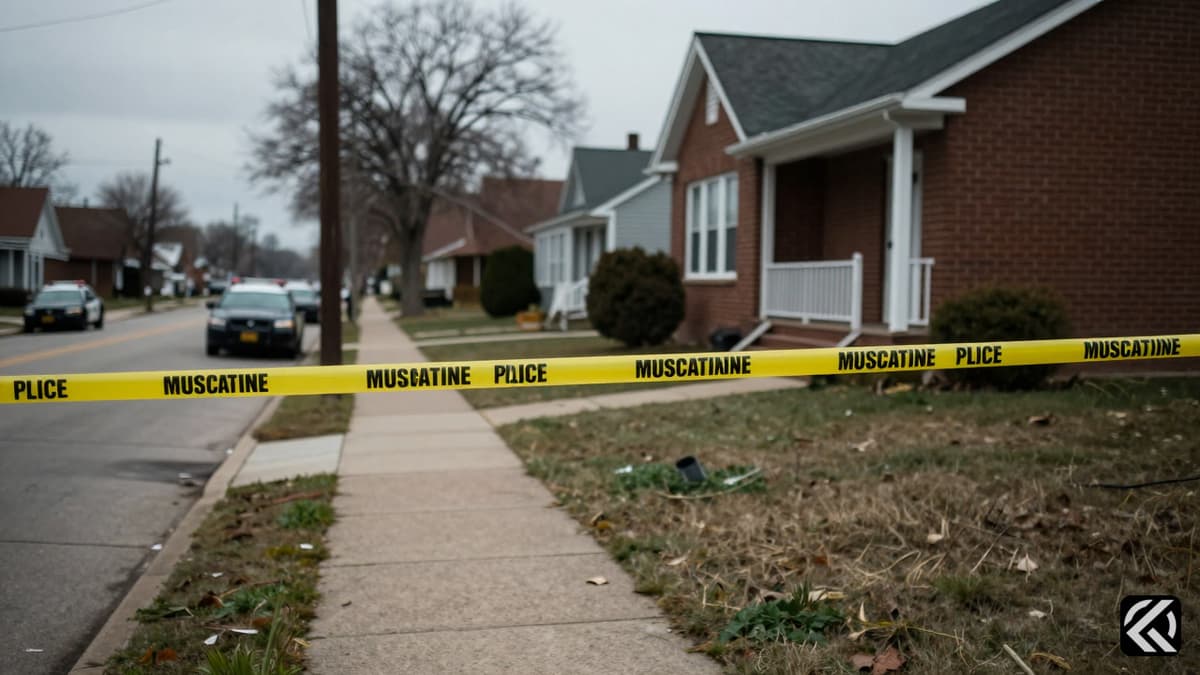
The "series of homicides" occurred at two residences and a business in Muscatine, according to Muscatine police chief Anthony Kies. Four victims were found dead in one home after police received a call around 12:12 pm local time. The suspect, identified as Ryan Willis McFarland, 52, of Muscatine, had left the home before officers arrived, police said. Officers located McFarland nearby on a trail along the Mississippi River. "While talking to Ryan Willis McFarland, he took his own life," Kies said. "Officers and EMS personnel rendered aid. However, he was pronounced deceased at the scene."
During the investigation, detectives learned there were possibly additional victims and subsequently located two men dead from apparent gunshot wounds, one at another home and one at a nearby business. "Preliminary findings indicate the shootings stemmed from a domestic-related dispute," the Muscatine police department said in a press release. "All victims are believed to be family members of the deceased suspect."
Kies described the incident as an "act of evil" and said McFarland had a criminal record, though he did not elaborate. There is no active threat to the community, he added. Police have not released the names or ages of the victims. The homicides remain under investigation.
The details emerging from the Muscatine shooting highlight the tragic and sudden nature of violence rooted in private conflicts. The sequence of events began with a domestic-related dispute that escalated into a lethal spree across multiple sites. The initial call to police at 12:12 pm local time revealed four bodies in one residence. This discovery prompted a broader search that uncovered more victims at different locations, including another home and a nearby business. The scope of the tragedy expanded rapidly, transforming a private family matter into a community-wide catastrophe.

The suspect, Ryan Willis McFarland, played a central role in the unfolding crisis. After leaving the first crime scene, he was located by officers on a trail along the Mississippi River. The confrontation that ensued ended with his death by suicide. This event marked the end of the immediate violence but left a profound impact on the community and the families involved. The confirmation that all victims are believed to be family members of the deceased suspect underscores the intimate and devastating nature of the Iowa domestic dispute that triggered the events.
Police Chief Anthony Kies provided a somber assessment of the incident, labeling it an "act of evil." He noted that McFarland had a criminal record, although specific details were not provided at this time. The lack of elaboration on the criminal history suggests that the focus remains on the immediate resolution of the active threat rather than a deep dive into the suspect's past. However, the existence of a criminal record may inform future investigations into motive and potential prior threats.
The community response has been swift and controlled. With the suspect dead and the threat neutralized, officials have assured the public that there is no active threat to the community. This assurance is crucial in preventing panic and allowing for a systematic investigation. The Muscatine police department has issued a press release detailing the preliminary findings, emphasizing the domestic origin of the violence. This transparency helps the public understand the context, even if it offers little comfort to the grieving families.
The identification of the victims remains a sensitive and critical next step. Police have not yet released the names or ages of the seven individuals who lost their lives. This delay is standard procedure in such tragedies, as it allows for DNA testing and notification of next of kin. The release of this information will likely occur as the investigation progresses and ensures that the families are supported through the official channels.
The geographic context of the incident adds another layer to the narrative. The events took place in Muscatine, a city known for its scenic location along the Mississippi River. The trail where McFarland was found is a public space, highlighting how quickly private violence can spill into public view. The locations involved-two residences and a business-suggest a pattern of targeting specific individuals rather than random violence. This specificity is often seen in domestic disputes that escalate beyond the immediate household.
The role of law enforcement in this crisis was pivotal. Officers responded to the initial call and conducted a thorough search that led to the identification of multiple victims. Their quick action in locating McFarland and the subsequent confrontation ended the spree. However, the tragedy underscores the limitations of police intervention in deeply rooted domestic conflicts. Despite the rapid response, the violence had already claimed seven lives, illustrating the catastrophic potential of unresolved family disputes.
The community is now left to grapple with the aftermath of this event. The loss of seven individuals, likely all connected by blood, is a profound blow to the social fabric of Muscatine. The "act of evil" described by Chief Kies will leave a lasting mark on the town. Residents may feel a renewed sense of vulnerability, even though the immediate threat has passed. The support systems in place, including mental health services and family assistance programs, will be tested in the coming weeks and months.
The investigation into the Muscatine shooting will likely focus on the timeline of events and the precise motives behind each shot. While the domestic origin is clear, the specific triggers and sequence of decisions made by the suspect will be scrutinized. This analysis is crucial for understanding how such a tragedy could occur and what interventions might prevent similar incidents in the future. The criminal record of McFarland may provide clues, but the full picture requires a comprehensive review of his interactions with the victims prior to the shooting.
The media coverage of this event, including reports from outlets like ABC, has brought attention to the broader issue of domestic violence in Iowa. The Iowa domestic dispute that led to these deaths is a stark reminder of the dangers lurking within private relationships. The national conversation around gun violence and domestic abuse may be reignited by this tragic event, prompting calls for stronger legal protections and better support systems for at-risk families.
The resolution of this crisis does not mean the end of the story. The investigation is ongoing, and the community is still in shock. The families of the victims are navigating immense grief, while the town of Muscatine works to heal from the trauma. The identification of the Ryan Willis McFarland incident as a domestic dispute provides a framework for understanding the tragedy, but the human cost remains the most pressing concern.
The Muscatine shooting serves as a grim case study in the escalation of domestic violence. It highlights the importance of early intervention and the need for robust community resources to support families in crisis. As the investigation proceeds, more details may emerge that shed light on the dynamics of the family involved. Until then, the community remains in mourning, united by the shared loss and the shock of the events that transpired.
The immediate cessation of violence provides a fragile sense of normalcy, but the long-term impacts will be profound. The identification of victims will bring further pain as families are notified, likely causing a surge in grief counseling needs. Law enforcement will continue to analyze the suspect's criminal history and final movements to rule out any external threats or accomplices. The community may see increased demand for mental health services and domestic violence advocacy. Future policy discussions in Iowa may focus on tightening protocols for handling high-risk domestic cases to prevent similar escalations into mass casualty events.
Jun 11, 2026 17:21 UTC
Bangladesh Opposition Mobilizes Against India-Bangladesh Border Push-Ins and BSF Killings
Join 50,000+ readers getting the global briefing every morning.
No spam. Unsubscribe anytime.
Jun 11, 2026 17:40 UTC
Boelter Pleads Guilty in Minnesota Political Assassinations
Jun 11, 2026 17:21 UTC
Bangladesh Opposition Mobilizes Against India-Bangladesh Border Push-Ins and BSF Killings
Jun 11, 2026 17:21 UTC
John Healey Quits as UK Defence Secretary Over Funding Dispute
Jun 11, 2026 16:19 UTC
UK Defence Secretary John Healey Quits Over Funding Dispute