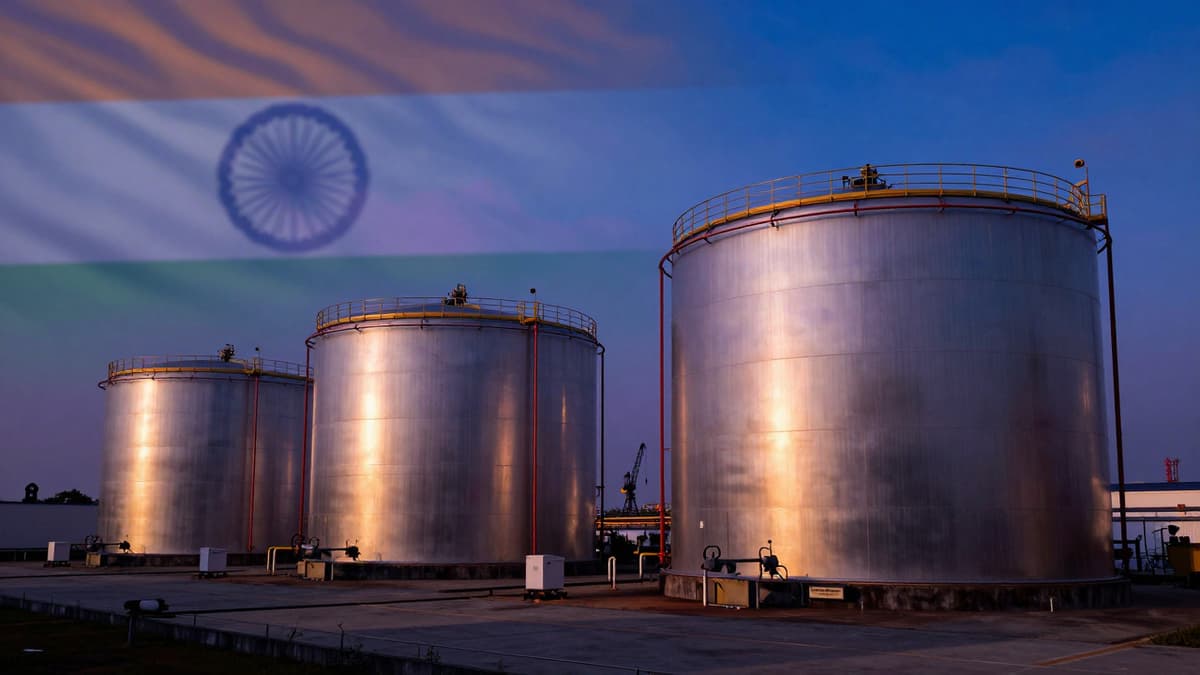
Amidst regional instability, Russian officials assure India of expanded oil and LNG supplies and increased fertilizer exports, reinforcing strategic ties ahead of key summits.
Russian Deputy Prime Minister Denis Manturov has assured India that its energy sector possesses the capacity to steadily increase supplies of oil and liquified natural gas (LNG). This commitment comes amidst a backdrop of global energy shock and supply chain disruptions triggered by the U.S.-Israel war on Iran. Manturov met with Prime Minister Narendra Modi on Thursday, April 2, 2026, to discuss these critical energy transitions. During the high-level discussions, the Russian delegation emphasized their readiness to continue addressing India's fertilizer needs, highlighting the depth of the ongoing bilateral relationship.
The visit by Manturov, which concluded on Friday, April 3, 2026, is being interpreted as a significant strategic move ahead of major diplomatic gatherings. It is viewed as part of the active preparations by both nations for the upcoming BRICS summit, which India is set to host, as well as the India-Russia annual summit scheduled for later this year in Russia. The talks covered a broad spectrum of mutual interests, including trade, connectivity, and people-to-people ties. Prime Minister Modi explicitly welcomed the sustained efforts from both sides to realize the agreements of the 23rd India-Russia Annual Summit, which was hosted in India in December 2025.
In a detailed press note, the External Affairs Ministry highlighted the depth of the dialogue. External Affairs Minister S. Jaishankar and Deputy Prime Minister Manturov exchanged views on various regional and global developments, specifically including the ongoing conflict in West Asia. This diplomatic exchange underscores the importance of maintaining stable relations despite the volatile international environment. The discussions also touched upon nuclear cooperation, with Manturov confirming that Russia intends to deepen its nuclear partnership with India. Other areas of focus included industrial cooperation, space projects, and educational initiatives.
According to a readout from the Russian embassy, Manturov made specific claims regarding agricultural support. He stated that Russia has increased supplies of in-demand mineral fertilizers to India by 40 percent. Furthermore, he confirmed that Russia is ready to continue meeting India's needs for this essential product. A joint project for the production of carbamide, also known as urea, is currently under development, signaling a long-term commitment to agricultural stability. The embassy readout further emphasized that particular attention was paid to cooperation in the oil and gas sector. Manturov confirmed that Russian companies have the technical and logistical capacity to steadily increase supplies of oil and LNG to the Indian market, directly addressing the energy security concerns of the region.
The timing of Manturov's visit follows a series of high-level diplomatic engagements. It took place just days after Russian Foreign Minister Sergei Lavrov and S. Jaishankar addressed a conference on bilateral relations via video link on March 23, 2026. During that address, Lavrov indicated Russia's preparations for the annual summit. Lavrov also expressed Russia's strong support for the BRICS group, where India currently holds the Chairmanship. The BRICS group has recently attracted global attention for not issuing a statement on the evolving situation in West Asia. However, the RIC trilateral sub-group, comprising Russia, India, and China, has indicated a commitment to working closely within BRICS, the Shanghai Cooperation Organisation, and the UN on issues affecting the Global South.
This flurry of diplomatic activity coincides with a period of growing energy insecurity in India and the rest of South Asia as the war in West Asia enters its second month. The geopolitical landscape is complicated by recent trade restrictions. The United States had previously imposed penalty tariffs on India in August 2025, aiming to force a reduction in Russian energy imports and compel Russia to make concessions in the war in Ukraine. However, amidst the backdrop of a crisis in the global energy market, the U.S. issued a temporary 30-day waiver on March 6, 2026. This waiver allows Indian refiners to continue purchasing Russian crude, providing a lifeline for the nation's energy security during this critical period.
Earlier in the week, the Indian side hosted Vladimir Yakushev, the First Deputy Chairman of the Federation Council, marking another high-level interaction. Yakushev met with Deputy Chairman of the Rajya Sabha, Harivansh Narayan Singh, and Lok Sabha Speaker Om Birla. He also held discussions with Bharatiya Janata Party president Nitin Nabin. These meetings were part of a broader series of consultations, including the Foreign Office Consultations on March 30, led by Foreign Secretary Vikram Misri and Russia's Deputy Foreign Minister Andrey Rudenko. The cumulative effect of these interactions suggests a coordinated effort to solidify the India-Russia energy cooperation framework.
The discussions during Manturov's visit highlighted that Russian fertilizer exports to India have seen a significant boost, with a 40% increase already recorded. This is crucial for Indian agriculture, especially given the global disruptions. The promise of a new joint urea production project further cements this partnership. As BRICS summit preparation intensifies, these economic and energy assurances serve as a foundation for broader strategic alignment. The willingness of Russian companies to ramp up oil and LNG output suggests a resilient supply chain capable of withstanding external pressures.
The sustained diplomatic exchanges and the concrete promises of increased energy and agricultural supplies indicate a strengthening of the bilateral bond between New Delhi and Moscow. As the U.S. temporarily waives restrictions on Russian crude to mitigate global market instability, the window for expanded trade remains open. The establishment of new joint projects and the focus on nuclear cooperation suggest that these ties will likely deepen rather than fray in the near future. With the upcoming BRICS and annual summits on the horizon, the current trajectory points toward a more integrated economic partnership, ensuring that both nations can navigate the challenges of the evolving geopolitical landscape together. The focus on the Global South through RIC and BRICS mechanisms further cements this role, positioning India-Russia relations as a stabilizing force in South Asia amidst regional and global uncertainties.
Jun 8, 2026 02:17 UTC
Magnitude 7.8 Quake Shakes Philippines, Urging Immediate Evacuations
Jun 8, 2026 00:51 UTC
Trump Claims Iran Nuclear Deal Imminent Despite Diplomatic Fractures
Jun 8, 2026 00:47 UTC
Iran Fires Missiles at Israel After Beirut Strike
Jun 7, 2026 22:00 UTC
US, Iran Peace Hops Fade 100 Days Into War
Jun 8, 2026 04:15 UTC
Trump Urges Netanyahu to Halt Iran Strike for Peace