
Section
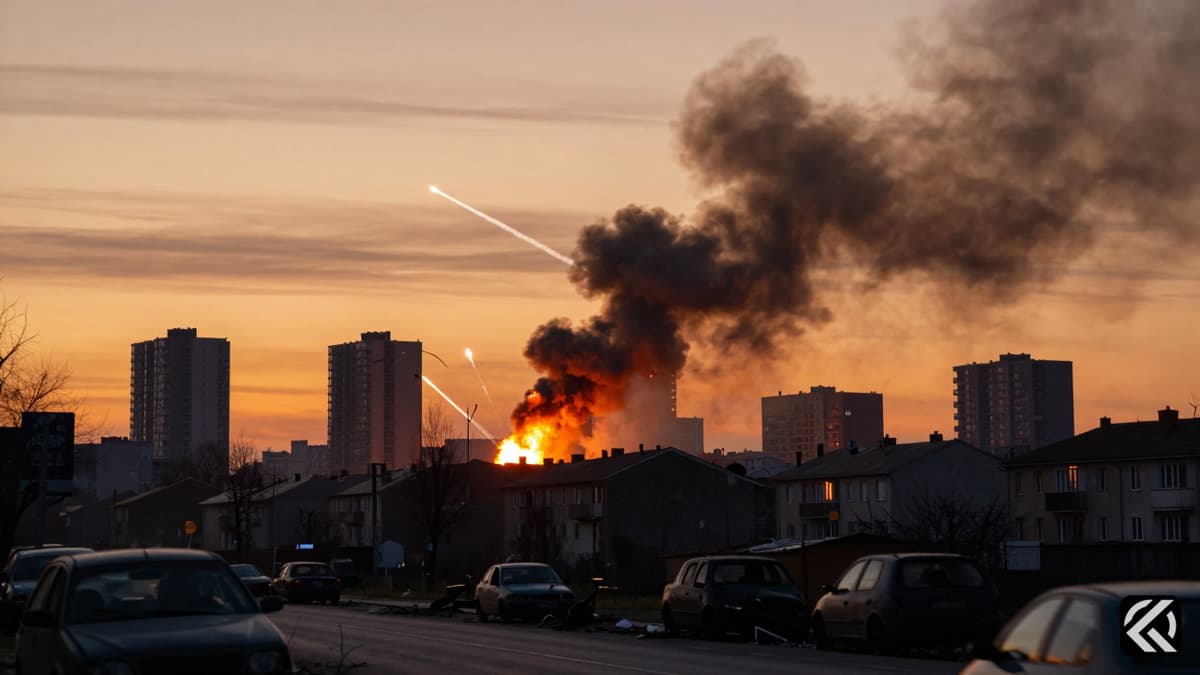
Moscow demands foreign diplomats evacuate Kyiv following a massive aerial assault. This escalation signals a severe shift in the ongoing Ukraine war strategy and international diplomatic pressure.
Russia has escalated tensions by threatening a fresh wave of "systematic strikes" against the Ukrainian capital, Kyiv, while simultaneously ordering all foreign nationals and diplomats to evacuate the city immediately. This development comes just days after Moscow executed one of the largest aerial assaults on Kyiv since the inception of the full-scale invasion. The Russian foreign ministry stated that these new strikes will specifically target "decision-making centres and command posts," as well as drone manufacturing facilities located within the capital. In a statement released alongside the threat, Moscow urged citizens to avoid administrative and military buildings, signaling a coordinated effort to destabilize the Ukrainian government’s operational capacity while pushing for a diplomatic withdrawal.
The immediate trigger for this heightened aggression appears to be Moscow's claim that Ukraine deliberately attacked a student dormitory in Starobilsk on Friday. Russian officials reported that 21 people were killed in that incident, which they cited as justification for the subsequent barrage. However, Ukraine’s military contested this narrative, stating that its forces had targeted an elite Russian military drone unit in the area of Russian-occupied eastern Ukraine and had not aimed at civilians. This dispute highlights the ongoing information war that accompanies the physical destruction on the ground. The timing of these events is critical, as the region recently experienced a brief ceasefire that coincided with Moscow's annual Victory Day parade, which expired earlier in May. The breakdown of this truce has led to a rapid re-escalation of hostilities, with both sides accusing the other of violating the fragile peace.
On Saturday night, the intensity of the conflict reached a new peak as large-scale Russian strikes hit Kyiv and surrounding areas. Ukrainian President Volodymyr Zelensky confirmed that the attacks resulted in four deaths and injured approximately 100 people. The scale of the assault was further evidenced by videos posted on social media, which showed explosions lighting up the night sky throughout the evening. Many residents reported that blasts rocked the city as numerous civilian targets were hit. The Russian arsenal employed in this latest wave was diverse and formidable, including dozens of ballistic and cruise missiles, hundreds of drones, and a hypersonic, nuclear-capable Oreshnik missile fired at Bila Tserkva, a city 90km south of Kyiv. The use of such advanced weaponry underscores the severity of the current phase of the Ukraine war, where technological superiority is being leveraged to inflict maximum damage.
The damage inflicted on Kyiv was extensive, affecting both strategic and cultural infrastructure. Non-military targets, including the Chernobyl Museum in Kyiv's historic district and the National Art Museum of Ukraine, were damaged or destroyed. Additionally, a shopping centre, a market, and several residential buildings in the Lukanivka area were destroyed. The targeting of cultural institutions and civilian infrastructure has drawn widespread attention to the humanitarian cost of the conflict. Earlier in May, just after the ceasefire expired, Russian strikes on Kyiv had killed 24 people, including three children, in a block of flats. This pattern of repeated high-casualty events suggests a strategy of attrition rather than mere tactical positioning.
Diplomatic channels have also become a battleground in this escalation. On Monday evening, Russian Foreign Minister Sergei Lavrov urged US Secretary of State Marco Rubio to evacuate American diplomats from Kyiv during a phone call, as reported by Russia's foreign ministry. Many analysts interpret Russia's warning for foreign nationals to leave as a form of psychological pressure aimed at undermining confidence in Ukraine's stability. This tactic of coercive diplomacy is often employed to signal intent and test the resolve of international allies. While Russia already conducts large-scale strikes on the capital, the explicit order for evacuation marks a significant rhetorical shift. It suggests that Moscow may be preparing for even more sustained or intense operations, or it may be an attempt to portray the situation as untenable for non-combatants.
Despite the ferocity of these Russian missile strikes, four and a half years of war have taught Ukraine to develop and ramp up a sophisticated and layered air defence system. This resilience has allowed the country to continue functioning despite repeated attempts to cripple its infrastructure. However, the introduction of new weapon systems, such as the Oreshnik missile, poses a challenge to existing defence capabilities. The conflict has also seen reciprocal accusations of civilian harm. Days after the Saturday night strikes, Russian officials claimed that three people were killed in a large-scale Ukrainian drone attack on the Moscow region. Zelensky described these Ukrainian strikes as an "entirely justified" response to deadly Russian attacks, framing them as legitimate retaliation for the ongoing bombardment of Ukrainian cities.
The current situation in Kyiv is characterized by a high degree of volatility and uncertainty. The combination of direct military threats, diplomatic ultimatums, and sustained aerial bombardment creates a complex environment for both residents and foreign observers. The targeting of drone manufacturing facilities indicates that Russia is actively trying to disrupt Ukraine's defense logistics, which have been crucial in repelling previous waves of invasion. The destruction of museums and cultural sites serves as a reminder of the broader cultural erasure that often accompanies modern warfare. As the world watches, the actions taken by Kyiv in response to these threats will be critical in determining the trajectory of the conflict. The international community’s reaction to the evacuation orders and the use of hypersonic weapons will also play a role in shaping the diplomatic landscape.
Kyiv faces a critical juncture as Russia combines military intensity with diplomatic coercion. The systematic targeting of command centers and the evacuation of foreign diplomats suggests Moscow is testing the limits of Western support and internal stability. While Ukraine's air defense system has proven effective so far, the introduction of nuclear-capable hypersonic weapons introduces new variables in this Ukraine war that may strain existing defensive resources. The cycle of retaliation, evidenced by recent strikes on both Moscow and Kyiv, indicates that the conflict is entering a more volatile phase. Future developments will likely depend on whether diplomatic channels can de-escalate tensions or if the military objective shifts toward total exhaustion of Ukrainian infrastructure. The long-term impact of destroying cultural heritage and civilian homes may lead to deeper societal trauma and harder peace negotiations in the future.
Jun 11, 2026 12:59 UTC
US Strike on Settebello Kills Indian Sailors Amid Strait of Hormuz Tensions
Jun 11, 2026 12:49 UTC
Air India Flight 171 Crash Sparks Debate Over Boeing 787 Dreamliner Faults
Jun 11, 2026 08:51 UTC
US-Iran Conflict: Indian Seafarers Killed in Gulf Strike
Jun 11, 2026 18:04 UTC
Healey Quits Government Over Defence Spending Dispute


