
Section
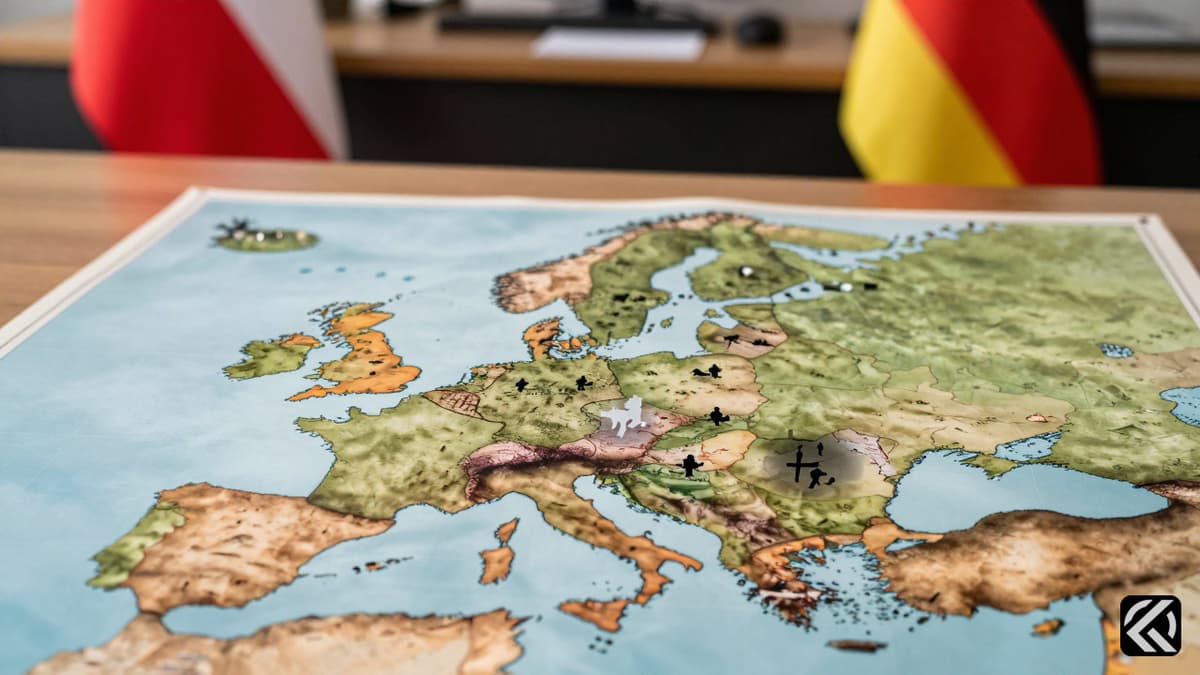
Amidst shifting military strategies driven by the Trump Iran conflict, Marco Rubio attempts to stabilize European concerns over unexpected US troop movements.
US Secretary of State Marco Rubio has undertaken a diplomatic effort to reassure NATO allies regarding the volatile nature of United States military strategies in Europe. This intervention occurs amidst a series of abrupt and seemingly contradictory announcements concerning the status and location of American forces on the continent.
The confusion stems from a rapid sequence of events. Just a week ago, the Pentagon announced the cancellation of a planned deployment of 4,000 troops to Poland. Days later, Washington declared that 5,000 troops would be withdrawn from Germany. These moves followed a recent row between President Donald Trump and German Chancellor Friedrich Merz regarding the war with Iran. However, the situation shifted again when Trump announced on his Truth Social platform that the US would send an additional 5,000 troops to Poland. This new decision was made while NATO foreign ministers were gathering in Helsingborg, Sweden, for their regular meetings.
Rubio addressed the growing unease among NATO ministers during a news conference on Friday. He stated that the United States is "constantly reevaluating its troop presence in view of its global commitments." While acknowledging that the situation is "confusing indeed," as noted by Swedish Foreign Minister Maria Malmer Stenergard, Rubio insisted that these adjustments are part of a coordinated process. "It is well understood in the alliance that the United States troop presence in Europe is going to be adjusted," Rubio said. He emphasized that this work was already ongoing and coordinated with allies, though he admitted he was "not saying they're going to be thrilled about it."
The complexity of the US military footprint in Europe is significant. The United States maintains the largest and most capable presence within the NATO alliance, which includes 30 European countries and Canada. Currently, more than 36,000 US troops are stationed in Germany, with approximately 12,000 in Italy, 10,000 in the UK, and an estimated 10,000 in Poland. These forces have served as a deterrent since the Cold War, originally facing off against the Soviet Union, and have become crucial for European defense since Russia’s full-scale invasion of Ukraine in February 2022.
The recent turmoil is deeply linked to broader geopolitical tensions, specifically the Trump Iran conflict. Some US troops are currently involved in the Middle East following the US and Israeli conflict with Iran. This regional engagement appears to be influencing strategic calculations in Europe. The White House has previously signaled an intent to reduce overall troop levels in Europe as part of its "America First" agenda. This agenda is often justified by Trump’s criticism of NATO members for their financial contributions, leading to threats of US withdrawal and subsequent demands for increased European defense spending.
President Trump’s decision to deploy extra troops to Poland was framed around his political relationship with Polish President Karol Nawrocki. Nawrocki, a long-time supporter of Trump who was backed during last year’s presidential elections, has seen his country become the focal point of this latest military adjustment. Trump noted that the decision was based on this strong bilateral relationship. However, the precise logistical details remain opaque. It remains unclear whether the new 5,000 troops for Poland are part of the previously canceled 4,000-troop deployment, a separate group, or related to the forces being withdrawn from Germany.
The lack of clarity has left allies navigating a complex strategic landscape. The simultaneous withdrawal from Germany and addition in Poland creates a disjointed perception of US commitment. While Rubio argues that allies are aware of the strategic reevaluation, the abruptness of the changes risks undermining trust. NATO members have urged Washington to remain committed to their defense, particularly given the ongoing security challenges posed by Russia. The confusion is further exacerbated by the dual fronts the US is managing: domestic political pressures, fiscal scrutiny of NATO, and active military engagements in the Middle East.
As NATO ministers deliberated in Sweden, the underlying message from Washington seemed to be one of prioritization rather than abandonment. The US, by far the biggest member of the alliance, is shifting resources to align with its immediate security interests. The involvement in the Trump Iran conflict highlights these competing priorities. With troops already engaged in the Middle East, the decision to move forces to Poland suggests a strategic pivot rather than a retreat. Yet, the abrupt cancellation of previous deployments undermines the predictability that NATO relies upon for collective defense planning.
The historical context of US troops in Europe adds weight to these current shifts. For decades, the presence of American forces has been a cornerstone of European security. The reduction or relocation of these forces is not merely a logistical change but a political statement. Trump’s frequent criticism of NATO and his emphasis on financial equity have already strained trans-Atlantic ties. The current troop movements may be seen as further evidence of a transactional approach to security alliances, where support is contingent on political alignment and financial contribution rather than mutual defense guarantees.
The immediate future for NATO depends on how Rubio’s reassurances are received and whether future announcements bring clarity to the strategic vision. If the US continues to make abrupt changes without detailed explanation, it may force European allies to accelerate their own defense capabilities, potentially leading to a more fragmented security architecture in Europe. The relationship with Poland may serve as a model for future bilateral security arrangements, but the broader implications for the alliance remain uncertain. The US troop deployment Europe is at a critical juncture, balancing global commitments with regional alliances.
The confusion surrounding US military movements signals a potential long-term shift in NATO dynamics. As the US reevaluates its global commitments, European allies may need to increase their autonomous defense capabilities to compensate for unpredictable American support. This could lead to a more independent European defense posture, reducing reliance on Washington. The current tensions highlight the fragility of trans-Atlantic security ties, suggesting that NATO must evolve beyond its post-Cold War structure to address new geopolitical realities.
Jun 11, 2026 17:21 UTC
Bangladesh Opposition Mobilizes Against India-Bangladesh Border Push-Ins and BSF Killings
Join 50,000+ readers getting the global briefing every morning.
No spam. Unsubscribe anytime.
Jun 11, 2026 17:40 UTC
Boelter Pleads Guilty in Minnesota Political Assassinations
Jun 11, 2026 17:21 UTC
Bangladesh Opposition Mobilizes Against India-Bangladesh Border Push-Ins and BSF Killings
Jun 11, 2026 17:21 UTC
John Healey Quits as UK Defence Secretary Over Funding Dispute
Jun 11, 2026 16:19 UTC
UK Defence Secretary John Healey Quits Over Funding Dispute


