
Section
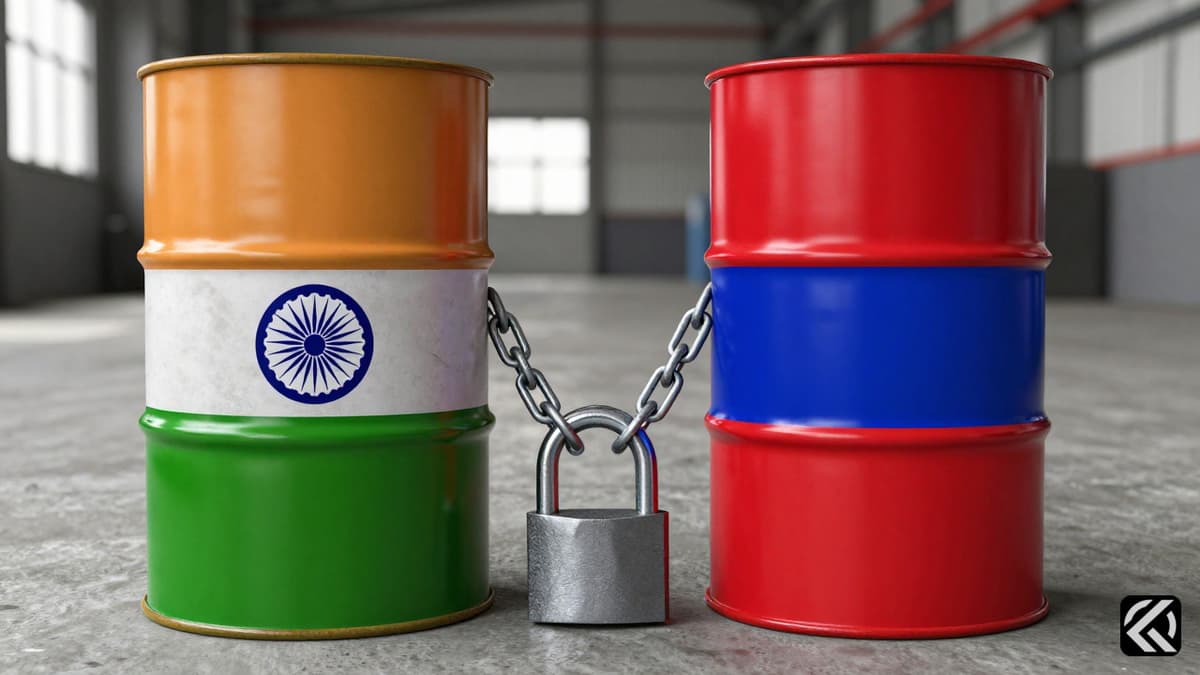
US Secretary of State Marco Rubio intensifies diplomatic pressure on New Delhi to halt Russian oil imports, challenging India's sovereign energy decisions.
In a renewed effort to constrain Moscow’s war financing, US Secretary of State Marco Rubio has intensified diplomatic pressure on New Delhi to cease its imports of Russian oil. Speaking before the Senate Foreign Relations Committee on Tuesday, Rubio emphasized that the Trump administration aims to terminate sanctions waivers and special arrangements as quickly as possible, which have historically permitted countries like India to purchase discounted Russian crude. This latest intervention marks a significant escalation in the ongoing tension between Washington and New Delhi regarding energy procurement strategies and the broader implications for global market stability.
The controversy stems from a long-standing pragmatic arrangement where Western governments, including the United States, have alternated between condemning and quietly tolerating India’s energy purchases from Russia. Since the 2022 invasion of Ukraine, this dual approach allowed Russian oil to remain in global circulation, helping to prevent a spike in worldwide energy prices while simultaneously limiting Moscow’s profits through heavy discounts. However, Washington’s current stance signals a shift toward stricter enforcement, with US officials claiming to have secured commitments from India to avoid further acquisitions, despite New Delhi’s insistence that its decisions are driven purely by national interest.
Indian officials and analysts have expressed frustration over what they perceive as Washington’s mercurial priorities, noting that New Delhi is often treated as a diplomatic irritant when it suits US political goals, but a stabilizing force when energy prices threaten to surge. Rubio recently clarified that US sanctions were "never aimed at India per se," attempting to balance pressure on Moscow with the maintenance of a broader strategic partnership with New Delhi. Nevertheless, the back-and-forth nature of these diplomatic exchanges has left many in New Delhi feeling that their commercial energy choices are being dictated by foreign powers rather than domestic needs.
At the heart of the dispute is a fundamental clash of perspectives: Washington views Russian oil revenues as direct funding for military activities, arguing that allies must not undermine international sanctions designed to constrain Russia’s war effort. In contrast, Indian leaders argue that as a sovereign nation of 1.4 billion people, India has an inherent responsibility to secure affordable energy supplies for its economy. This argument is frequently bolstered by the invocation of "strategic autonomy," a principle asserting that no foreign power should dictate the energy choices of a rising global power.
Complicating the situation further is the perceived double standard in how these rules are applied globally. Critics within India point out that China remains one of the largest buyers of Russian energy, yet Washington has been notably cautious about imposing secondary sanctions on Beijing. The rationale cited is often China’s leverage over critical resources such as rare earths, which are vital to various high-tech industries. For New Delhi, which lacks similar economic leverage over the US, this disparity reinforces the perception that strategic calculations in Washington often outweigh consistent application of principle.
The issue has thus transcended simple energy economics to become a broader test of whether India can maintain genuine strategic autonomy while attempting to deepen its ties with Washington. As diplomatic pressures mount, New Delhi is likely to continue resisting external dictates, maintaining that its Indian energy policy will be decided exclusively within its own borders. This stance reflects a growing assertiveness in India’s foreign policy, where national security and economic pragmatism are prioritized over alignment with external geopolitical mandates, even from close strategic partners.
The ongoing dispute highlights a critical juncture in US-India relations, where economic interests increasingly clash with geopolitical alliances. As Rubio continues to push for tighter restrictions, the likelihood of a diplomatic breakthrough remains low unless Washington offers compensatory economic incentives or alternative energy security assurances. In the coming months, New Delhi is expected to double down on its sovereign energy rights, potentially seeking diversified suppliers to mitigate reliance on any single market. This standoff could strain the broader strategic partnership, forcing both nations to navigate a complex web of international sanctions, energy security needs, and long-term geopolitical alignment without compromising their core national interests.
Jun 11, 2026 17:21 UTC
Bangladesh Opposition Mobilizes Against India-Bangladesh Border Push-Ins and BSF Killings
Join 50,000+ readers getting the global briefing every morning.
No spam. Unsubscribe anytime.
Jun 11, 2026 17:40 UTC
Boelter Pleads Guilty in Minnesota Political Assassinations
Jun 11, 2026 17:21 UTC
Bangladesh Opposition Mobilizes Against India-Bangladesh Border Push-Ins and BSF Killings
Jun 11, 2026 17:21 UTC
John Healey Quits as UK Defence Secretary Over Funding Dispute
Jun 11, 2026 16:19 UTC
UK Defence Secretary John Healey Quits Over Funding Dispute


