
Section
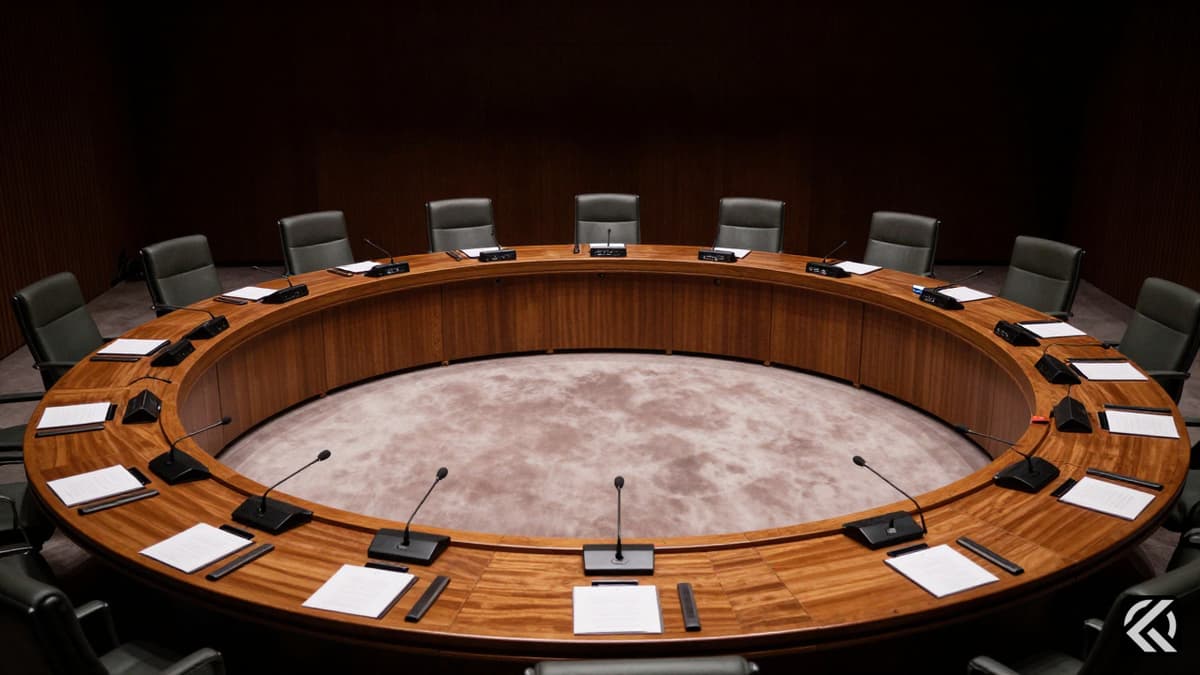
Amidst confusion over sudden military moves, the US Secretary of State addresses NATO concerns regarding shifting troop deployments and strategic adjustments in Europe.
US Secretary of State Marco Rubio has engaged in diplomatic efforts to clarify and reassure NATO allies regarding recent, contradictory decisions concerning United States military troop deployments in Europe. These interventions occurred at the conclusion of a NATO foreign ministers' meeting held in Helsingborg, Sweden, where Rubio addressed the growing uncertainty among trans-Atlantic partners. The clarification was necessary following a series of abrupt military announcements that have left partner nations navigating a complex and confusing geopolitical landscape. Rubio stated that the United States is continuously reevaluating its global commitments, necessitating adjustments to its European presence that are being conducted in coordination with allied nations.
The urgency of Rubio’s reassurance efforts stems from a rapid sequence of military maneuvers announced by the White House within a span of just a few days. President Donald Trump revealed via his Truth Social platform that the US would deploy an additional 5,000 troops to Poland. This announcement came shortly after the US Department of Defense abruptly cancelled a previously planned deployment of 4,000 troops to the same country. Furthermore, these conflicting signals emerged just days after an announcement that the US would withdraw 5,000 troops from Germany. The juxtaposition of sending troops to Poland while simultaneously removing them from Germany has sparked significant debate and confusion within the alliance.
Trump explained that the decision to send extra troops to Poland was influenced by his relationship with Polish President Karol Nawrocki, a long-time supporter whom Trump backed during last year’s presidential elections. However, the President did not clarify whether this new deployment was a replacement for the cancelled force or an entirely separate military operation. The lack of clarity has exacerbated tensions, with Swedish Foreign Minister Maria Malmer Stenergard openly acknowledging the difficulty allies face in navigating these shifting policies. Despite the confusion, Rubio insisted that the adjustments are well-understood within the alliance as part of an ongoing coordination process.
The confusion is particularly notable given the current global security context. The United States is currently involved in military operations in the Middle East, following conflicts with Iran. This involvement likely contributes to the "America First" agenda that the White House has signaled intends to reduce overall troop levels in Europe. The US has maintained a significant military presence in Europe for decades, originally to counter the Soviet Union, and now to deter aggression following Russia’s full-scale invasion of Ukraine in February 2022. European allies have consistently urged Washington to remain committed to their collective defense, making these abrupt changes especially sensitive.
The US maintains the largest and most capable military presence within NATO, which comprises 30 European countries and Canada. Currently, more than 36,000 US troops are stationed in Germany, with approximately 12,000 in Italy, 10,000 in the UK, and an estimated 10,000 in Poland. The recent announcements threaten to disrupt this established balance. Trump has previously criticized NATO for the financial contributions of European allies compared to the US, often threatening withdrawal to pressure increased defense spending. Many countries have indeed agreed to raise their spending, but Trump has expressed further anger over NATO countries' refusal to support the US in its conflict with Iran. This refusal appears to be a driving factor behind the current restructuring of forces.
Rubio’s comments at the Helsingborg summit attempted to mitigate the anxiety caused by these moves. He acknowledged that while allies are aware of the adjustments, they are not necessarily thrilled about them. "I'm not saying they're going to be thrilled about it, but they certainly are aware of it," Rubio remarked, highlighting the delicate diplomatic tightrope the US must walk. The situation underscores the tension between the US’s desire for flexibility in its global military strategy and its allies' need for predictable, reliable security guarantees. As the US continues to reevaluate its troop presence in view of its global commitments, the relationship between Washington and its European partners remains under intense scrutiny.
The ongoing adjustments to US troop deployments in Europe represent a significant shift in trans-Atlantic defense strategy. If the United States continues to prioritize its "America First" agenda and reduce its military footprint in response to conflicts like the one with Iran, European allies may need to accelerate their own defense capabilities. The uncertainty surrounding the additional Poland troop deployment and the withdrawal from Germany suggests that the US military posture is highly fluid. This fluidity could force NATO members to reconsider their reliance on US security guarantees, potentially leading to a more fragmented defense coalition. The long-term impact will depend on whether diplomatic reassurances from officials like Rubio can stabilize alliance cohesion amidst these operational changes.
Jun 11, 2026 17:21 UTC
Bangladesh Opposition Mobilizes Against India-Bangladesh Border Push-Ins and BSF Killings
Join 50,000+ readers getting the global briefing every morning.
No spam. Unsubscribe anytime.
Jun 11, 2026 17:40 UTC
Boelter Pleads Guilty in Minnesota Political Assassinations
Jun 11, 2026 17:21 UTC
Bangladesh Opposition Mobilizes Against India-Bangladesh Border Push-Ins and BSF Killings
Jun 11, 2026 17:21 UTC
John Healey Quits as UK Defence Secretary Over Funding Dispute
Jun 11, 2026 16:19 UTC
UK Defence Secretary John Healey Quits Over Funding Dispute


