
Section
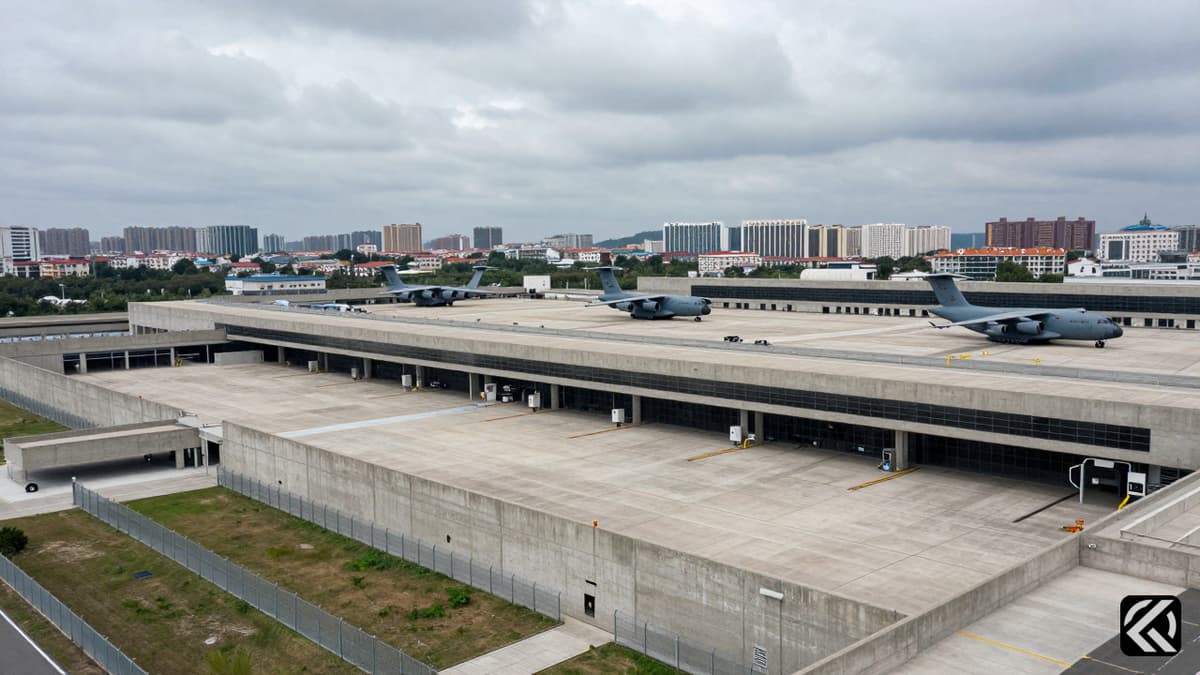
A CBS report alleges Pakistan sheltered Iranian planes to evade American strikes, sparking diplomatic backlash and challenging Islamabad's role as a peace mediator in the escalating regional crisis.
On February 28, hostilities erupted between the United States and Iran, initiating a period of intense geopolitical tension that was temporarily halted by a ceasefire announced on April 8. Despite publicly positioning itself as a neutral mediator in the US-Iran conflict, Pakistan is now facing serious allegations regarding its covert military support to Tehran. According to a report by CBS News citing US officials, Islamabad allegedly permitted Iranian military aircraft to utilize its strategic airbases to shield them from potential American airstrikes. This revelation has triggered sharp diplomatic reactions in Washington, with senior lawmakers questioning the credibility of Pakistan’s peacemaking efforts while simultaneously maintaining close strategic ties with both Iran and China.
The report centers on activities at the Nur Khan Air Base, located in Islamabad. CBS News states that shortly after US President Donald Trump announced the ceasefire, Iran moved multiple aircraft to this facility. Among the displaced planes was an Iranian Air Force RC-130 reconnaissance and intelligence-gathering plane. The strategic move appears designed to preserve Iran’s military assets from imminent US retaliation, a claim that directly contradicts Islamabad’s public stance of impartiality.
In response to the allegations, a senior Pakistani official told CBS News that the claims were implausible due to the base's location. The official argued that the Nur Khan base is situated in the heart of the city, a densely populated area where a large fleet of parked aircraft could not be hidden from the public eye. However, the report suggests that this denial did not align with the covert operations allegedly conducted by Pakistani authorities.
The disclosure has reignited scrutiny over Pakistan’s foreign policy balancing act. Republican Senator Lindsey Graham reacted strongly to the report, demanding a fundamental shift in how Washington engages with Islamabad. In a post on X, Graham stated, “If this reporting is accurate, it would require a complete reevaluation of the role Pakistan is playing as mediator between Iran, the United States and other parties.” He added, “Given some of the prior statements by Pakistani defense officials towards Israel, I would not be shocked if this were true.” Graham’s comments highlight the growing frustration in Washington regarding Pakistan’s dual-track diplomacy, which seeks to maintain defense cooperation with China while mediating between the US and its adversaries.
The controversy extends beyond Pakistan to neighboring Afghanistan. The CBS report claimed that Iran also moved civilian aircraft to Afghanistan during the conflict. An Afghan civil aviation official confirmed that an Iranian Mahan Air plane landed in Kabul shortly before the war began and remained there after Iranian airspace was closed. The same aircraft was later moved to Herat, near the Iranian border, following Pakistan’s attacks on Afghanistan. However, Taliban spokesman Zabihullah Mujahid categorically denied these reports, stating, “No, that's not true and Iran doesn't need to do that.” This contradiction adds another layer of complexity to the region’s information environment.
Pakistan’s alleged actions must be viewed through the lens of its deepening military dependence on China. Citing a study by the Stockholm International Peace Research Institute, the CBS report notes that China supplied nearly 80 percent of Pakistan’s major arms imports between 2020 and 2024. This heavy reliance on Chinese defense hardware likely influences Islamabad’s strategic calculations, forcing it to navigate carefully between its ally China and its historical, albeit strained, relationship with the United States. By allowing Iranian aircraft to park at its Nur Khan Air Base, Pakistan may have been attempting to secure favor with Tehran, Iran’s closest international ally, without openly alienating Washington.
The broader implications for the US-Iran conflict remain significant. While a ceasefire is technically in place, the underlying hostilities have not been resolved. The revelation of Pakistan’s alleged complicity in protecting Iranian military assets undermines the trust necessary for any durable peace agreement. It suggests that regional actors are still engaged in proxy behaviors despite public declarations of mediation.
Despite the technical cessation of hostilities, the rhetorical warfare between Washington and Tehran remains fierce. Iranian officials have reiterated that uranium enrichment and nuclear technology are non-negotiable in any future talks with the US. Iranian Foreign Ministry spokesman Esmaeil Baghaei described Tehran’s latest proposal to end the war as “reasonable.” Conversely, President Trump has dismissed Iran’s diplomatic overtures with blistering language. Speaking from the Oval Office, Trump said, “After reading that piece of garbage they sent us, I didn't even finish reading it. They (Iran) are on life support. The ceasefire is on massive life support.”
The ceasefire between the US and Iran remains fragile, with both sides engaging in high-stakes rhetoric and covert maneuvers rather than genuine diplomacy. The allegations against Pakistan reveal a fractured mediation effort where regional powers continue to prioritize military preservation over peace. If the reports of Pakistan sheltering Iran military aircraft are verified, it may lead to a significant rupture in US-Pakistan relations, potentially forcing Washington to reassess its strategic partnerships in South Asia. Furthermore, Iran’s insistence on retaining nuclear capabilities suggests that the current pause in fighting is temporary. Without a transparent framework for disarmament or confidence-building measures, the region remains poised for renewed conflict, with mediation efforts rendered ineffective by secret military alliances and unchecked geopolitical ambitions.
Jun 11, 2026 17:21 UTC
Bangladesh Opposition Mobilizes Against India-Bangladesh Border Push-Ins and BSF Killings
Join 50,000+ readers getting the global briefing every morning.
No spam. Unsubscribe anytime.
Jun 11, 2026 17:40 UTC
Boelter Pleads Guilty in Minnesota Political Assassinations
Jun 11, 2026 17:21 UTC
Bangladesh Opposition Mobilizes Against India-Bangladesh Border Push-Ins and BSF Killings
Jun 11, 2026 17:21 UTC
John Healey Quits as UK Defence Secretary Over Funding Dispute
Jun 11, 2026 16:19 UTC
UK Defence Secretary John Healey Quits Over Funding Dispute


