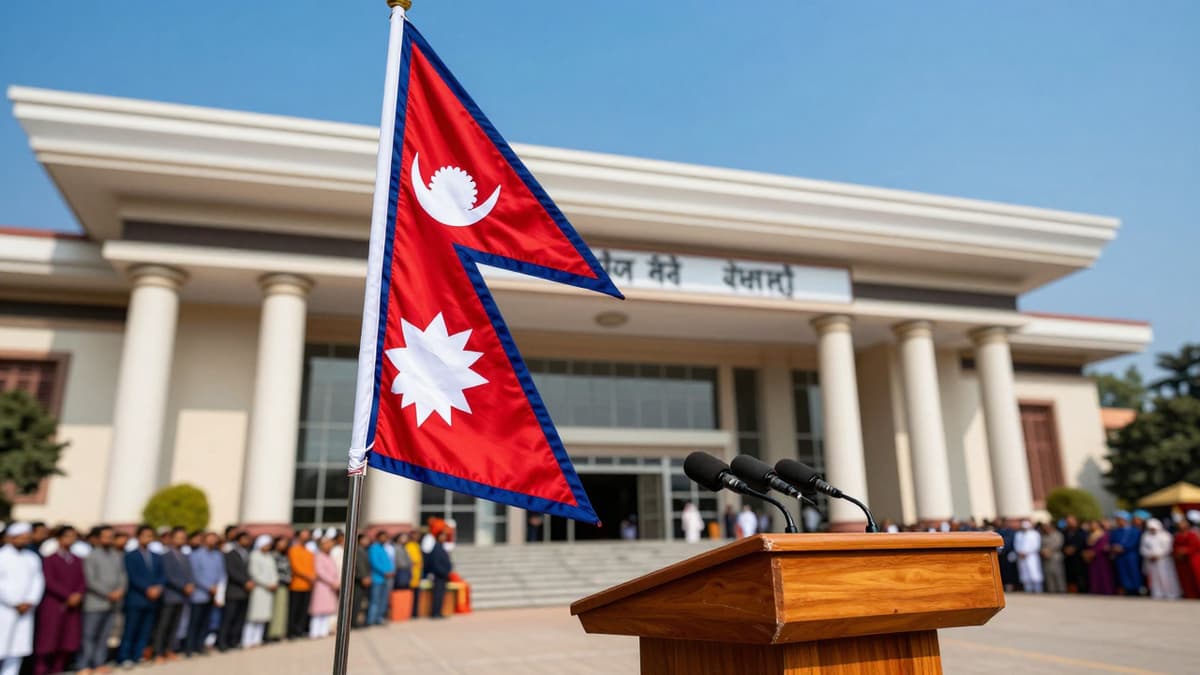
In a historic shift for Nepali politics, rapper Balendra Shah has been sworn in as prime minister following a decisive victory in the recent elections, promising to end corruption and elite rule.
Rapper-turned-politician Balendra Shah has been sworn in as Nepal's prime minister, marking a seismic shift in the nation's political landscape following a landslide victory in the country's first election since last year's youth-led protests. The 35-year-old, popularly known as Balen, took office on Friday, promising to dismantle the corruption, nepotism, and elite rule that have long frustrated the electorate.
His rise signals a break from the failings of Nepal's old guard, resonating deeply with an angry electorate that yearned for change. Before assuming his duties, Shah released a new song filled with optimism, rapping about how history is being made for an undivided Nepal. This track, which garnered over two million views within hours, harkens back to his underground roots where he used music to expose social problems and corruption.
Shah's political trajectory is as unconventional as his musical career. Born in 1990 in Naradevi, Kathmandu, to an Ayurvedic practitioner father and a homemaker mother, he graduated with engineering degrees before dominating the rap scene in 2013. His sharp verses gave voice to a suppressed generation, often featuring his trademark square black sunglasses and black blazer in music videos that criticized the nation's social inequality.
Three years ago, the political newbie won the Kathmandu mayoral race as an independent candidate, defeating parties that had dominated elections for decades. His tenure was defined by efforts to clean the city, preserve indigenous heritage, and a controversial crackdown on illegal buildings and unlicensed businesses. While these actions eased traffic, they also drew sharp criticism from rights groups regarding heavy-handed tactics against street vendors and residents in informal settlements.
During last September's protests, which saw 77 deaths and were fueled by anger over corruption and economic stagnation, Shah's message continued to resonate. He campaigned for the country's top office this year with an unconventional style, largely avoiding media interviews in favor of social media posts. In these posts, he pledged a sweeping Rastriya Swatantra Party agenda, including judiciary reforms and the creation of 1.2 million new jobs.
The strategy worked, resulting in a sweep of the 5 March general elections that shattered entrenched power structures. The party secured a decisive victory, and Shah even unseated former prime minister KP Sharma Oli in the Jhapa 5 constituency, a long-standing stronghold for the latter. As the leader of the four-year-old Rastriya Swatantra Party, Shah now faces the challenge of making good on bold pledges while navigating the expectations of his supporters.
The transition from an independent mayor to the head of the government brings mixed reactions. Supporters view Shah as a symbol of change, while others question the capacity of his party to deliver on its promises. Human Rights Watch has raised concerns about the tactics used during his mayoralty, noting that new leaders often resort to quick results-oriented behavior that can compromise rights.
Meenakshi Ganguly, deputy Asia director of Human Rights Watch, expressed hope that Shah would now focus on a rules-based order rather than the heavy-handed enforcement seen previously. Furthermore, Shah's time in the public eye has not been without controversy, including an expletive-laden Facebook post last November naming foreign nations and political parties, which he later deleted.
Despite these challenges, the commission investigating the recent unrest recommended that ex-prime minister Oli be prosecuted, a decision that the newly elected leadership must now navigate. As Balendra Shah assumes his role as prime minister, the nation watches to see if his anti-corruption fervor and youth-driven momentum can translate into a sustainable political future for Nepal.
This historic inauguration marks a definitive end to the era of traditional political dominance in Nepal, driven by a youth movement that demanded accountability and economic relief. With the Rastriya Swatantra Party now holding the reins of power, the administration is expected to prioritize the implementation of the anti-corruption measures and judicial reforms promised during the campaign. However, the path forward is fraught with the need to balance decisive action with the protection of civil liberties, particularly following international concerns regarding the methods used during his mayoralty. The coming four years will determine whether this unprecedented political shift can deliver on the promise of a prosperous, smiling Nepal or if it will struggle to manage the complex legacy of the protests that brought it to power.
Jun 8, 2026 02:17 UTC
Magnitude 7.8 Quake Shakes Philippines, Urging Immediate Evacuations
Jun 8, 2026 00:51 UTC
Trump Claims Iran Nuclear Deal Imminent Despite Diplomatic Fractures
Jun 8, 2026 00:47 UTC
Iran Fires Missiles at Israel After Beirut Strike
Jun 7, 2026 22:00 UTC
US, Iran Peace Hops Fade 100 Days Into War
Jun 8, 2026 04:15 UTC
Trump Urges Netanyahu to Halt Iran Strike for Peace


