
Section
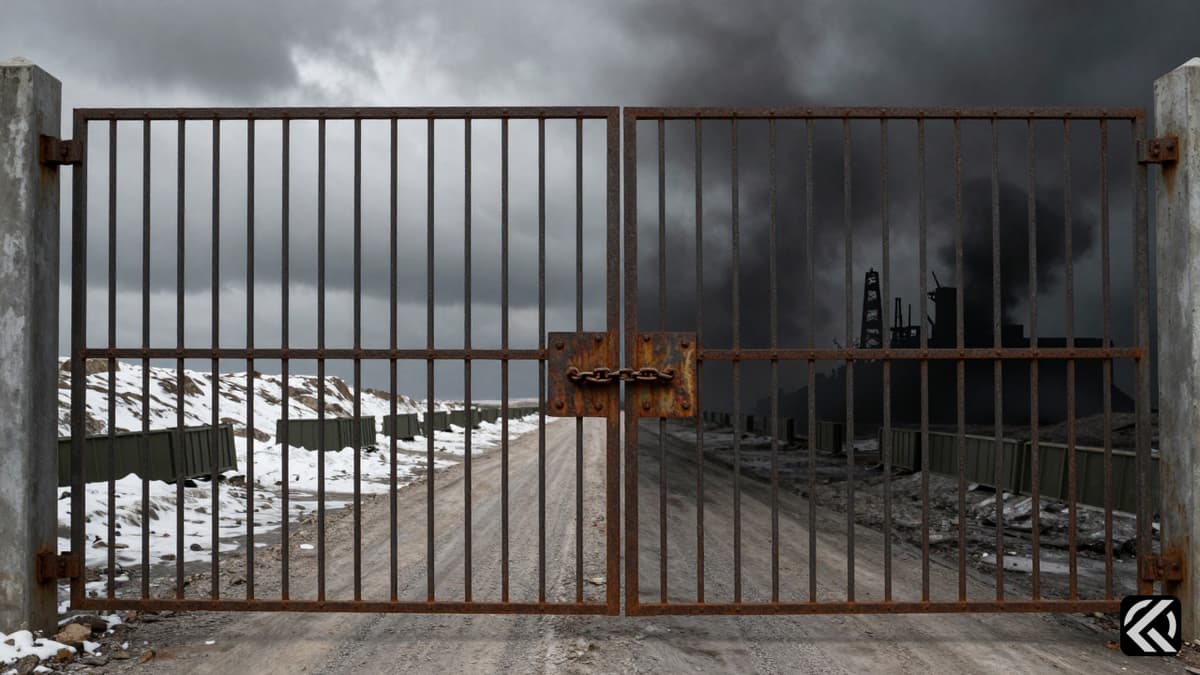
Putin refuses direct negotiations with Zelensky, demanding long-term agreements before any ceasefire. Tensions escalate as Ukraine strikes Russian ships and criticizes Moscow's war stance.
Russian President Vladimir Putin has firmly rejected Ukrainian President Volodymyr Zelensky’s recent proposal for direct, face-to-face negotiations to end the ongoing conflict. Speaking at the Russia’s annual economic forum in St. Petersburg on Friday, Putin declared there was "no point" in such a meeting at the current time. This rejection follows an open letter sent by Zelensky on Thursday, in which the Ukrainian leader called for immediate direct negotiations and a ceasefire, arguing that it was "wrong to simply wait" for the international community, particularly the United States, to re-focus attention on the war.
The diplomatic exchange began when Zelensky publicly urged Putin to engage in dialogue to halt the bloodshed that has persisted since Russia’s full-scale invasion in 2022. In his letter, Zelensky adopted a defiant tone, at times mocking, and suggested that age was affecting Putin’s decision-making. He also referenced recent Ukrainian military strikes on Russian territory, including one in St. Petersburg, which he described as "paying a visit." Putin responded sharply to these provocations, labeling the contents of the letter as "rude" and dismissing the offer of a meeting as a tactic to avoid actual engagement rather than a genuine attempt at peace.
"I don't see any point for now," Putin stated when asked about Zelensky’s offer. "Was it a way to create the conditions for a face-to-face meeting or a way not to set up a face-to-face meeting? I think it was the second." Putin reiterated Moscow’s longstanding stance that peace talks must precede any ceasefire. He argued that a temporary halt to hostilities would merely allow Ukraine to regroup militarily while the conditions Moscow seeks-such as Ukraine withdrawing from the Donetsk, Luhansk, Kherson, and Zaporizhzhia regions and abandoning efforts to join NATO-remain unmet.
The rejection has intensified rhetoric on both sides. Zelensky responded on Telegram, stating that Russia "was choosing war again" and expressing disappointment in Putin’s answer, noting that many in the world likely shared this sentiment. "He just doesn't want to end the war," Zelensky wrote, highlighting the deepening diplomatic chasm. Meanwhile, the White House initially expressed optimism about the possibility of peace, with US President Donald Trump stating that a meeting between the two leaders "would be great." However, Putin’s conditions have effectively shelved these hopes, emphasizing that military actions will only end once Russia achieves its predefined goals.
While diplomatic channels remain frozen, kinetic activity on the battlefield and in adjacent waters has intensified. On Friday, Ukraine announced that its forces had struck five ships in the Sea of Azov and coastal waters of territories occupied by Russia. Robert Brovdi, Ukraine’s drone commander, stated that these vessels were involved in stealing Ukrainian grain and transferring fuel and military supplies. The attacks resulted in fatalities, with Azerbaijan’s foreign ministry reporting that five people were killed in strikes on two of the ships. Azerbaijan clarified that the boats did not belong to its country and did not specify the perpetrator of the attacks, adding a regional dimension to the conflict's spillover effects.
This escalation occurs against the backdrop of Kyiv’s firm refusal to cede any territory. Ukrainian officials argue that any concessions to Moscow would embolden future aggression, citing the annexation of Crimea eight years prior to the current invasion. The current stalemate reflects a broader impasse: Ukraine seeks security guarantees and territorial integrity, while Russia demands recognition of its annexed territories and neutrality for Ukraine. With Putin insisting on long-term agreements that require significant Ukrainian territorial and political concessions, the path to resolution remains obstructed.
The international community watches closely as the gap between Kyiv’s demand for immediate peace and Moscow’s requirement for strategic victory widens. The lack of progress in negotiations leaves little room for de-escalation, with both sides continuing to escalate military pressure. The incident in the Sea of Azov underscores the conflict’s regional impact, threatening stability beyond the immediate border zones. As winter approaches, the absence of a diplomatic breakthrough combined with active military operations suggests a prolonged period of hostilities.
The current diplomatic freeze, marked by Putin’s dismissal of Zelensky’s overtures and the subsequent military strikes in the Sea of Azov, indicates that the Russia-Ukraine war will likely persist without significant change in the immediate future. With both leaders entrenched in their respective positions-Putin demanding long-term concessions and Zelensky refusing territorial capitulation-the probability of a negotiated settlement diminishes. This trajectory suggests continued military escalation and prolonged instability, further straining international resources and regional security dynamics as no viable pathway for dialogue currently exists.
Jun 11, 2026 17:21 UTC
Bangladesh Opposition Mobilizes Against India-Bangladesh Border Push-Ins and BSF Killings
Join 50,000+ readers getting the global briefing every morning.
No spam. Unsubscribe anytime.
Jun 11, 2026 17:40 UTC
Boelter Pleads Guilty in Minnesota Political Assassinations
Jun 11, 2026 17:21 UTC
Bangladesh Opposition Mobilizes Against India-Bangladesh Border Push-Ins and BSF Killings
Jun 11, 2026 17:21 UTC
John Healey Quits as UK Defence Secretary Over Funding Dispute
Jun 11, 2026 16:19 UTC
UK Defence Secretary John Healey Quits Over Funding Dispute


