Section
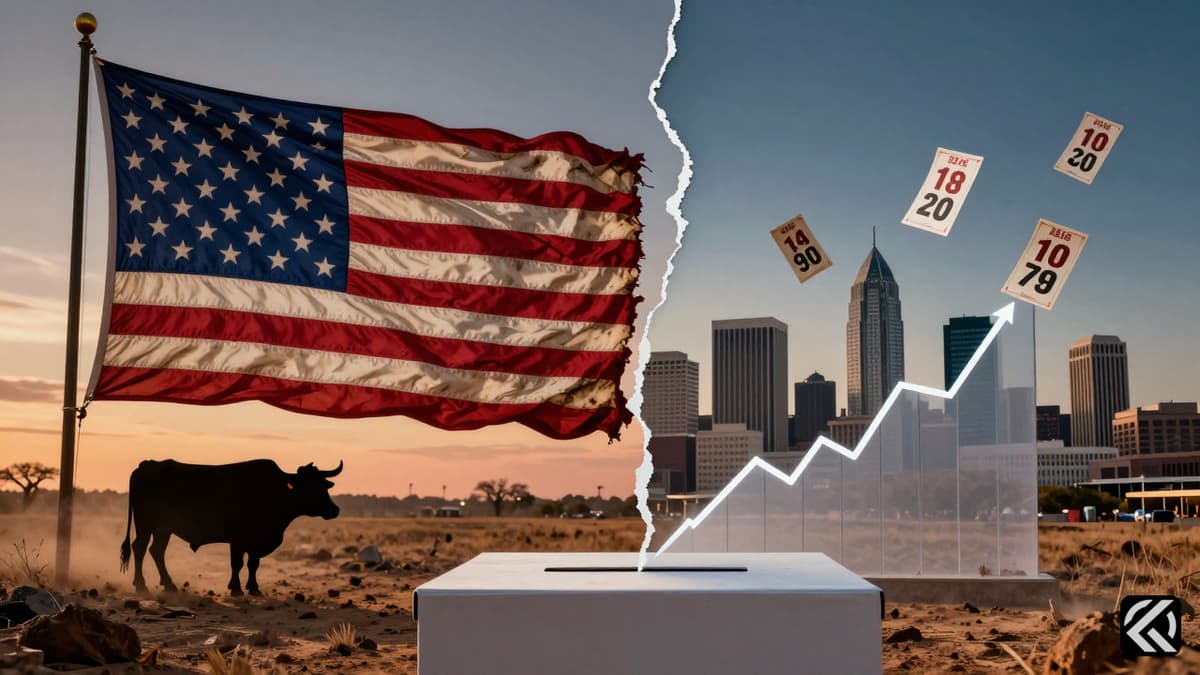
The Texas Senate race pits Republican Ken Paxton’s cultural populism against Democrat James Talarico’s economic focus, highlighting a shifting political landscape in a deep-red state.
The Texas Senate race has emerged as the most direct collision between the competing theories of populism that now dominate American politics, with Republican Ken Paxton and Democrat James Talarico already sparring over the future of the state. As the general election nears, the contest offers a stark contrast between the cultural appeals favored by the GOP and the economic grievances central to the Democratic message.
In the wake of Paxton’s primary victory over Republican Sen. John Cornyn, both camps have wasted no time constructing frames for voters. Paxton has adopted a Trump-like strategy of derisive nicknames, labeling his opponent “Tofu Talarico” and “Tala-freako” to portray the former seminarian as culturally alien. He has described Talarico as a supporter of “open borders,” “boys in girls’ sports,” and “gender mutilation surgery,” while also highlighting his veganism-a point Talarico countered by stating he has eaten barbecue since before Paxton’s first indictment.
Talarico, in response, has focused his attacks on Paxton’s history of financial and personal scandals, labeling him “the most corrupt politician in America.” Talarico’s narrative centers on economic populism, arguing that “mega donors and their puppet politicians like Ken Paxton have stolen from us” through bribes and tax breaks. This approach leverages Talarico’s background as a seminarian who discusses his Christian faith extensively, aiming to neutralize cultural battles that have historically hurt his party.
The core of this election is a battle between cultural and economic appeals. Paxton relies on cultural populism, a strategy the GOP has increasingly used to cement its coalition. His ally, Republican Senator Ted Cruz, declared on social media, “Texas will never elect someone who thinks God is nonbinary,” referencing Talarico’s 2021 comments on transgender rights. This cultural framing aims to exploit what analysts see as a vulnerability for Democrats in a state where Republicans have historically dominated statewide offices since 1994.
Conversely, Talarico and his advisers believe that current economic conditions favor their message. Chuck Rocha, a Democratic adviser to Talarico, stated, “There’s no doubt they are going to run the same culture war … and we’re going to run on the cost of living.” Rocha argued that when gas is $4 a gallon and daycare is unaffordable, cultural debates about pronouns lose resonance compared to discussions about the price of meat. This strategy was echoed in Talarico’s appearance on the Joe Rogan podcast, where he argued that the wealthy use cultural issues to keep the public distracted, framing politics as a battle between the top and the bottom.
James Henson, director of the Texas Politics Project at the University of Texas, notes that while Talarico’s Christian faith might seem like a shield, the progressive version of Christianity he espouses could make him even more vulnerable to GOP attacks. “There’s always been a contradiction at the heart of the case for Talarico that probably underestimates the degree to which a lot of voters, but especially Republican voters, are used to making distinctions among different brands of Christianity,” Henson said.
Analysts point to the 2018 Senate race between Beto O’Rourke and Ted Cruz as the baseline for this year’s contest. O’Rourke, a charismatic candidate, made significant inroads in major metro areas, though he ultimately lost by 2.6 percentage points. Since then, Texas has undergone significant demographic changes. The number of registered voters has grown by approximately 3.4 million since March 2018.
Data from William Frey at Brookings Metro indicates that White eligible voters have dropped from 51% in 2018 to 46.5% in January 2026. The decline is most sharp among White voters without a four-year college degree, a key segment of the GOP coalition, which fell from 30.5% to 26.6%. Meanwhile, Asian, Latino, and Black adults have seen their share of the eligible electorate rise. Among actual voters, people of color increased from 39% in 2018 to 44% in 2024.
These shifts are critical because Democrats have struggled to win White voters, capturing only about a third in recent presidential and Senate races. However, national headwinds for Republicans may offer Ken Paxton an opponent who can capitalize on economic discontent. In 2018, 70% of Texas voters rated the economy as excellent or good, and Trump’s approval was split evenly. In contrast, a recent University of Texas survey shows twice as many registered voters view the economy as worse than better, with only 45% approving of Trump’s job performance.
Despite these favorable national conditions for Democrats, local factors remain daunting. The Democratic brand in Texas is still considered weak, and Republicans have extensive practice running against Democrats. While Talarico’s personal vulnerabilities and the state’s demographic tilt toward minorities provide hope, many analysts conclude that Paxton remains the favorite due to the durability of Republican cultural arguments in red-leaning states.
The Texas Senate race highlights a pivotal moment where economic populism challenges entrenched cultural conservatism. As voter demographics continue to shift and economic dissatisfaction grows, the outcome will depend on whether Talarico’s message on the cost of living can overcome the GOP’s decades-long dominance in cultural issues. This race serves as a barometer for whether economic discontent can finally breach the Republican stronghold in Texas, or if cultural identity will remain the decisive factor for voters.
Jun 11, 2026 17:21 UTC
Bangladesh Opposition Mobilizes Against India-Bangladesh Border Push-Ins and BSF Killings
Join 50,000+ readers getting the global briefing every morning.
No spam. Unsubscribe anytime.
Jun 11, 2026 17:40 UTC
Boelter Pleads Guilty in Minnesota Political Assassinations
Jun 11, 2026 17:21 UTC
Bangladesh Opposition Mobilizes Against India-Bangladesh Border Push-Ins and BSF Killings
Jun 11, 2026 17:21 UTC
John Healey Quits as UK Defence Secretary Over Funding Dispute
Jun 11, 2026 16:19 UTC
UK Defence Secretary John Healey Quits Over Funding Dispute