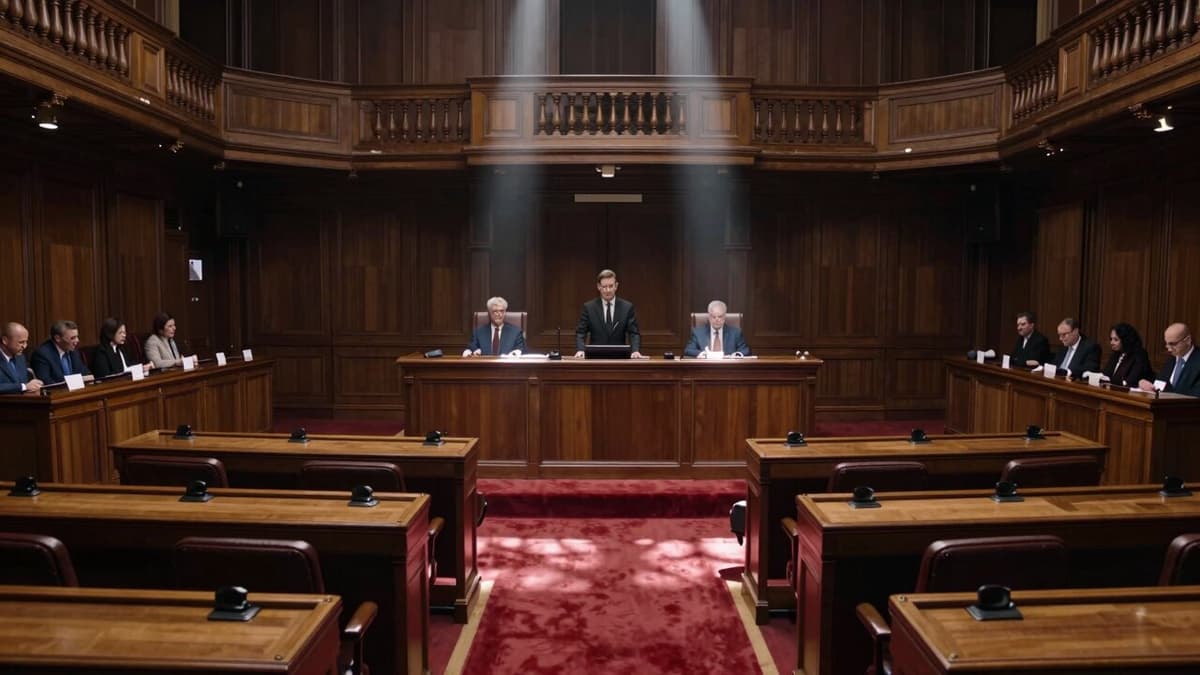
Union Finance Minister Nirmala Sitharaman and PM Modi address the West Asia crisis, strategic oil reserves, and the Corporate Laws Amendment Bill during the Budget Session.
Prime Minister Modi emphasized that the government is currently formulating a comprehensive three-pronged strategy—short-term, medium-term, and long-term—to minimize the economic and social impact of the West Asia crisis. A primary focus of these preparations has been energy security.
Highlighting India's resilience, the PM noted that the country has significantly bolstered its strategic petroleum reserves over the last decade. Currently, India holds 53 lakh metric tonnes of strategic reserve petrol, separate from the stockpiles held by private oil companies. This totals 56 lakh metric tonnes, ensuring the nation has a robust buffer against supply shocks. Additionally, Modi pointed to the success of ethanol blending programs, which have reduced crude oil import requirements by 4.5 crore barrels compared to previous years.
Addressing the agricultural sector, the PM assured farmers that the government has made adequate arrangements for fertilizer supplies, drawing on lessons learned during the pandemic to prevent agricultural distress. "The government didn't allow the impact of COVID to be felt by farmers, and we will do everything possible to help them now," he stated.
On the humanitarian front, the PM updated the House on the evacuation efforts. To date, 3,75,000 Indians have been safely returned to India. Of these, approximately 1,000 have returned from Iran alone, with around 700 being medical students pursuing MBBS degrees there. The PM urged the Parliament to send a united voice regarding the crisis, noting that the conflict zone remains a critical aspect of India's business and trade relations.
He also issued a cautionary note regarding domestic stability, stating that certain elements may attempt to exploit the situation. Consequently, the government is closely monitoring law and order to ensure that any potential unrest is quickly contained.
In the legislative chamber, Union Finance Minister Nirmala Sitharaman took center stage to introduce the Corporate Laws (Amendment) Bill, 2026. This legislation seeks to further amend the Limited Liability Partnership Act, 2008, and the Companies Act, 2013. The bill aims to streamline regulations and empower the National Financial Reporting Authority with powers similar to those held by regulators like SEBI, the CCI, and the IBBI.
Sitharaman defended the bill against criticism, stating that it follows two years of extensive deliberation, including recommendations from the Company Law Committee and a public comment period on their 2022 reports. A key amendment involves the corporate social responsibility (CSR) criteria; the PM clarified that the changes are designed to adjust the net profit threshold, thereby favoring small businesses that are striving to grow.
However, the introduction of the bill faced staunch opposition. Manish Tewary of the Indian National Congress opposed the measure on multiple grounds, filing an interminum. He argued that the bill suffers from "excessive delegation of essential legislative functions," violating constitutional doctrines under Articles 245 and 246. Tewary pointed out that core policy matters—such as company classification, exemption thresholds, and penalty frameworks—are being left to subordinate legislation without adequate guidance from Parliament.
The session also saw discussions on social welfare and civil rights. Education Minister Dharmendra Pradhan addressed concerns regarding access to education loans for students from below-the-poverty-line (BPL) families. He clarified that the ministry's scheme is wide-ranging and not allocated strictly on a state or district basis. He highlighted the revision of the Vijayalakshmi scheme, which now offers a 15-year payback period, flexible family income criteria, and attractive interest rates of 3% or higher, all without the need for collateral.
On the other side of the legislative divide, a significant debate emerged regarding the proposed amendments to the Transgender Persons (Protection of Rights) Act, 2019. On Sunday, March 22, 2026, MPs from the RJD, INC, and CPI(M), along with civil society representatives, gathered at the Press Club of India to oppose the bill. The proposed amendments would remove the right to self-perceived gender identity, replacing it with a requirement for a medical board to determine transgender status based on a new definition.
Manoj Kumar Jha (RJD) criticized the government for acting out of fear of street protests, while Renuka Chowdhury warned of an "uphill battle" to defeat the legislation in Parliament. John Brittas noted that while no formal strategy meeting had yet been held among opposition parties, coordination was expected to take place in the upcoming gathering of Parliamentarians.
As the second phase of the Budget Session continues, the Parliament is poised to take up the Appropriation No. 2 Bill and the Finance Bill for the 2026-2027 fiscal year. With the Business Advisory Committee allocating seven hours for these combined discussions, the focus remains on balancing economic recovery with legislative reform.
The trajectory of the session will likely depend on the government's ability to navigate the contentious Corporate Laws Amendment Bill while maintaining the economic stability required to weather the West Asia crisis. The next meeting of Opposition Parliamentarians, as hinted by civil rights activists, will be a critical juncture in determining the political landscape for the upcoming bills. As the nation looks toward electric mobility and enhanced refining capacities, the coming weeks will test the resilience of India's policy framework in the face of global uncertainty.
May 7, 2026 17:24 UTC
Iran Enforces New Maritime Rules for Hormuz Transit
Join 50,000+ readers getting the global briefing every morning.
No spam. Unsubscribe anytime.
May 7, 2026 19:41 UTC
Court Rejects Hegseth’s Bid to Punish Kelly for Speech
May 7, 2026 17:29 UTC
Samrat Choudhary Becomes First BJP Chief Minister of Bihar
May 7, 2026 17:24 UTC
Iran Enforces New Maritime Rules for Hormuz Transit
May 7, 2026 15:29 UTC
TVK Allies Urge Governor to Invite Vijay to Form Government


