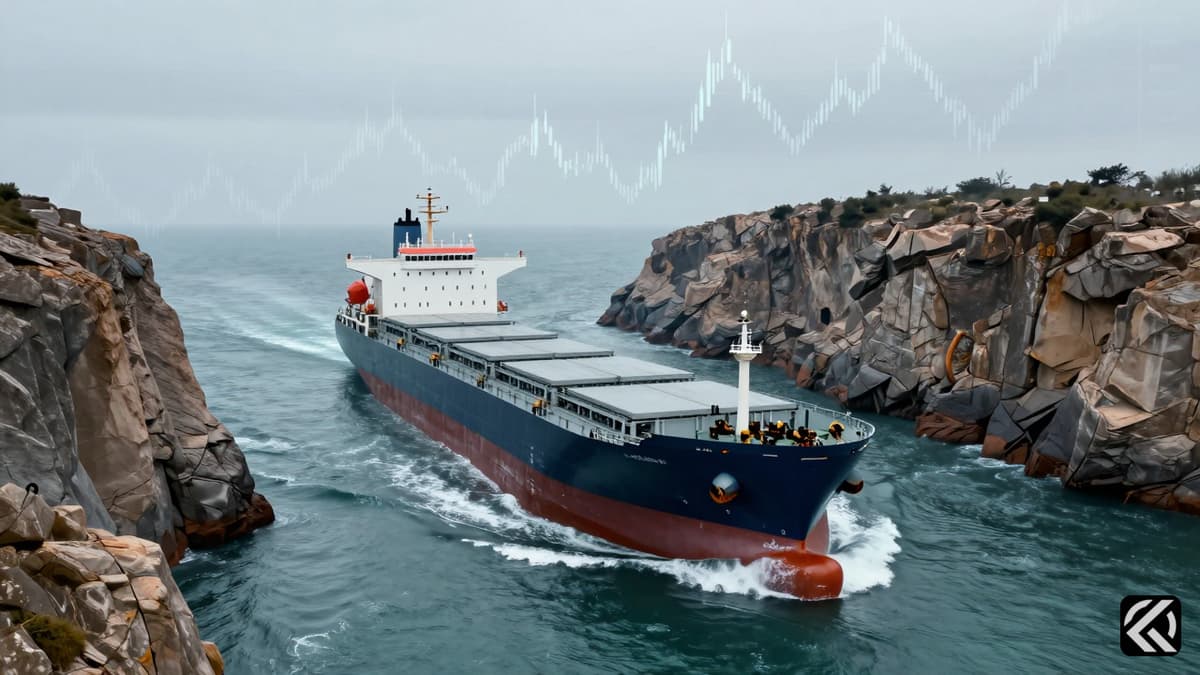
New mandates complicate shipping in the Strait of Hormuz, driving volatile oil prices as Iran and the US navigate tense negotiations and economic fallout.
Iran has introduced stringent new regulations for maritime transit, requiring vessels to complete a detailed declaration form to navigate the Strait of Hormuz. This move marks a significant escalation in Tehran’s control over the strategic waterway amid the ongoing Iran war.
The document, titled “Vessel Information Declaration,” was issued by Iran’s Persian Gulf Strait Authority (PGSA) and mandates that all transiting ships provide extensive personal and operational data. Richard Meade, editor-in-chief of Lloyd’s List Intelligence, shared the form with CNN, noting it comprises over 40 questions. These requirements include the vessel’s name, identification number, previous name, country of origin, destination, and the nationalities of the registered owner, manager, and crew members.
This new system, launched on Tuesday, requires all intending vessels to receive an email from the PGSA outlining regulations. The email emphasizes that “complete and accurate information is essential” and warns that further instructions will follow. Meade described the initiative as a play by Iran to “normalize its authority over transits,” formalizing a structure that was already informally in place. Before February 28, when the US and Israel launched military operations against Iran, no such information was required for transit.
The PGSA has restricted passage to vessels linked to the US or Israel. This formalization comes as about 1,600 ships remain stuck near the strait, facing a two-month wait for clearer navigation windows. The last US attempt to “guide” ships through the waterway lasted only 48 hours and resulted in only two guided transits. Shipping companies are now unwilling to bear the risk, noting that insurers’ wartime clauses do not cover vessels stuck in conflict zones, making any transit extraordinarily costly.
The conflict has triggered significant economic ripples. Shell reported a $1.3 billion jump in first-quarter profits to $6.9 billion, driven by volatility in oil prices and higher fuel costs. CEO Wael Sawan cited “unprecedented disruption in global energy markets.” Similarly, BP reported doubled profits, while the End Fuel Poverty Coalition called for a windfall tax on oil companies to offset rising household energy bills.
In Europe, Transport Minister Philippe Tabarot announced financial aid for airlines struggling with rising jet fuel costs, as 75% of Europe’s fuel is imported from the Middle East. EU Transport Commissioner Apostolos Tzitzikostas clarified that soaring fuel costs do not exempt airlines from reimbursing passengers for canceled flights.
Amidst the conflict, Iran’s embassy in South Korea firmly rejected claims of Iranian involvement in the damage to a South Korean-linked vessel in the strait. However, Tehran emphasized that the waterway is part of its “defensive geography.” Earlier, US President Donald Trump claimed Iran had “taken some shots” at the ship, which sustained damage but reported no casualties.
Market reactions have been swift. Brent crude fell 1.5% to $99.8 a barrel, continuing a slump from Monday’s peak. However, analysts like Mohit Kumar of Jefferies predict oil prices will not return to pre-war levels, forecasting Brent around $80 in the coming months. Meanwhile, defiant crowds rallied in Tehran, questioning if President Trump would launch further attacks as negotiations continue.
The formalization of Iran’s transit rules and the ongoing diplomatic maneuvering suggest a prolonged period of uncertainty for global energy and shipping routes. While current negotiations may ease immediate tensions, the structural changes imposed by the PGSA indicate that the Strait of Hormuz will remain a heavily regulated choke point. Investors and logistics firms must prepare for continued volatility in oil prices and aviation costs, as the region’s security situation evolves without a guaranteed long-term resolution to the underlying geopolitical conflict.
May 7, 2026 11:58 UTC
Operation Sindoor: One Year Since Pahalgam Attack and Military Response
May 7, 2026 11:10 UTC
Iran War Forces Strait of Hormuz Control Amid Oil Price Volatility
May 7, 2026 07:16 UTC
Tehran Prepares Response as Ships Stranded in Strait of Hormuz Crisis
May 7, 2026 05:46 UTC
Trump Claims Progress as Iran-US War Negotiations Stall Amid Strait of Hormuz Crisis
May 7, 2026 13:16 UTC
Rubio Meets Pope as Iran Weighs US War Proposal


