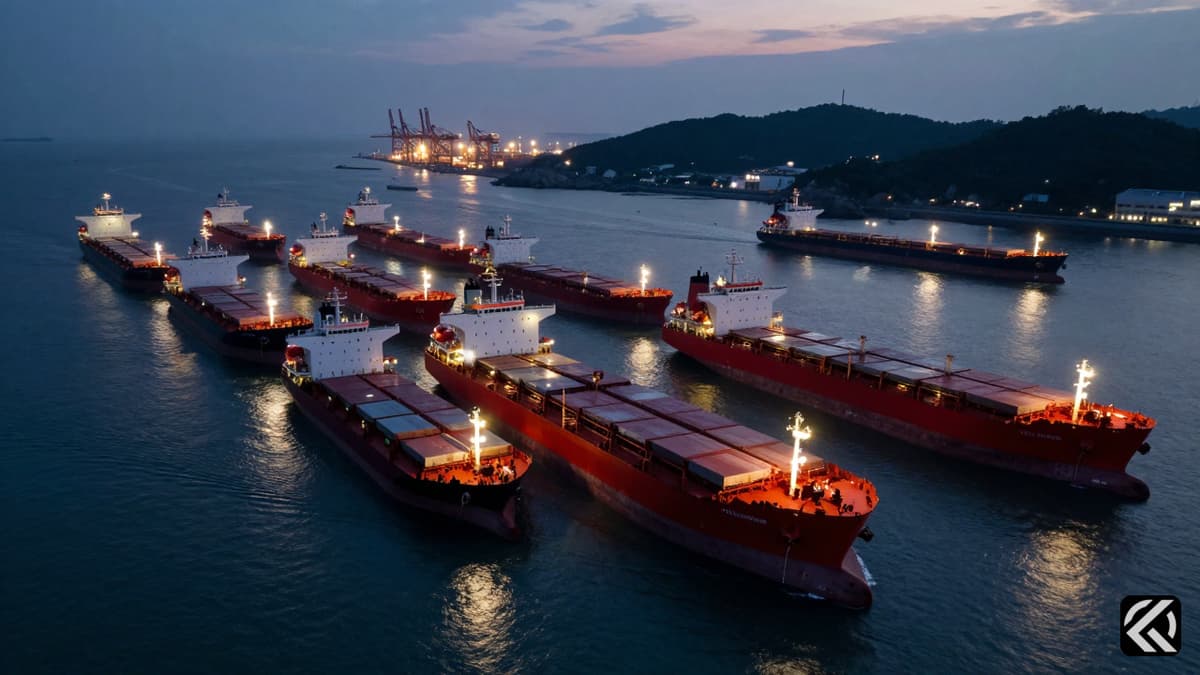
With Iran poised to respond to a US peace proposal, thousands of ships remain stranded near the Strait of Hormuz amid escalating military tensions and diplomatic maneuvering.
The global logistics landscape is grappling with a severe shipping crisis as approximately 1,600 vessels remain trapped near the Strait of Hormuz for over two months. This bottleneck coincides with critical US-Iran negotiations, where Tehran is expected to hand its response to mediators today regarding a potential peace memorandum.
President Donald Trump recently concluded that talks with Iran were “very good” but warned that continued bombing would resume if no agreement is reached. Meanwhile, the humanitarian and economic toll of the conflict continues to mount, with naval escorts deemed unsustainable by international maritime authorities.
The financial and physical peril for maritime transport has reached unprecedented levels. According to reports, shipping companies are currently unwilling to bear the immense risk of transit through the contested waters. Letting ships leave the area would endanger both the valuable cargo and the personnel aboard. The stakes are incredibly high; any damage to a multimillion-dollar ship would inflict severe financial and logistical setbacks on the operating companies.
Compounding this danger is the reality of international insurance contracts. Insurers have activated wartime clauses in their policies that explicitly do not require them to cover vessels stuck in the middle of a war. Consequently, moving ships without that specific financial backing risks being extraordinarily costly for commercial entities. The market is paralyzed, waiting for a diplomatic breakthrough that has yet to materialize.
The US military’s attempt to unblock the strait saw limited success. President Trump’s operation to “guide” ships through the waterway lasted just 48 hours, during which only two ships were successfully guided through. Now that the ships are on their own again, the willingness of companies to navigate the zone has evaporated. The risk-reward ratio has shifted entirely against commercial interests, leading to a stalemate that affects global trade.
The human cost of the conflict is starkly illustrated by data from the International Maritime Organization (IMO). Thirty-two ships have been hit with missiles since the beginning of the war, resulting in 10 deaths and at least a dozen injuries. The IMO continues to urge ships to “exercise maximum caution” while acknowledging that “naval escorts are not a sustainable long-term solution.” This admission highlights the inadequacy of military intervention in resolving a complex diplomatic and commercial deadlock.
Amidst the maritime standoff, defiant crowds gathered in Tehran on Wednesday night, waving flags and chanting “down with Israel” during a rally supporting the country’s leadership. The streets were filled with music and singing as Iranian people waved phone lights, pumped their fists, and held pictures of Iran’s former Supreme Leader Ayatollah Ali Khamenei, who was killed during a joint US-Israeli airstrike in February.
At the event, attendees like Rahmatpour expressed skepticism about further US aggression. “In my opinion, Trump doesn’t have the guts (to attack again), because we are a superpower ourselves and I don’t think they will attack us anymore,” Rahmatpour told Reuters. However, he added, “If they attack again, it’s foolishness again, so it depends, he (Trump) is capable of such a thing (to attack again) on whether they can do such a thing, but I hope not.”
The diplomatic front remains the most critical variable. The United States and Iran are moving closer to an agreement on a short memorandum aimed at ending the war. Sources indicate that Tehran is expected to hand over its response to mediators today. This potential deal would declare an end to the war and trigger a 30-day period for resolving sticking points. These issues include nuclear matters, the unfreezing of Iranian assets, and security in the Strait of Hormuz.
In a recent interview with PBS News, President Trump outlined the terms of the potential deal. He stated it would include Tehran shipping its highly enriched uranium to the US and pledging not to operate its underground facilities. Trump emphasized that the US has had “very good talks” over the previous 24 hours but simultaneously threatened the resumption of bombing if Iran does not agree to a deal.
Israel’s role in these proceedings remains fraught with anxiety. Israeli Prime Minister Benjamin Netanyahu held talks with Trump administration officials yesterday to better understand the developments in negotiations between the US and Iran. An Israeli source revealed that Israel is concerned about potential last-minute US concessions, underscoring the delicate balance of power in the region.
Meanwhile, the ceasefire in Lebanon appears fragile. Israel targeted a top Hezbollah commander yesterday in the first strike on the capital since the start of the truce in Lebanon, underscoring the fragility of the truce. This action highlights the multi-front nature of the conflict and the difficulty of isolating the Iranian issue from its regional proxies.
On the logistical front, the US military fired on an Iranian-flagged tanker heading toward an Iranian port yesterday, enforcing its blockade. This action came hours after Iran launched a body it said will govern traffic through the Strait of Hormuz, its latest effort to formalize control over the trade chokepoint. Simultaneously, French President Emmanuel Macron encouraged countries to join a multinational mission seeking to secure shipping in the strait after a call with his Iranian counterpart.
The outcome of today’s potential response from Tehran will dictate the immediate future of global energy markets and regional stability. If the US-Iran negotiations succeed, the 30-day window for resolving nuclear and asset issues could begin de-escalating tensions, potentially allowing the 1,600 stranded ships to resume navigation with reduced risk. However, if the deal fails, the threat of renewed US bombing and further Israeli strikes, as seen in Beirut, suggests a rapid escalation into a broader regional conflict. The continued blockade and targeted strikes indicate that without a formalized security agreement, the Strait of Hormuz will remain a lethal hazard for commerce, prolonging the shipping crisis and straining international insurance frameworks. The fragile ceasefire in Lebanon and the unresolved nuclear issues mean that even a partial deal may only offer temporary relief, leaving the underlying geopolitical tensions to simmer until the next diplomatic breakthrough or military provocation.
CNN’s Joseph Ataman, Mitchell McCluskey, Dana Karni, Thomas Bordeaux, Alejandra Jaramillo, Kit Maher, Max Saltman, Nic Robertson, Alayna Treene, Kevin Liptak and Tal Shalev contributed reporting on this post.
May 7, 2026 13:16 UTC
Rubio Meets Pope as Iran Weighs US War Proposal
Join 50,000+ readers getting the global briefing every morning.
No spam. Unsubscribe anytime.
May 7, 2026 11:58 UTC
Operation Sindoor: One Year Since Pahalgam Attack and Military Response
May 7, 2026 11:10 UTC
Iran War Forces Strait of Hormuz Control Amid Oil Price Volatility
May 7, 2026 09:44 UTC
Suvendu Adhikari's Aide Shot Dead in West Bengal Election Violence
May 7, 2026 07:45 UTC
Tamil Nadu Assembly Election: TVK Chief Minister Race Intensifies


