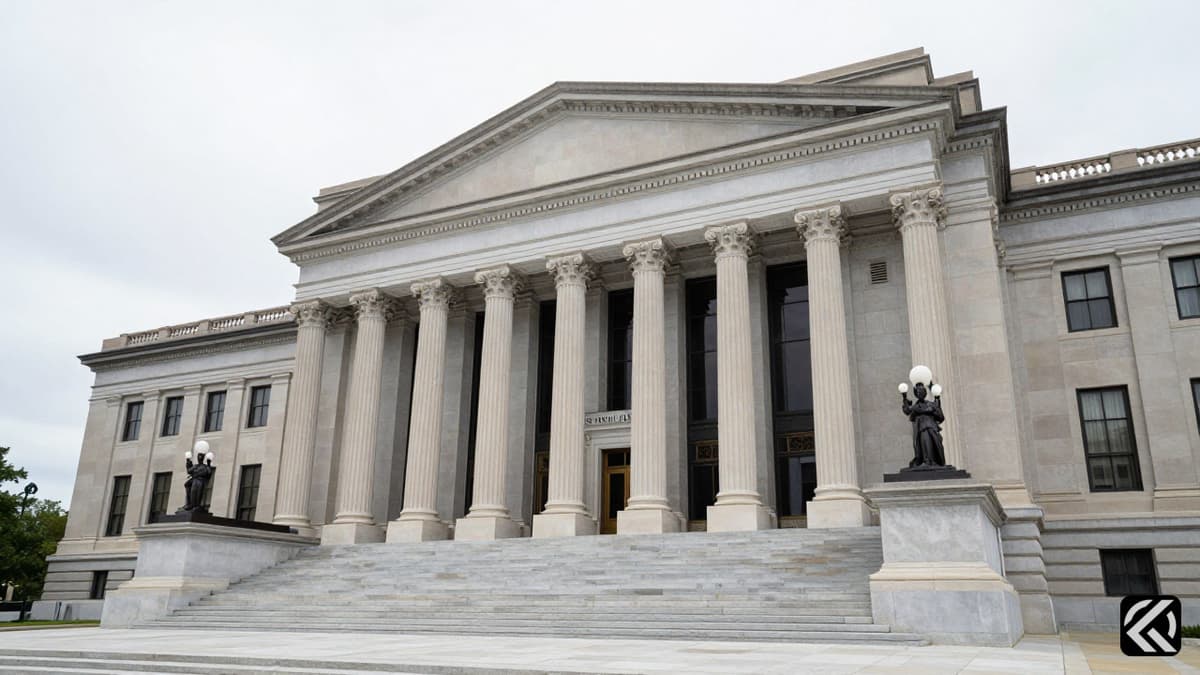
A federal appeals court appears ready to reject Defense Secretary Pete Hegseth’s effort to punish Senator Mark Kelly for urging service members to refuse illegal orders.
A federal appeals court appeared ready Thursday to reject Defense Secretary Pete Hegseth’s effort to punish Democratic Sen. Mark Kelly over his call to US service members to refuse illegal orders. The DC US Circuit Court of Appeals heard arguments from the Justice Department, which sought to revive Hegseth’s plans after a lower court judge shut them down earlier this year as unconstitutionally retaliatory.
During the lengthy hearing, a majority of the three-judge panel spent more than an hour and a half expressing skepticism toward the government’s arguments. The case represents a significant test of the reach of free speech protections for former US military members and serves as the latest flashpoint in President Donald Trump’s campaign to use government levers to punish high-profile critics.
Kelly, a retired Navy captain and former astronaut, sued Hegseth in January after the defense secretary announced the Pentagon would pursue administrative action against the Arizona senator. The proposed penalties included reducing Kelly’s last military rank, which would lower the pay he receives as a retired Navy captain, and issuing a formal letter of censure. Both Hegseth and Trump had attacked Kelly over a video posted in November by the lawmaker and five other Democrats with a history of military or intelligence service. In the video, they urged service members not to obey unlawful orders that could be issued by the Trump administration.
The lawmakers did not specify which orders had been or might be received that could be illegal, but the video emerged as allies and others questioned the legality of military strikes targeting suspected drug traffickers in the Caribbean and eastern Pacific. It also followed the Trump administration facing multiple court challenges regarding the president’s decision to send federalized state National Guard members to Democratic-led cities. Federal prosecutors in Washington, DC, also attempted to indict the lawmakers over the video, but were rebuffed by a grand jury in a remarkable pushback rarely seen.
At issue in Thursday’s case were thorny questions about how much First Amendment protection retired service members have over speech directed at serving members of the military. Justice Department lawyer John Bailey contended that, like active-duty members, retirees can have their speech curtailed or be punished for objectionable speech if officials believe it impacts the discipline and good order of the troops. Bailey argued that Kelly’s comments were not an “abstract legal education” but rather part of a pattern of conduct. He described the situation as a “wink-wink and a nod,” referencing Kelly’s remarks about the military being used for counter-narcotics operations.
Bailey repeatedly asserted that Kelly’s case was controlled by a 1970s Supreme Court decision in which justices said an active-duty officer could be punished for imploring service members not to fight in the Vietnam War. However, Judges Nina Pillard and Florence Pan made clear they did not see that precedent as applicable due to stark factual differences. Judge Pillard, an appointee of former President Barack Obama, noted that Sen. Kelly never says disobey lawful orders, describing his comments later as an “abstract statement of a principle.”
The judges acknowledged the complexity of the legal landscape. Both Pillard and Pan seemed to agree with Kelly’s argument that retired service members have neither the full free speech protections enjoyed by civilians nor the limited First Amendment rights active-duty service members have. Instead, the millions of retirees like Kelly who still receive pay from the military likely fall into a third category that has never before been sketched out by a court.
“It’s not clear what the standard is for a retiree,” Judge Pan, an appointee of former President Joe Biden, said. She added that the court may not need to define that standard at all. In the end, the panel could reject the government’s position that retirees are on par with active-duty service members without going any further. Judge Pan emphasized the absurdity of the administration’s position, stating, “These are people who served their country - many put their lives on the line. And you’re saying that they have to give up their retired status in order to say something that is a textbook example taught at West Point and the Naval Academy - that you can disobey illegal orders.”
Judge Pillard reinforced this sentiment, noting, “That is something that is taught at Annapolis to every cadet.” The third member of the panel, Judge Karen Henderson, an appointee of former President George H. W. Bush, seemed at least somewhat sympathetic to the administration’s arguments. She suggested that since Kelly could be recalled at any time and court-martialed, other tools must also be available for the military to use to go after him over his conduct.
Kelly’s lawyer, Benjamin Mizer, told the court that Hegseth’s plan to reduce the senator’s pay and censure him represented “textbook retaliation for disfavored speech.” Mizer argued that Kelly was being targeted for stating something that has traditionally been viewed as uncontroversial. “He simply recited the bedrock principle of military law,” Mizer said.
Outside the courthouse after the hearing, Kelly issued a warning about the purpose of the censure effort. “If you say something that the president and this administration does not like, they’re going to come after you,” Kelly said. He noted that the administration argued in court that “any time a retired veteran says something the secretary of defense doesn’t like, they can be punished.” Kelly added, “The people who have given the most in service to this country wouldn’t be free to say what they believe.”
The appeals court’s apparent rejection of the government’s arguments could have profound implications for the speech rights of retired military personnel and the administration’s ability to use administrative tools against political critics. If the court ultimately rules in favor of Kelly, it may establish that retired service members occupy a distinct legal category with significant free speech protections, separate from active-duty constraints. This decision could halt similar administrative actions by the Trump administration against other high-profile critics who have military backgrounds. Furthermore, the ruling may reinforce the principle that criticizing potential unlawful orders, even from public figures, remains protected speech rather than a punishable offense against military discipline. The outcome will likely serve as a critical boundary marker for executive power over military personnel and veterans in the era of heightened political polarization.
May 7, 2026 17:24 UTC
Iran Enforces New Maritime Rules for Hormuz Transit
Join 50,000+ readers getting the global briefing every morning.
No spam. Unsubscribe anytime.
May 7, 2026 17:29 UTC
Samrat Choudhary Becomes First BJP Chief Minister of Bihar
May 7, 2026 17:24 UTC
Iran Enforces New Maritime Rules for Hormuz Transit
May 7, 2026 15:29 UTC
TVK Allies Urge Governor to Invite Vijay to Form Government
Rubio Meets Pope as Iran Weighs US War Proposal


