
Section
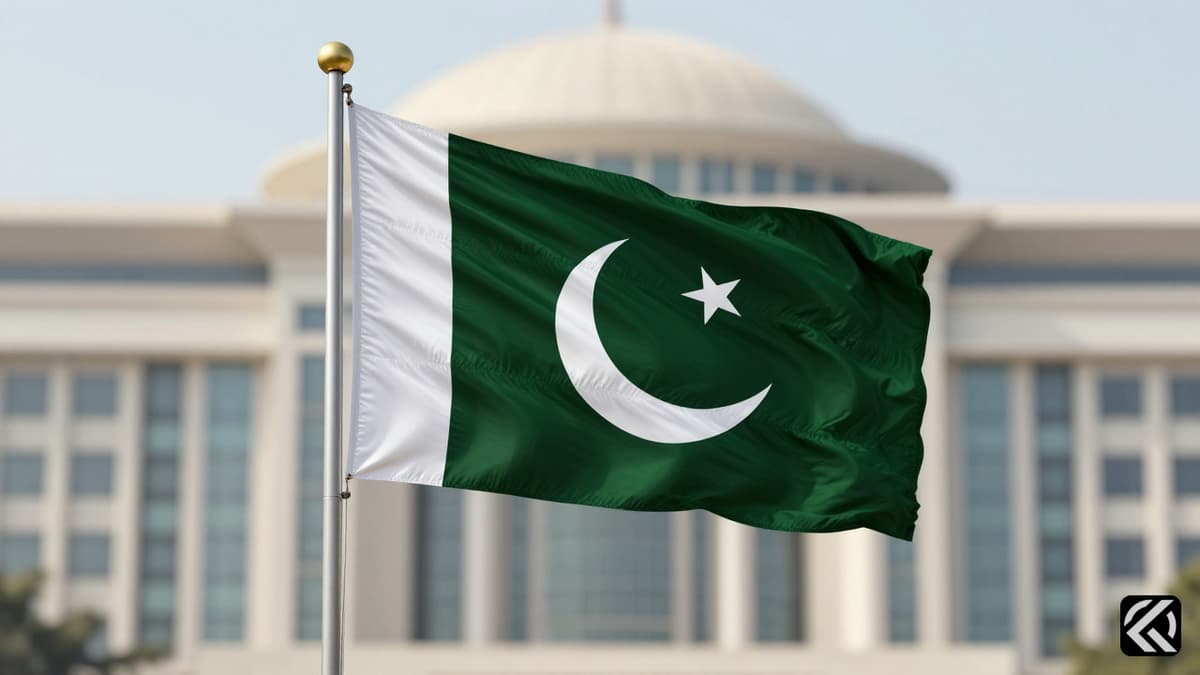
Pakistan has firmly rejected US President Donald Trump's proposal for Islamabad to join the Abraham Accords, stating that such an agreement contradicts its core national ideologies and longstanding stance on Palestine.
Pakistan on Monday firmly rejected the possibility of joining the Abraham Accords after US President Donald Trump called on several Muslim-majority countries, including Pakistan, to normalise ties with Israel as part of a broader regional agreement linked to ongoing negotiations with Iran. The rejection highlights the continued diplomatic friction between Islamabad and Jerusalem, underscoring Pakistan's unwavering commitment to its historical stance on Palestinian statehood.
The response came directly from Pakistan’s Defence Minister Khawaja Asif, who stated that Islamabad would not support any agreement that contradicted the country’s “fundamental ideologies.” During an interview with Pakistani broadcaster Samaa TV, Asif reiterated Pakistan’s long-standing refusal to recognise Israel without the establishment of a Palestinian state. “Personally, I don't think we should join any such accord that clashes with our fundamental ideologies,” Asif said. He further questioned the credibility of engagement with Jerusalem, asking, “How will you sit down with those people whose word cannot be trusted even for a single day?” Reiterating the nation's official position, the Defence Minister declared, “We have a very clear stance that this is not acceptable to us.”
Asif also highlighted a unique aspect of Pakistan’s diplomatic relationship with Israel, noting its strict passport policy. “And secondly, on our passports, we are the only country whose passports don't even include Israel's name,” he added. These remarks were made hours after Trump pushed for an expansion of the Abraham Accords as part of a wider diplomatic settlement tied to a possible US-Iran agreement.
In a lengthy Truth Social post, Trump claimed that negotiations with Iran were “proceeding nicely” and urged countries including Saudi Arabia, Qatar, Pakistan, Turkey, Egypt, and Jordan to join the accords. “Negotiations with the Islamic Republic of Iran are proceeding nicely! It will only be a Great Deal for all or, no Deal at all,” Trump wrote, warning that failure to reach an agreement could mean “Back to the Battlefront and shooting, but bigger and stronger than ever before.” Trump said Saudi Arabia and Qatar should immediately join the accords after a deal with Iran and suggested that Tehran itself could eventually become part of the framework if negotiations succeeded.
According to Trump, the Abraham Accords had delivered a “Financial, Economic, and Social BOOM” to existing signatories, including the United Arab Emirates, Bahrain, Morocco, Sudan, and Kazakhstan. “The Abraham Accords have been great for them, and will be even better for everybody, and bring true Power, Strength, and Peace to the Middle East,” he wrote. Trump also claimed he had discussed the proposal with several regional leaders, including Saudi Crown Prince Mohammed bin Salman, UAE President Mohammed bin Zayed Al Nahyan, Qatar Emir Sheikh Tamim bin Hamad Al Thani, Pakistan Army Chief Asim Munir, Turkish President Recep Tayyip Erdoğan, Egyptian President Abdel Fattah el-Sisi, and Jordan’s King Abdullah II.
Calling the proposed arrangement potentially “the most important Deal” in the region’s history, Trump said he had instructed his representatives to begin expanding the accords to more nations. However, Pakistan maintained that its position on Israel remained unchanged. Islamabad ties any possible recognition to the creation of an independent Palestinian state based on pre-1967 borders with East Jerusalem as its capital. Asif, one of Pakistan’s strongest critics of Israel, has previously accused Israel of carrying out “genocide” in the region and described the country as a “curse for humanity.”
The Abraham Accords, launched in 2020, were a series of United States-brokered diplomatic agreements designed to normalise relations between Israel and several Arab and Muslim-majority nations. Originally signed on September 15, 2020, during Trump’s first presidency, the initial agreements involved Israel, the United Arab Emirates, and Bahrain. The accords are named after Abraham, a patriarch revered in Judaism, Christianity, and Islam, and were presented as an attempt to promote coexistence, economic cooperation, and regional stability.
Unlike earlier Arab policies that linked recognition of Israel to the creation of a Palestinian state, the Abraham Accords prioritised strategic, economic, and security partnerships first, particularly amid growing concerns over Iran’s regional influence. The agreements focused on expanding diplomatic ties, direct flights, trade, investment, tourism, defence cooperation, technology partnerships, and intelligence sharing between participating countries.
The framework has been widely described as the biggest Arab-Israeli diplomatic breakthrough since Egypt recognised Israel in 1979 under the Camp David Accords and Jordan established formal ties with Israel in 1994. The United Arab Emirates became the first Gulf nation to sign, viewing the agreement as an opportunity to deepen economic ties and strengthen security coordination. Bahrain joined alongside the UAE, influenced by its ties with Saudi Arabia and the US. Morocco joined in December 2020 in exchange for US recognition of its sovereignty over Western Sahara. Sudan agreed to join in late 2020 as part of a US-backed arrangement involving its removal from the state sponsors of terrorism list, though political instability has slowed implementation. Kazakhstan formally joined the grouping in 2025, expanding the framework beyond Arab states.
Egypt and Jordan had already established ties with Israel decades before the accords. Egypt signed the Camp David Accords in 1979, while Jordan signed a peace treaty in 1994. Both countries are often discussed alongside the accords but are not signatories. Saudi Arabia remains the most significant nation yet to formally join, stating that formal recognition depends on a “clear and irreversible” path towards Palestinian statehood.
Pakistan’s refusal to engage with the Abraham Accords framework underscores its prioritisation of ideological consistency over geopolitical expediency. By maintaining its stance on Palestinian statehood and refusing to normalise ties with Israel, Islamabad signals a distinct diplomatic trajectory separate from other Muslim-majority nations. As US pressure mounts for broader regional integration to facilitate Iran negotiations, Pakistan’s resistance suggests that domestic ideological commitments will likely continue to outweigh external diplomatic incentives in Islamabad’s foreign policy calculus.
Jun 11, 2026 17:21 UTC
Bangladesh Opposition Mobilizes Against India-Bangladesh Border Push-Ins and BSF Killings
Join 50,000+ readers getting the global briefing every morning.
No spam. Unsubscribe anytime.
Jun 11, 2026 17:40 UTC
Boelter Pleads Guilty in Minnesota Political Assassinations
Jun 11, 2026 17:21 UTC
Bangladesh Opposition Mobilizes Against India-Bangladesh Border Push-Ins and BSF Killings
Jun 11, 2026 17:21 UTC
John Healey Quits as UK Defence Secretary Over Funding Dispute
Jun 11, 2026 16:19 UTC
UK Defence Secretary John Healey Quits Over Funding Dispute


