
Section
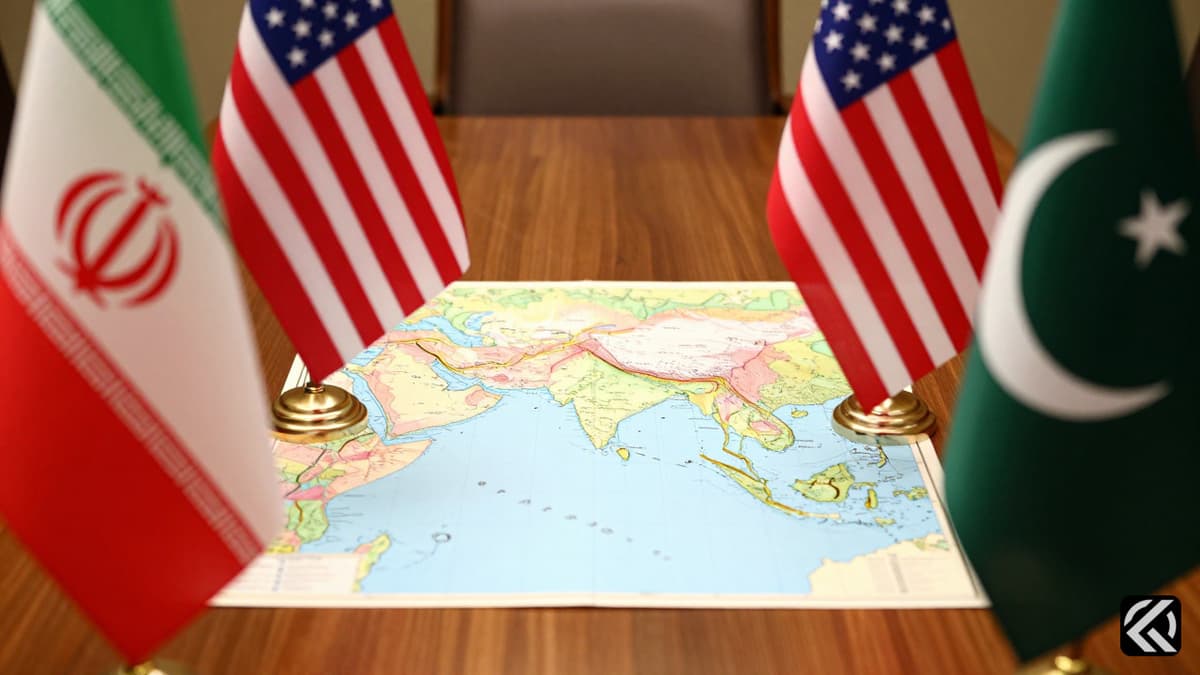
Diplomatic breakthroughs emerge as Pakistan mediates an Iran US deal to reopen the Strait of Hormuz, while Iran prepares a robust military response if hostilities resume.
U.S. President Donald Trump announced on Saturday that Iran and the U.S. had largely negotiated a comprehensive agreement involving the opening of the Strait of Hormuz, though the draft remains subject to finalization.
The diplomatic landscape shifted rapidly as Iran’s Foreign Ministry confirmed it was finalizing a 14-point framework for a deal with the United States, signaling convergence on key issues while cautioning that significant gaps remain.
On Saturday, May 23, 2026, U.S. President Donald Trump took to Truth Social to declare that an agreement had been "largely negotiated" between the United States, the Islamic Republic of Iran, and various other countries in West Asia. “An Agreement has been largely negotiated, subject to finalisation between the United States of America, the Islamic Republic of Iran, and the various other Countries,” Trump wrote. He specifically noted that the Strait of Hormuz would be opened as part of these terms.
“I had a call with Prime Minister Bibi Netanyahu, of Israel, which, likewise, went very well,” Trump added, listing his conversations with leaders from Saudi Arabia, the United Arab Emirates, Qatar, Pakistan, Turkiye, Egypt, Jordan, and Bahrain, alongside Israel. He stated that final aspects and details of the deal were being discussed and would be announced shortly.
Simultaneously, Iranian officials provided more concrete details regarding their position. Iranian Foreign Ministry spokesman Esmaeil Baqaei stated on state television that Tehran was in the final stages of drafting a memorandum of understanding composed of 14 clauses. “Our intention was first to draft a memorandum of understanding, a kind of framework agreement composed of 14 clauses,” Baqaei said. He highlighted that the issue of the Strait of Hormuz was addressed in the memorandum, emphasizing the need to end what he described as piracy carried out by the United States against international navigation.
Baqaei also clarified Iran’s stance on regional sovereignty, stating that any mechanism concerning the Strait of Hormuz should be agreed upon by Iran, Oman, and countries bordering the waterway, asserting that the United States “has nothing to do” with it. Despite expressing a “trend towards rapprochement” with Washington, Baqaei cautioned that this did not guarantee an agreement on all important issues. He estimated that details would be discussed within 30 to 60 days to reach a final conclusion.
The mediation efforts have been spearheaded by Pakistan, whose Army Chief, Field Marshal Asim Munir, flew to Tehran on Friday for crucial talks. The Iranian government confirmed that Munir held discussions with Iran’s Foreign Minister, Abbas Araghchi, to end the West Asia conflict and establish lasting peace. Munir was received by Iran’s Interior Minister Eskandar Momeni, while Pakistan’s Interior Minister Mohsin Naqvi was already engaged in talks with top Iranian officials upon the Field Marshal’s arrival.
While diplomatic channels moved forward, military tensions remained high. Iranian chief negotiator Mohammad Bagher Ghalibaf issued a stern warning on social media following his meeting with Field Marshal Munir in Tehran. Ghalibaf stated that Iran’s armed forces had rebuilt themselves during the ceasefire period. He warned that if President Trump “commits another act of folly and restarts the war, it will certainly be more crushing and bitter for the United States than on the first day of the war.”
The Financial Times reported on Saturday that mediators believe they are nearing an agreement to extend the U.S. ceasefire with Iran by 60 days. This potential framework would include a gradual reopening of the Strait of Hormuz, discussions on diluting or transferring Iran’s stockpile of enriched uranium, and steps by Washington to ease its blockade of Iranian ports and provide sanctions relief.
In Lebanon, Hezbollah announced it had received a message from Iranian Foreign Minister Abbas Araghchi confirming that Iran would not drop its support for the group. The group’s statement noted that Tehran’s proposal, submitted through Pakistani mediation to end the Iran war, reaffirmed its demand that Lebanon be included in any ceasefire agreement.
Despite the diplomatic progress, violence continued in the region. Israel maintained strikes on Lebanon on Saturday, hitting military barracks in the south and damaging a hospital in Tyre after an overnight raid. Israeli military issued evacuation warnings for 15 south Lebanon villages, indicating further strikes were imminent. Lebanese state media reported that an airstrike in an agricultural area wounded several Syrian workers. The Israeli military has been pounding Lebanon despite an April 17 ceasefire, which was recently extended for several weeks, while Hezbollah has also continued attacks.
The broader economic impact of the conflict is being closely watched. Sajjan Jindal, chairman of JSW Group, stated on Saturday that the West Asian conflict would not last more than two months and would not significantly hinder India’s growth story. He noted that industries focus on long-term plans and viewed the conflict as a temporary setback.
Separately, a source familiar with U.S. arms sales to Taiwan clarified that the process, which could be worth up to $14 billion, takes years and is unrelated to the conflict with Iran. The source dismissed suggestions that the war was pausing these sales, asserting that the U.S. military has sufficient stockpiles to serve all strategic goals. Meanwhile, Iran’s IRGC Navy reported that 25 ships had passed through the Strait of Hormuz in the last 24 hours after obtaining permission from Iran, signaling a partial normalization of traffic amidst the political negotiations.
The convergence of diplomatic efforts led by Pakistan and the tentative agreement between the U.S. and Iran suggest a potential de-escalation of hostilities. The proposed 60-day ceasefire extension and the framework for addressing nuclear concerns indicate a move toward a structured resolution. However, the continued military activity in Lebanon and the stark warnings from Iranian officials highlight the fragility of the peace process. If the 14-point framework is finalized, the reopening of the Strait of Hormuz could stabilize global energy markets, but any breach of the ceasefire could lead to intensified retaliation, underscoring the high stakes of the upcoming negotiations.
Jun 11, 2026 17:21 UTC
Bangladesh Opposition Mobilizes Against India-Bangladesh Border Push-Ins and BSF Killings
Join 50,000+ readers getting the global briefing every morning.
No spam. Unsubscribe anytime.
Jun 11, 2026 17:40 UTC
Boelter Pleads Guilty in Minnesota Political Assassinations
Jun 11, 2026 17:21 UTC
Bangladesh Opposition Mobilizes Against India-Bangladesh Border Push-Ins and BSF Killings
Jun 11, 2026 17:21 UTC
John Healey Quits as UK Defence Secretary Over Funding Dispute
Jun 11, 2026 16:19 UTC
UK Defence Secretary John Healey Quits Over Funding Dispute


