
Section
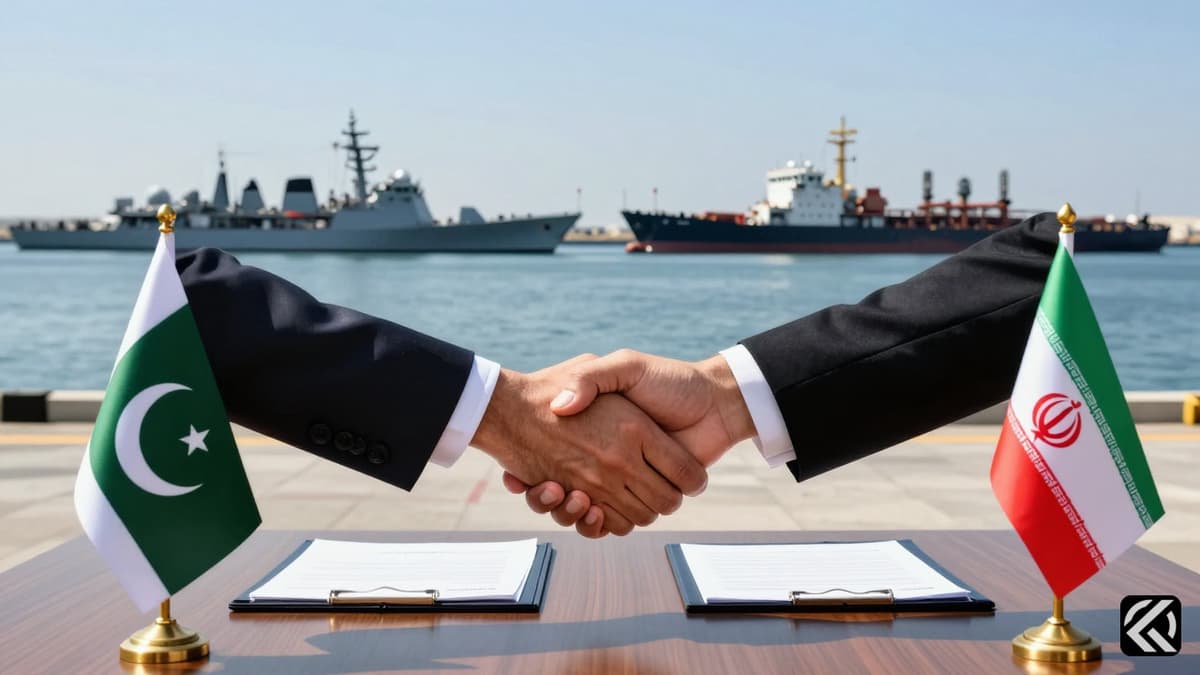
Pakistan's Army Chief leads critical mediation efforts as Iran and the U.S. navigate a fragile framework for peace, with the Strait of Hormuz central to negotiations.
On Saturday, May 23, 2026, critical diplomatic momentum surged as Pakistan’s Army Chief Field Marshal Asim Munir engaged in high-level talks in Tehran with Iran’s Foreign Minister Abbas Araghchi. The primary objective of this urgent mediation is to secure a lasting peace framework between Iran and the United States, aiming to resolve the ongoing West Asian conflict.
This strategic meeting follows Munir’s arrival in Tehran on Friday, part of intensified efforts to bridge gaps between Washington and Tehran. Concurrently, Iran’s Foreign Ministry announced it was finalizing a 14-point memorandum of understanding. While Tehran acknowledges a "trend towards rapprochement" with the U.S., officials cautioned that significant disparities remain. Central to these discussions is the future management of the Strait of Hormuz, a critical global energy chokepoint. Iran has firmly stated that any mechanism governing the strait must be agreed upon by Iran, Oman, and other bordering nations, explicitly excluding the U.S. from direct management roles despite recent U.S. claims to the contrary.
The diplomatic landscape remains complex, with mediators believing they are nearing an agreement to extend a U.S.-Iran ceasefire by 60 days. This potential deal includes gradual measures to reopen the Strait of Hormuz, discussions on diluting Iran’s enriched uranium stockpile, and steps by Washington to ease its naval blockade and sanctions. Iran’s Foreign Ministry spokesman, Esmaeil Baqaei, confirmed that the draft framework addresses the ending of what Tehran describes as U.S. "piracy" against international navigation.
Tehran’s position is uncompromising on sovereignty over the strait. In a sharp rebuttal to U.S. President Donald Trump’s recent announcement that the strait would be "opened" as part of a largely negotiated deal, Iran dismissed the U.S. claims as "incomplete and inconsistent with reality." Iranian officials, including Foreign Ministry spokesperson Esmaeil Baghaei, emphasized that the United States "has nothing to do" with the strait’s management, asserting that arrangements must involve regional powers directly adjacent to the waterway. This divergence in perspective highlights the delicate nature of the ongoing negotiations, where trust remains fragile.
The role of Pakistan as the primary mediator has intensified significantly. Beyond Field Marshal Munir’s meetings, Pakistan’s Interior Minister Mohsin Naqvi has been engaged in parallel talks with top Iranian officials. Munir was received in Tehran by Interior Minister Eskandar Momeni, signaling high-level coordination between the two nations. The Pakistani military described the visit as crucial for expediting a peace deal, leveraging its unique diplomatic channels to facilitate dialogue between the U.S. and Iran.
Military posturing continues alongside diplomatic efforts. Iran’s chief negotiator, Mohammad Bagher Ghalibaf, issued a stern warning following his meeting with Munir. He stated that Iran’s armed forces have rebuilt during the ceasefire and threatened a "crushing" response if the U.S. resumes hostilities. Ghalibaf’s social media post indicated that any renewed aggression would be "more crushing and bitter for the United States than on the first day of the war," underscoring the high stakes of the current mediation phase.
The conflict’s regional spillover remains acute, particularly regarding Lebanon. Hezbollah stated it received a message from Iranian Foreign Minister Abbas Araghchi reaffirming Tehran’s support for the group. The militant group insisted that any ceasefire agreement must include Lebanon, linking its status directly to the broader U.S.-Iran negotiations. Despite an April 17 ceasefire between Israel and Hezbollah, Israeli strikes continued on Saturday, targeting locations in southern Lebanon, including a hospital and agricultural areas, wounding several individuals and damaging infrastructure. Israel issued evacuation warnings for 15 villages, maintaining pressure despite the diplomatic flurry in Tehran.
Economic and industrial perspectives on the conflict offer a different dimension. Sajjan Jindal, Chairman of JSW Group, expressed confidence that the West Asian conflict’s impact on India’s growth would be temporary, lasting no more than two months. He noted that industries focus on long-term plans and that the current disruptions are little more than a setback for industrial growth, expecting capital expenditure to continue driven by domestic demand rather than global geopolitical volatility.
Meanwhile, unrelated diplomatic channels show that U.S. arms sales to Taiwan are undergoing standard multi-year processing and are unrelated to the Iran conflict, despite rumors of a pause. As the world watches, the coming 30 to 60 days will be critical. Iranian officials have indicated that details within the 14-point framework will be discussed within this timeframe, potentially leading to a final agreement. The success of these talks hinges on resolving the fundamental disagreement over the Strait of Hormuz’s governance and ensuring all regional actors, including Lebanon and Israel, are aligned with the resulting security architecture.
The convergence of views between Iran and the U.S. suggests a potential de-escalation, yet the gaps in the 14-point framework remain significant. If the 60-day ceasefire extension holds, it may provide the necessary window for a more comprehensive resolution. However, the continued military activities in Lebanon and Iran’s firm stance on the Strait of Hormuz indicate that underlying tensions persist. Long-term stability will depend on whether mediators can translate the current diplomatic momentum into a binding agreement that addresses nuclear concerns, regional security guarantees, and economic sanctions relief. Failure to bridge these gaps could lead to renewed hostilities, destabilizing global energy markets and regional alliances further.
Jun 11, 2026 12:59 UTC
US Strike on Settebello Kills Indian Sailors Amid Strait of Hormuz Tensions
Jun 11, 2026 12:49 UTC
Air India Flight 171 Crash Sparks Debate Over Boeing 787 Dreamliner Faults
Jun 11, 2026 08:51 UTC
US-Iran Conflict: Indian Seafarers Killed in Gulf Strike
Jun 11, 2026 18:04 UTC
Healey Quits Government Over Defence Spending Dispute


