
Section
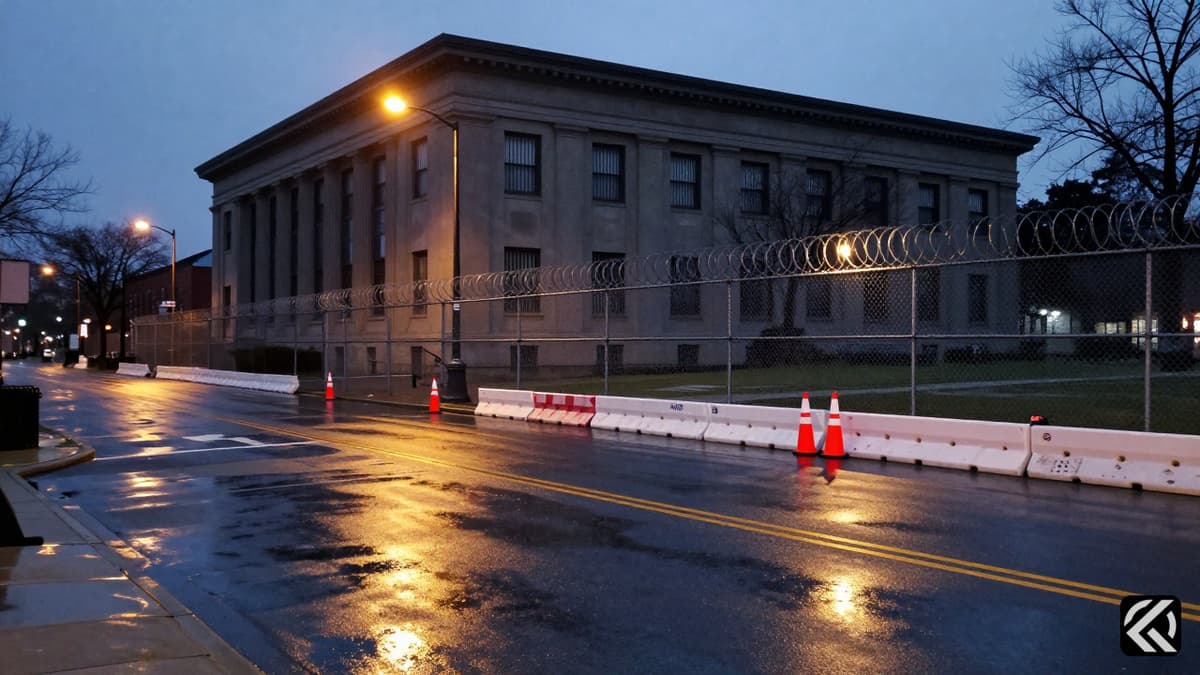
Newark establishes a strict nighttime curfew around the controversial Delaney Hall detention center as tensions spike between protesters, authorities, and federal agents.
Newark, New Jersey, has instituted a strict curfew in the immediate vicinity of the Delaney Hall immigration detention center, a facility that has recently become the epicenter of intense public debate and civil unrest. Mayor Ras Baraka made the announcement on Sunday morning, citing escalating safety concerns and the necessity for immediate police intervention to protect the public. The curfew restricts movement within a half-mile radius of the center between 9 p.m. and 6 a.m. Eastern time, effectively shutting down the area during nighttime hours to curb ongoing disturbances.
This decisive action comes as tensions outside the facility reach a boiling point, fueled by a prolonged hunger strike among detainees and fierce protests from supporters demanding better conditions and closure of the site. The detention center, operated by the private contractor GEO Group under a 15-year agreement with Immigration and Customs Enforcement (ICE), has seen daily confrontations since its reopening last year. In his statement, Mayor Baraka emphasized that the situation had deteriorated to a point where multiple individuals were arrested with weapons, underscoring the severity of the threat to public safety.
The curfew is accompanied by the closure of Doremus Avenue, a nearby road, to all pedestrians and vehicles unless they can verify a legitimate need to be in the restricted zone. Since the facility reopened as an immigration detention site last year, it has been a flashpoint for clashes between law enforcement and demonstrators. The month of May has been particularly volatile, marked by more than a week of continuous daily protests. These demonstrations were triggered in part by the announcement from lawyers representing the detainees that a hunger strike was underway inside the center.
Detainees have voiced serious grievances to human rights groups, alleging expired food, insufficient medical care, and abuse by authorities. While the Trump administration has framed its mass deportation drive as a necessary measure to remove "the worst of the worst," critics argue that many detainees lack criminal records. Data from the Transactional Records Access Clearinghouse at Syracuse University indicates that as of April, approximately 71 percent of individuals in ICE detention had no criminal conviction. This discrepancy has galvanized protesters, who have formed human chains and barricades to support the hunger strikers and block access to the facility.
Law enforcement has responded with batons and pepper spray to clear roads, leading to further confrontations. Governor Mikie Sherrill has advocated for designated protest zones to reduce conflict, but clashes persist. Overnight on Wednesday, six protesters were arrested, highlighting the ongoing volatility. The site has also been a venue for political drama, with past protests resulting in trespassing charges for Mayor Ras Baraka and assault charges for US Representative LaMonica McIver. Although Baraka’s charges were dropped, McIver continues to face legal proceedings, which she denies as politically motivated.
Governor Sherrill was recently denied access to the facility and has since issued a statement calling for its closure. During a Saturday news conference, she blamed "national extremist groups" for arriving from out of state to escalate tensions, though she urged peaceful protesters to de-escalate to focus on the detainees' welfare. She emphasized that state and local measures are designed to prevent ICE from using the unrest as a pretext to expand operations in New Jersey.
The situation at the detention center reflects broader national debates over immigration policy and the treatment of undocumented immigrants. With the curfew now in place, the focus shifts to how long the restrictions can be maintained and the potential for legal challenges from both civil rights groups and federal authorities. The intersection of local governance, federal immigration enforcement, and grassroots activism continues to define the narrative surrounding this facility.
As Newark enforces the curfew, the facility remains a focal point for both support and opposition. The strict nighttime restrictions aim to stabilize the area, but the underlying issues regarding detention conditions and deportation policies remain unresolved. If the hunger strike continues or protests regain momentum despite the curfew, pressure on local and state officials will intensify. The long-term impact may involve further legal scrutiny of the ICE contract with GEO Group and increased political polarization in New Jersey regarding immigration enforcement strategies.
Jun 11, 2026 17:21 UTC
Bangladesh Opposition Mobilizes Against India-Bangladesh Border Push-Ins and BSF Killings
Join 50,000+ readers getting the global briefing every morning.
No spam. Unsubscribe anytime.
Jun 11, 2026 17:40 UTC
Boelter Pleads Guilty in Minnesota Political Assassinations
Jun 11, 2026 17:21 UTC
Bangladesh Opposition Mobilizes Against India-Bangladesh Border Push-Ins and BSF Killings
Jun 11, 2026 17:21 UTC
John Healey Quits as UK Defence Secretary Over Funding Dispute
Jun 11, 2026 16:19 UTC
UK Defence Secretary John Healey Quits Over Funding Dispute


