
Section
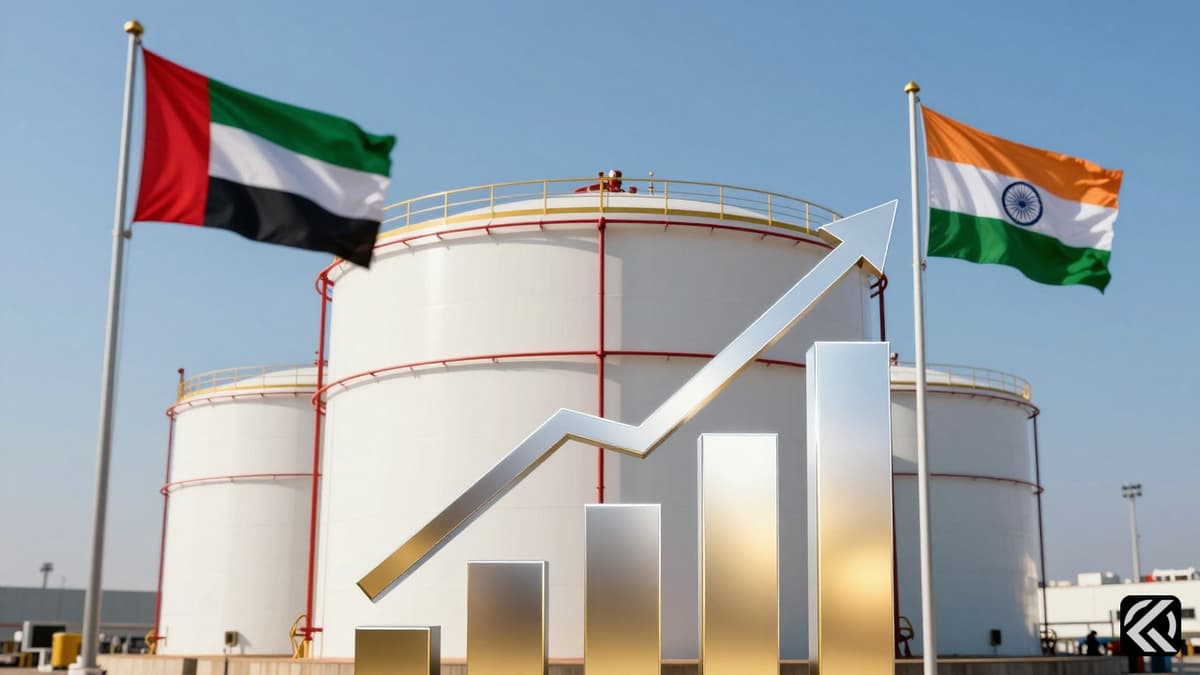
Prime Minister Modi’s UAE visit secures critical energy MOUs, boosting India’s crude reserves and LPG stability amid geopolitical tensions.
Prime Minister Narendra Modi’s recent visit to the United Arab Emirates resulted in the signing of two pivotal Memoranda of Understanding (MOUs) designed to significantly bolster India’s energy security. These agreements, focused on strategic petroleum reserves and long-term LPG supply, aim to mitigate risks associated with geopolitical instability and supply chain disruptions.
The immediate context for these deals involves India’s heavy reliance on crude imports, with nearly 90% of its requirements sourced from abroad. This dependency was highlighted as a critical vulnerability during the ongoing US-Iran conflict, which disrupted supplies via the Strait of Hormuz. By securing agreements with the UAE, one of India’s top five crude oil suppliers, New Delhi seeks to stabilize its energy intake against such external shocks.
A primary component of this enhanced UAE-India energy security framework is the collaboration on strategic petroleum reserves. According to a press release from the Prime Minister's Office, an MoU between Indian Strategic Petroleum Reserves Limited (ISPRL) and Abu Dhabi National Oil Company (ADNOC) outlines potential crude oil storage in India’s strategic reserves up to 30 million barrels. This includes participation in existing facilities in Visakhapatnam, Andhra Pradesh, and the development of new reserve facilities in Chandikol, Odisha. Furthermore, the agreement allows for the potential storage of crude oil in Fujairah, UAE, as part of India’s strategic reserves, which helps reduce dependence on the Strait of Hormuz for transit.
The second major agreement focuses on energy security through the supply of Liquid Petroleum Gas (LPG). An MoU between Indian Oil Limited (IOCL) and ADNOC aims to explore opportunities in the sale and purchase of LPG, including a long-term supply agreement between ADNOC Gas Limited and IOCL. This long-term arrangement is critical given that India’s LPG requirement is primarily met through the Middle East, exposing it to similar vulnerabilities as crude oil but with fewer global supplier options.
Experts have hailed these developments as game-changing for India’s long-term energy strategy. Gaurav Moda, Partner and Leader of the Energy sector at EY-Parthenon India, noted that such bilateral engagement is timely and mutually beneficial, potentially paving the way for new avenues in energy cooperation at both government-to-government and major corporate levels. The importance of these reserves is underscored by the stark reality that India’s strategic oil reserves have historically fallen short compared to major economies like the US, Japan, and China.
The significance of these agreements extends beyond immediate supply stabilization. Sourav Mitra, Partner - Oil & Gas at Grant Thornton Bharat, describes the announcement as having “monumental implications for India.” He emphasizes that larger and more collaborative reserve arrangements can reduce exposure to short-term volatility and provide policymakers with more space to respond during crises. This shift allows energy security to be viewed not just as emergency storage, but as a strategic instrument for national resilience and stable long-term planning.
Sumit Ritolia, Manager of Modelling and Refining at Kpler, highlights that the MoUs represent an important step in strengthening the long-term energy partnership between the two nations. He notes that enhanced cooperation on strategic petroleum reserves could help India strengthen its emergency crude storage capabilities and provide greater flexibility in crude procurement. For the LPG sector, Ritolia points out that India remains structurally dependent on imports despite increasing domestic output. Securing long-term supply arrangements with the UAE can help India reduce reliance on volatile spot cargo markets and improve affordability for domestic consumers.
Beyond these specific agreements, the broader energy cooperation framework deepens the India-UAE strategic relationship across the hydrocarbon value chain. This includes potential collaboration in upstream investments, refining, petrochemicals, and storage infrastructure. The UAE’s recent move to step up oil production following its adjustments in OPEC+ roles is also seen as beneficial for India, with recent data showing that Indian imports from the UAE have already recovered to pre-conflict levels.
In addition to energy deals, PM Modi announced on social media that the UAE has committed investments worth $5 billion in India. This financial injection is expected to further deepen economic ties across vital areas such as defense, infrastructure, shipping, and advanced technology. The combination of financial investment and energy security agreements underscores the Comprehensive Strategic Partnership between the two countries, providing a robust buffer against global uncertainties and ensuring a more stable energy future for India.
The convergence of $5 billion in investments and critical energy MOUs signals a durable shift in India-UAE relations. As geopolitical tensions persist, these agreements provide India with the necessary buffers to withstand supply shocks. Looking ahead, the integration of UAE entities into India’s energy infrastructure will likely result in more resilient supply chains and enhanced policy flexibility, ensuring that India’s energy needs are met with greater reliability and reduced exposure to international market volatility.
Jun 11, 2026 17:21 UTC
Bangladesh Opposition Mobilizes Against India-Bangladesh Border Push-Ins and BSF Killings
Join 50,000+ readers getting the global briefing every morning.
No spam. Unsubscribe anytime.
Jun 11, 2026 17:40 UTC
Boelter Pleads Guilty in Minnesota Political Assassinations
Jun 11, 2026 17:21 UTC
Bangladesh Opposition Mobilizes Against India-Bangladesh Border Push-Ins and BSF Killings
Jun 11, 2026 17:21 UTC
John Healey Quits as UK Defence Secretary Over Funding Dispute
Jun 11, 2026 16:19 UTC
UK Defence Secretary John Healey Quits Over Funding Dispute


