
Section
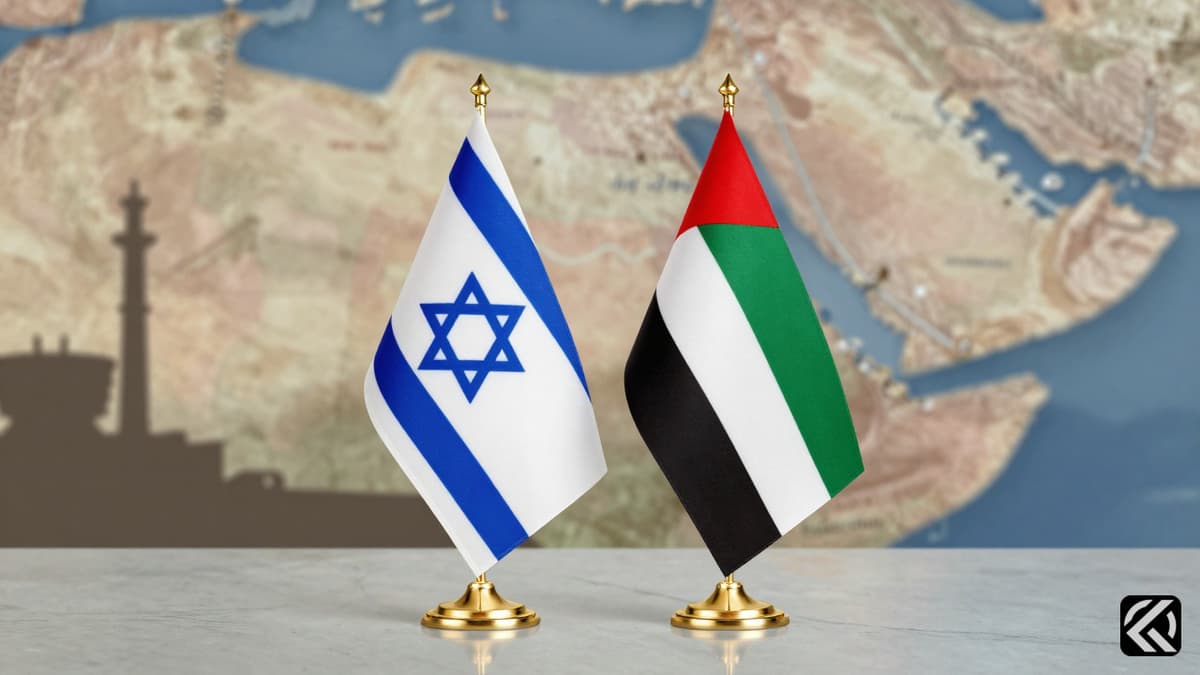
Israel confirms Prime Minister Netanyahu made a secret visit to the UAE during the Iran conflict, marking a historic diplomatic breakthrough amid rising tensions.
The Israeli Prime Minister’s office officially announced on Wednesday that Benjamin Netanyahu conducted a clandestine mission to the United Arab Emirates while active hostilities with Iran were ongoing. This disclosure sheds light on high-level diplomatic maneuvers occurring behind the scenes during one of the most volatile periods in recent Middle Eastern history.
The announcement came just one day after US Ambassador to Israel Mike Huckabee publicly stated that Israel had dispatched its Iron Dome air defense systems and personnel to operate them within the UAE. While Netanyahu’s office did not explicitly verify the operational details of the military deployment, they used the occasion to highlight the strategic importance of the visit, describing it as "a historic breakthrough in relations between Israel and the United Arab Emirates." The statement from the Prime Minister’s office confirmed that during Operation 'Lion's Roar', Netanyahu held a direct meeting with UAE President Sheikh Mohammed bin Zayed Al Nahyan.
This diplomatic engagement occurred against a backdrop of intense military activity. The conflict was sparked by US-Israeli strikes on the Islamic Republic at the end of February, leading Iran to retaliate with significant force. Tehran targeted the UAE more aggressively than any other nation during the war. Beyond attacking Israeli territory, Iranian forces struck Gulf states that host US military bases and effectively blockaded the vital Strait of Hormuz. This strategic waterway is critical to the global economy, as approximately 20% of the world’s crude oil supply passes through it.
Despite the escalation, the UAE has sought to maintain its position as a stabilizing force. The oil-rich kingdom is a key ally of Washington in the region and is among the Arab nations that established official diplomatic ties with Israel following the signing of the Abraham Accords in 2020, during US President Donald Trump’s first term. The secret nature of Netanyahu’s visit suggests that high-level coordination was necessary to manage the escalating threat while maintaining public diplomatic postures.
While the US ambassador’s remarks provided the first public confirmation of the Iron Dome deployment, the Israeli Prime Minister’s office focused on the diplomatic implications of the meeting with Sheikh Mohammed. The confirmation of the visit implies that despite the public rhetoric and military posturing, backchannel communications were active and critical during the height of the confrontation. The deployment of advanced air defense technology to a partner nation signifies a deepening of security cooperation that goes beyond the official frameworks established by previous accords.
The conflict has had a tangible impact on the region’s security architecture. Although a ceasefire came into effect on April 8, the United Arab Emirates has continued to report multiple missile and drone attacks from Iran. This persistent threat landscape underscores the necessity of the defensive measures previously deployed and the strategic value of the diplomatic links reinforced by Netanyahu’s secret trip. The targeting of UAE infrastructure, including reports of covert strikes hitting key oil refineries, highlights the direct line of fire drawn by Tehran against its regional adversaries and their allies.
The revelation of this secret visit adds a new layer to the understanding of Israel-UAE relations. It suggests that even during active warfare, critical dialogue continued between the leadership of both nations. The meeting between Netanyahu and Sheikh Mohammed likely addressed immediate security concerns, including the protection of UAE airspace and the coordination of defensive responses against Iranian ballistic missiles. The presence of Israeli personnel operating the Iron Dome systems further indicates a level of trust and operational integration that is rare in the region. This cooperation stands in stark contrast to the broader tensions in the Middle East, where many other Arab states have remained distant from formal security partnerships with Israel.
The geopolitical implications are significant. By allowing the deployment of strategic defense assets on its soil, the UAE has demonstrated a willingness to integrate more closely with Israeli security capabilities. This move likely serves as a deterrent to Iran, signaling that attacks on the UAE are viewed as part of a broader conflict with Israel. The blockade of the Strait of Hormuz further elevated the stakes, drawing in global economic concerns and reinforcing the US interest in the stability of the Gulf region. As the US maintains its military presence in the area, the collaboration between Israel and its Gulf allies becomes a focal point of regional defense strategy.
The confirmation of Netanyahu’s secret visit and the associated military cooperation points toward a long-term shift in regional alliances. As the UAE continues to face asymmetric threats from Iran, the integration of its defense systems with Israeli technology is likely to become more permanent. This deepening partnership could encourage other Gulf states to reconsider their security postures, potentially leading to further normalization efforts despite ongoing geopolitical friction. The resilience of the UAE in the face of continued attacks, supported by these diplomatic and military ties, suggests that the Abraham Accords have evolved into a more robust security framework. Moving forward, the region may see increased focus on collective defense mechanisms and intelligence sharing to counter the persistent threat of Iranian aggression. The historical nature of this breakthrough indicates that practical security needs are overriding traditional political hesitations, reshaping the diplomatic landscape of the Middle East for years to come.
Jun 11, 2026 17:21 UTC
Bangladesh Opposition Mobilizes Against India-Bangladesh Border Push-Ins and BSF Killings
Join 50,000+ readers getting the global briefing every morning.
No spam. Unsubscribe anytime.
Jun 11, 2026 17:40 UTC
Boelter Pleads Guilty in Minnesota Political Assassinations
Jun 11, 2026 17:21 UTC
Bangladesh Opposition Mobilizes Against India-Bangladesh Border Push-Ins and BSF Killings
Jun 11, 2026 17:21 UTC
John Healey Quits as UK Defence Secretary Over Funding Dispute
Jun 11, 2026 16:19 UTC
UK Defence Secretary John Healey Quits Over Funding Dispute


