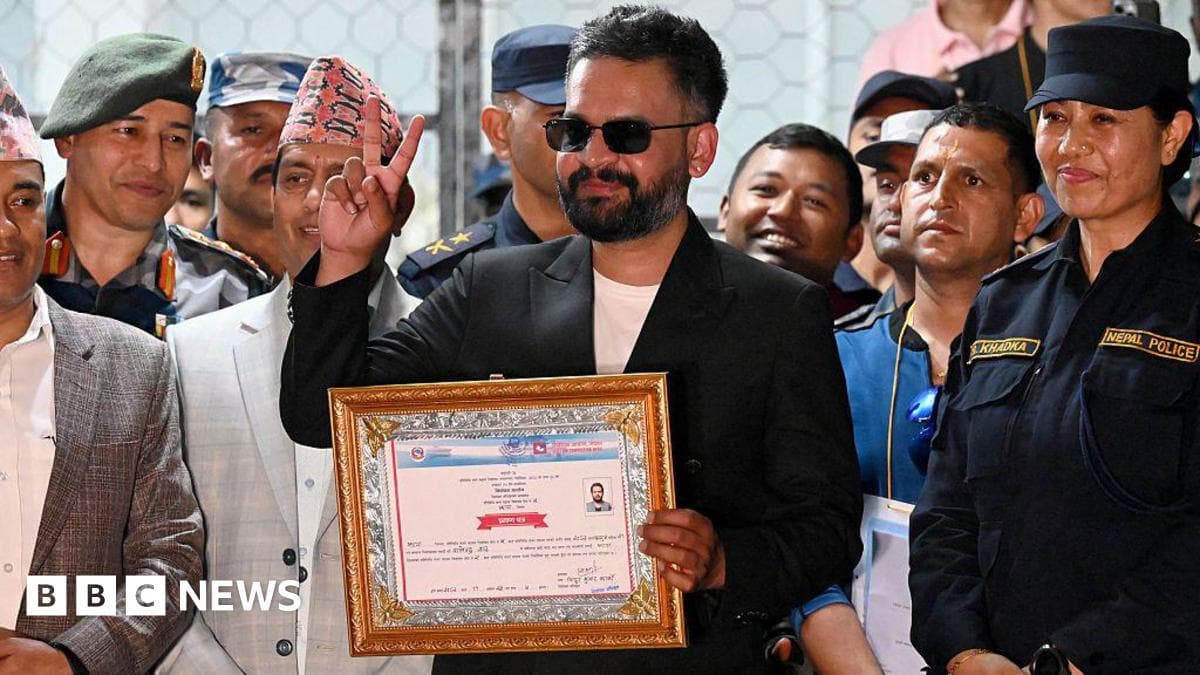
In a historic turn for Nepali politics, Balendra Shah defeats former PM KP Sharma Oli, promising youth-led change and stability after months of unrest.
March 9, 2026 — The political landscape of Nepal has undergone a seismic transformation following the release of partial election results on Monday morning. In a stunning upset that signals a departure from decades of traditional governance, Balendra Shah, widely known as Balen, appears poised to become Nepal’s youngest ever prime minister. His victory in the Jhapa 5 constituency, traditionally a stronghold for four-time former Prime Minister KP Sharma Oli, represents a decisive break from the past and offers renewed hope to a nation weary of political instability.
The Rashtriya Swatantra Party (RSP), which is less than four years old, has secured a massive mandate that analysts suggest could end the era of fragile coalitions that have long dominated the country's political scene. This election marks a significant turning point where a new, untried generation is set to shape the future of the Himalayan nation.
The partial results released on March 9 indicate that Balendra Shah has won by a landslide in Jhapa 5, a constituency where KP Sharma Oli had previously held significant influence. This outcome shakes the belief held by Oli’s camp that recent protests were not a referendum on his leadership. Instead, the numbers suggest voters have rejected old parties and their ideologies absolutely.
Balen’s victory carries multiple historic firsts for the country. He is projected to be the youngest prime minister in Nepal’s history at 35 years old. Furthermore, he will become the nation's first Madhesi prime minister. The Madhes movement has been a critical feature in the long struggle for rights within Nepal, and his candidacy was viewed by many as an opportunity to install a son of the Madhes soil in the country’s most important position.
The RSP party itself is less than four years old, yet it has managed to secure massive votes across several constituencies. In some areas, people voted for the RSP without knowing who their local candidate was, effectively turning the campaign into a presidential-style election that older parties could not answer. This suggests a quest for political stability through an electoral majority, which Balen’s team campaigned on and has now achieved despite skepticism about the current electoral system.
The driving force behind this shift appears to be the youth demographic. Tamanna Kumari Rana, a 20-year-old first-time voter, expressed optimism regarding Balen’s leadership following his win. Speaking to the BBC on her way to college, she stated that she believes his leadership will drive national development. Her primary concerns reflect a broader sentiment among young voters: the need for local opportunities so students are not forced to move abroad for work or study.

Tamanna outlined specific expectations for the new government, stating there should be no corruption and hoping for better-built roads, water supply, and electricity. Similarly, David Paudel, an 18-year-old first-time voter who participated in the Gen Z movement last year, expressed satisfaction with the results. He emphasized that the new government must break away from past patterns to focus on effective governance.
David specifically highlighted employment for youth as a critical issue. “Things like employment for the youth in the country, and issues of development—they should work on those important issues,” David stated. The consensus among these young voters is clear: they want a new political culture characterized by transparency, accountability, and real change. Ispa, another Gen Z voter seen waving an RSP flag during rallies in Jhapa 5, noted that the result proves Balen appealed to older Nepalis as well as the youth, shaking the foundations of Nepal’s politics.
The election results must be viewed in the context of the unrest that occurred just six months prior. In September 2025, thousands of demonstrators, describing themselves as Generation Z, gathered near the parliament building in Kathmandu. The immediate trigger was a government ban on 26 social media platforms, but the anger expressed by those who took to the streets ran much deeper.
Many citizens felt that the country’s succession of governments had failed to deliver on promises regarding longstanding economic problems. There were widespread accusations against officials and members of the social elite for corruption and nepotism. Within less than 48 hours, these Gen Z-led, digitally-driven anti-corruption protests brought down the government. However, this victory came at a heavy price.
With 77 people killed, the protests became the deadliest unrest in the Himalayan country in decades. Official buildings, residences of political leaders, and luxury hotels, including the Hilton which had opened just months prior in July 2024, were torched, vandalised, and looted. In the aftermath, protesters gave approval to a new interim prime minister and demanded new elections. Now, six months later, they are getting their wish through the ballot box.
Who is the man behind this historic victory? Balendra Shah is more commonly known as Balen. He is a former rapper who served as the mayor of the capital Kathmandu until January 2026. His songs have featured prominently in his campaign and have been heavily critical of Nepal’s political elite. He joined the Rashtriya Swatantra Party (RSP) late last year, moving from local municipal leadership to national politics.
Shah has mostly shunned the press and avoided answering questions. Reports indicate that attempts to speak to him over the past week resulted in him storming past reporters and cameras. His critics argue that this strategy allows him to avoid public scrutiny of his record as mayor. During his tenure, rights groups criticized him for using police against street vendors in a heavy-handed manner while working to keep roads clear and crack down on unlicensed businesses. Shah’s campaign has not responded to requests for comment regarding these criticisms.
Analyst Amish Raj Mulmi, based in Kathmandu, describes this moment as historic for Nepal’s quest for better governance. He notes that the demands of the September protests have translated into electoral verdicts focused on good governance, service delivery, and anti-corruption. The large number of winning candidates under the age of 40, including Balen Shah, indicates that the political pendulum has firmly swung in favor of the youth.
Mulmi suggests the results are a decisive verdict not just on old gerontocratic parties but also on the September protests themselves. The massive votes secured by RSP candidates and the high margins of victory suggest voters were exhausted by the old parties. The results can be seen as a rejection of a culture of arrogance, impunity, unaccountability, and corruption that marked the first decade of the Nepali republic and has been a constant feature of politics for decades.
The 2026 Nepal election results signal a definitive break from the country's past political norms. With Balendra Shah poised to lead a new government, the era of fragile coalitions appears to be ending in favor of a youthful, stability-seeking administration. The victory reflects the deep dissatisfaction with corruption and economic stagnation that fueled recent unrest, offering a chance for a new political culture focused on development and transparency. As Nepal moves forward, the focus remains on delivering the local opportunities and governance improvements promised by the youth-led movement.
Jun 9, 2026 20:58 UTC
Trump Demands U.S. Action as Iran Shoots Down Second Aircraft
Join 50,000+ readers getting the global briefing every morning.
No spam. Unsubscribe anytime.
Jun 9, 2026 18:37 UTC
Israel Strikes Tyre Despite Iranian Warnings
Jun 9, 2026 16:42 UTC
IAB Framework Data Practices and User Privacy Choices
Jun 9, 2026 16:07 UTC
Madhya Pradesh Congress Departs for Bengaluru to Avoid Rajya Sabha Elections Pitfalls
Jun 9, 2026 14:27 UTC
US Sea Drone Saves Army Helicopter Crew Near Strait of Hormuz