
Section
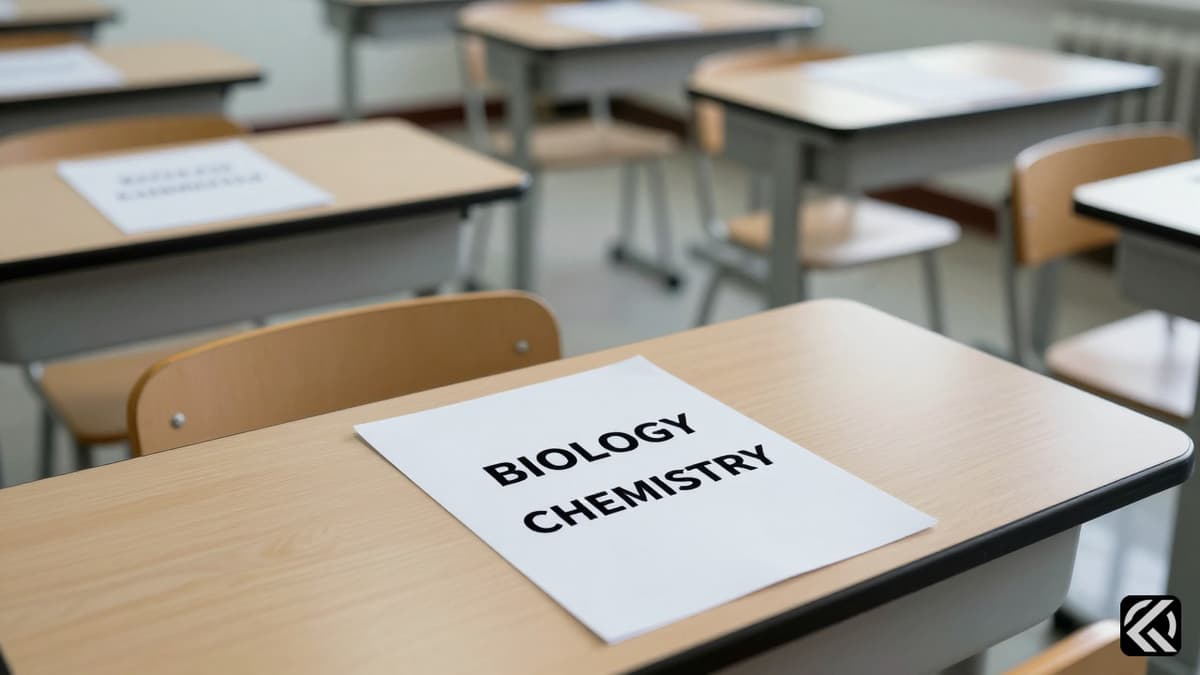
A guess paper leaked before NEET-UG 2026 originated from an MBBS student in Kerala, spread via Sikar hostel, and has now triggered a major CBI investigation.
The origins of the NEET-UG 2026 medical exam leak have been traced back to a student from Rajasthan’s Sikar district who is currently pursuing an MBBS degree in Kerala. According to the State’s Special Operations Group (SOG), this student received the sensitive material from a friend and subsequently shared it with his peer group in Sikar. The document, which contained questions strikingly similar to those in the actual examination, was further disseminated through a hostel owner in Sikar who distributed it to residents, claiming it would be helpful. This chain of distribution allowed the leak to reach candidates in Jaipur and surrounding areas before the exam was held on May 3, 2026.
Acting on intelligence regarding the rumor of a paper leak, joint police teams from Sikar, Jhunjhunu, Alwar, and Jaipur, along with the SOG, initiated a massive crackdown. More than 150 individuals, including candidates, their friends, and parents, were questioned. The investigation revealed that the material had allegedly reached specific individuals in Rajasthan prior to the exam's commencement. The SOG, after matching the original question paper with the leaked document, detained several suspects on the night of May 8. Among those detained was a shop operator from whom students had obtained printed copies of the guess paper. The leak was also found to have circulated through a password-protected PDF in a social group named 'Private Mafia'.
The scope of the probe expanded rapidly as investigators uncovered that the leaked PDF contained approximately 45 chemistry questions and 90 biology questions with answers that allegedly matched the actual examination paper. Officials noted that while most individuals questioned were NEET aspirants or directly connected to candidates, no direct role of coaching institutes had surfaced thus far. The investigation also suggested that the material might have originated from Nashik, where police later detained a man based on information provided by the Rajasthan SOG. Despite the extensive local probe, no FIR was registered in Rajasthan, with legal authority handed over to the Central Bureau of Investigation.
The findings of the Rajasthan SOG were shared with the National Testing Agency (NTA), which decided to cancel the NEET-UG 2026 examination following the confirmation of the breach. Following this decision, the case was transferred to the CBI investigation, marking a significant escalation in the response to the academic misconduct. A CBI team arrived at the SOG office on the evening of May 12, 2026, to formally take over the investigation. Statements and evidence collected during the initial probe were handed over to the central agency.
Officials confirmed that more than two dozen suspects have been handed over to the CBI. The central agency is now focusing on unraveling the network behind the leak. The investigation revealed that the material was allegedly routed through a person based in Haryana’s Gurugram before reaching Rajasthan. This complex routing suggests an organized network operating across state lines. The hostel owner who initially distributed the papers played a pivotal role in the detection process; he tipped off the local police by lodging a complaint with the Udyog Nagar police station and the NTA, alleging that a "question bank" had been distributed among a large number of students.
The role of the hostel owner highlights the informal channels through which such leaks often propagate. By sharing the guess paper under the guise of helping students, the owner inadvertently facilitated the spread of the material. However, his subsequent decision to report the incident underscores the internal awareness of the illegality and severity of the act. The SOG’s immediate action after verifying the match between the guess paper and the actual exam paper demonstrates the efficacy of rapid inter-agency coordination. Senior officials, including ADG Vishal Bansal and IG Ajay Pal Lamba, held emergency meetings to analyze the evidence, leading to the swift detention of key figures in the distribution network.
The cancellation of the exam by the NTA was a direct consequence of the SOG’s findings. This decision reflects the zero-tolerance policy towards examination integrity in India. The involvement of the CBI indicates that the authorities view this incident as more than just a local breach but as part of a larger, potentially organized crime syndicate. The questioning of over 150 individuals highlights the extensive reach of the leak, affecting not just the students who received the papers but also those connected to them. The lack of coaching institute involvement so far suggests that the leak originated from within the student community or through individual actors rather than institutional malpractice.
The identification of Nashik as a potential source point adds another layer of complexity to the investigation. With police in Nashik detaining a suspect based on Rajasthan’s intelligence, it is clear that the leak was not confined to a single geographic area. The use of digital tools, such as password-protected PDFs and social media groups like 'Private Mafia', illustrates how modern technology facilitates the rapid dissemination of sensitive information. This case serves as a stark reminder of the vulnerabilities in digital security within educational examination systems.
The CBI investigation into the NEET-UG 2026 leak is expected to have long-lasting impacts on how national medical entrance examinations are secured. The cancellation of the exam was a drastic measure, but it underscores the severe consequences of compromised integrity. Future reforms may include stricter digital monitoring of question paper distribution and enhanced verification protocols for exam centers. The involvement of an MBBS student in the leak highlights the need for tighter security around medical professionals who might have access to question banks. As the CBI unravels the network involving suspects from Kerala, Rajasthan, and Haryana, it may lead to broader crackdowns on organized paper leak syndicates. The lack of coaching institute involvement suggests that future preventive measures must focus on individual accountability and digital forensics. The successful apprehension of suspects from Nashik and Sikar demonstrates inter-state cooperation, which will likely be strengthened in future probes. Ultimately, this case will serve as a critical benchmark for restoring confidence in the fairness of medical admissions in India.
Jun 11, 2026 17:21 UTC
Bangladesh Opposition Mobilizes Against India-Bangladesh Border Push-Ins and BSF Killings
Join 50,000+ readers getting the global briefing every morning.
No spam. Unsubscribe anytime.
Jun 11, 2026 17:40 UTC
Boelter Pleads Guilty in Minnesota Political Assassinations
Jun 11, 2026 17:21 UTC
Bangladesh Opposition Mobilizes Against India-Bangladesh Border Push-Ins and BSF Killings
Jun 11, 2026 17:21 UTC
John Healey Quits as UK Defence Secretary Over Funding Dispute
Jun 11, 2026 16:19 UTC
UK Defence Secretary John Healey Quits Over Funding Dispute


