
Section
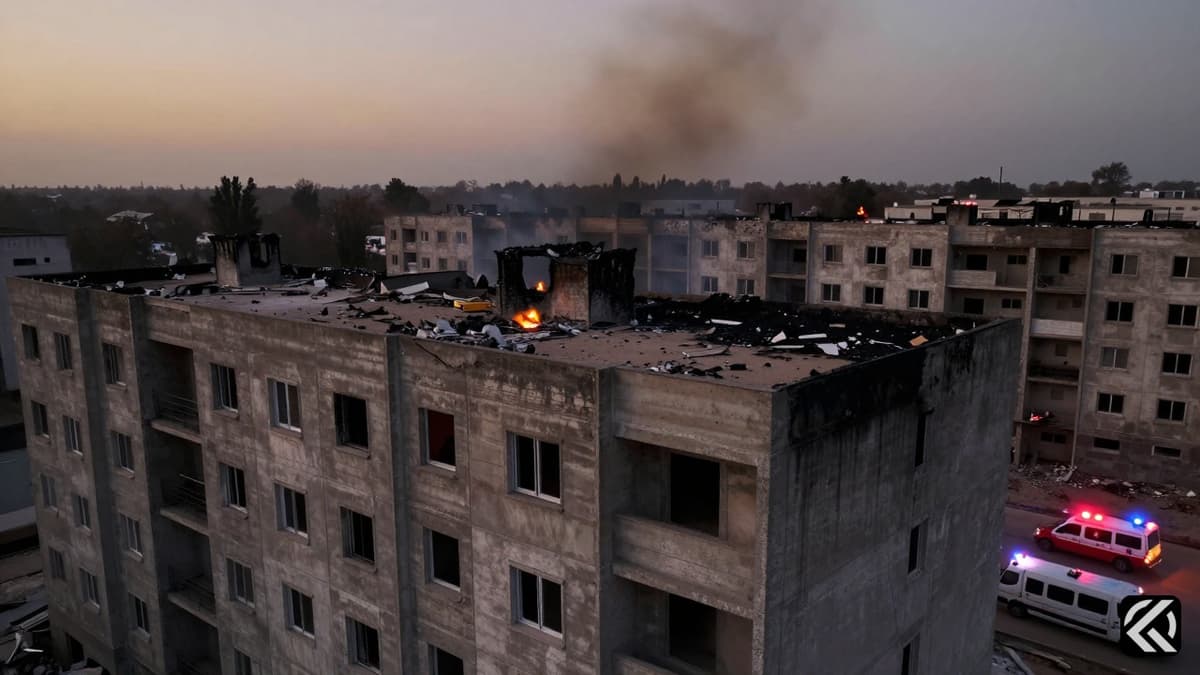
A Russian drone crashed into a Romanian apartment block, wounding two residents. NATO allies strongly condemned the incident as a dangerous escalation of the conflict.
In the early hours of Friday, May 28, 2026, a Russian military drone penetrated Romanian airspace and crashed into the roof of a residential apartment building in the city of Galati. The strike resulted in injuries to two individuals and drew immediate, unified condemnation from Romania’s allies within the North Atlantic Treaty Organization (NATO). This incident marks another severe breach of sovereignty as Moscow’s forces continue their military campaign in neighboring Ukraine.
The explosion occurred shortly after 1:54 a.m. when the drone entered national airspace, heading toward the eastern area of Galati, according to Colonel Cristian Popovici, a spokesman for Romania’s Ministry of National Defence. The drone was lost from radar south of the city before impacting the residential structure. Video footage captured the charred remains of the building’s roof, while response teams and investigators began inspecting the site of the impact on Friday morning.
Foreign Affairs Minister Oana-Silvia Toiu confirmed the source of the attack in a post on X, stating, “I have confirmation from the Ministry of National Defence that the drone which crashed into a residential building in Galati was of Russian origin.” Toiu described the action as a “serious and irresponsible escalation” and noted that the foreign ministry had formally summoned Russia’s ambassador in Bucharest to protest the violation.
The timing of the strike is significant, occurring as Moscow’s forces simultaneously attacked a nearby Ukrainian port. Just across the border from Galati lies Izmail, Ukraine’s largest port on the Danube River, which has become a frequent target of Russian attacks. Romanian authorities reported that Russian drones had also targeted the Izmail port area around the same time the drone hit the apartment in Galati.
In response to the threat, Romanian radars detected the intruding drones, prompting the deployment of two F-16 aircraft. Romanian pilots were authorized to engage targets throughout the alert, signaling a heightened state of defensive readiness. Romania, a member of both NATO and the European Union, has been increasingly grappling with incursions by Russian military assets across its southeastern border.
Toiu announced that Romania has requested measures from both the EU and NATO to accelerate the transfer of anti-drone capabilities to the country. “Romania will act with the utmost determination to increase international pressure on the Russian Federation with a view to achieving an immediate and comprehensive ceasefire” in the ongoing war, the foreign ministry stated. The government is actively seeking to bolster its defensive infrastructure to prevent further violations.
The international response was swift and severe. NATO Secretary General Jens Stoltenberg was in contact with Romanian authorities following the incident. Alliance spokesperson Allison Hart stated, “We condemn Russia’s recklessness, and NATO will continue to strengthen our defences against all threats, including drones.” The alliance emphasized that such breaches represent a dangerous ramping up of tensions with Moscow.
European leaders also expressed strong disapproval. European Commission President Ursula von der Leyen announced that the EU is preparing sanctions against Moscow, adding that “Russia’s war of aggression has crossed yet another line.” French Foreign Minister Jean-Noel Barrot summoned Russia’s ambassador in Paris, condemning the “irresponsible act” and noting that Moscow had targeted a friendly nation that is a member of both the EU and NATO. Latvian President Edgars Rinkevics similarly affirmed solidarity with Romania and expressed readiness to support appropriate measures to prevent such violations.
This incident is part of a broader pattern of airspace violations by Russian military assets near Romania’s border. According to Romania’s defense ministry, Russian drones have breached Romanian airspace 28 times since Moscow began attacking Kyiv’s ports across the Danube. The frequency of these incursions has raised concerns about the stability of the region and the safety of civilian populations living near the border.
The tensions between NATO and Russia have been escalating due to such border incidents. In September 2025, NATO fighter jets shot down multiple Russian drones that violated Polish airspace during an attack on neighboring Ukraine. At that time, the military alliance denounced Moscow for “absolutely dangerous” behavior that ratcheted up tensions to a new level. Similarly, days after that Polish incident, Romania condemned Moscow’s “irresponsible actions” after alleging that a Russian drone breached Romanian airspace during an attack on Ukraine, prompting Bucharest to scramble fighter jets.
These repeated violations highlight the challenges faced by NATO members in defending their airspace against long-range strikes intended for Ukraine. The principle of collective defense, which posits that an attack on one member is an attack on all, is increasingly tested by these ambiguous and dangerous incursions. Romania’s request for accelerated anti-drone capabilities reflects the urgent need for member states to adapt their defensive strategies to counter this evolving threat landscape.
As investigations into the Galati apartment strike continue, the political and diplomatic fallout is expected to deepen the rift between Russia and Western allies. The convergence of military aggression in Ukraine and airspace violations in NATO countries underscores the broader regional instability. Analysts suggest that such incidents could lead to further strengthening of Eastern European defenses and potentially harsher sanctions against Moscow. The international community remains united in its condemnation of these actions, viewing them as a direct challenge to international law and regional security.
Romania’s response to the drone strike underscores its commitment to protecting its sovereignty and citizens. By accelerating the acquisition of anti-drone systems and coordinating closely with NATO, Bucharest aims to mitigate future risks. The incident highlights the critical need for robust border security in Eastern Europe. As tensions with Moscow remain high, Romania’s enhanced defenses will serve as a deterrent against further violations, ensuring the safety of its people and contributing to the broader collective security of the alliance.
Jun 11, 2026 17:21 UTC
Bangladesh Opposition Mobilizes Against India-Bangladesh Border Push-Ins and BSF Killings
Join 50,000+ readers getting the global briefing every morning.
No spam. Unsubscribe anytime.
Jun 11, 2026 17:40 UTC
Boelter Pleads Guilty in Minnesota Political Assassinations
Jun 11, 2026 17:21 UTC
Bangladesh Opposition Mobilizes Against India-Bangladesh Border Push-Ins and BSF Killings
Jun 11, 2026 17:21 UTC
John Healey Quits as UK Defence Secretary Over Funding Dispute
Jun 11, 2026 16:19 UTC
UK Defence Secretary John Healey Quits Over Funding Dispute


