India's oil ministry rejects claims of payment hurdles causing Iranian tankers to divert to China, confirming refiners are securing vital crude supplies.
The Ministry of Petroleum and Natural Gas (MoPNG) on Saturday, April 4, 2026, issued a firm dismissal regarding reports suggesting an Iranian crude oil tanker was diverted from India to China. The ministry stated that Indian refiners have successfully secured their crude oil requirements, including shipments from Iran, and that there are no payment hurdles hindering these imports. This official stance directly counters circulating rumors about the vessel's fate, asserting that the flow of energy resources remains uninterrupted despite geopolitical tensions in the region.
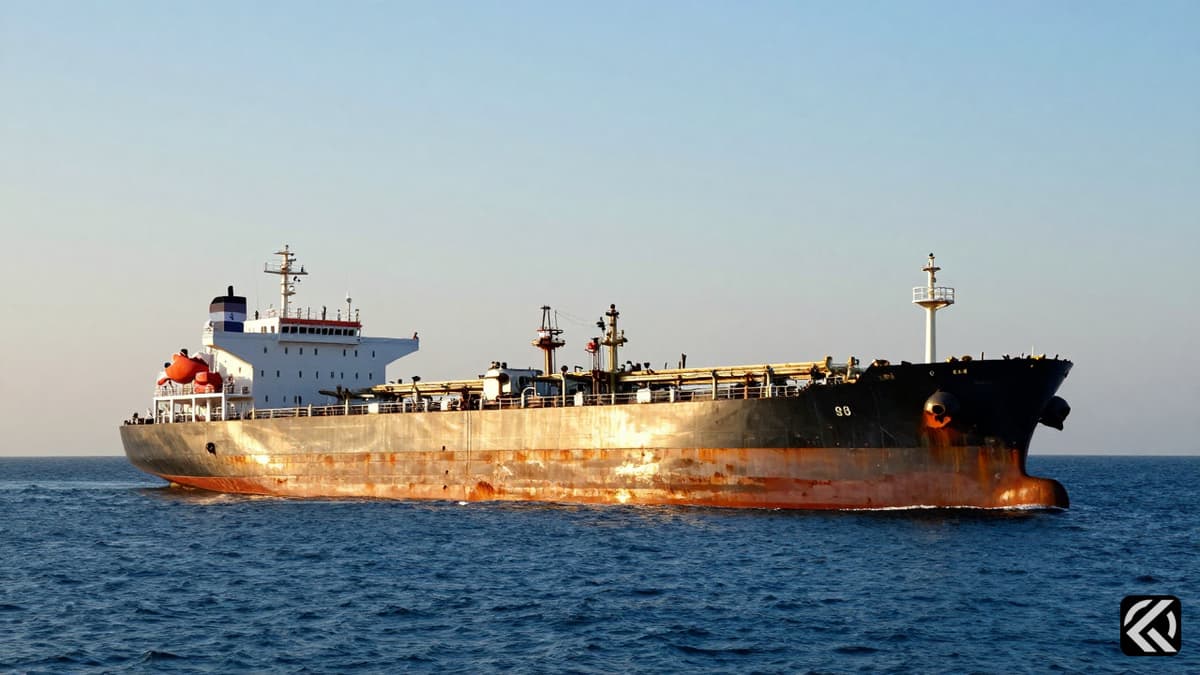
The clarification comes amidst heightened scrutiny over a specific vessel named Ping Shun. According to marine logistics and commodity markets analytics firm Kpler, the ship had crossed the Strait of Hormuz and signaled a destination of Vadinar, India, for three consecutive days. However, recent data indicated a change in signals showing the vessel heading toward China. While the ministry confirmed that Indian refiners have been seeking opportunities to purchase cargoes of Iranian oil on water following a sanctions waiver by Washington, the specific quantum of these purchases was not disclosed to the public. The situation has sparked debate regarding the India-China oil trade dynamics, with some interpretations suggesting a strategic shift in sourcing.
Addressing the core of the controversy, the Ministry provided a detailed explanation regarding vessel movements. The officials emphasized that changes in vessel destinations during transit are common occurrences in global oil trade. The ministry noted that bills of lading often indicate tentative discharge ports, and cargoes can be rerouted mid-voyage for operational and commercial reasons. The statement explicitly read that claims on vessel diversion ignore the operational mechanics of the oil trade, reiterating that MoPNG clarification on the matter establishes that destinations can shift based on trade optimization. The ministry highlighted that companies maintain full flexibility to source oil from different sources and geographies based on commercial considerations, rather than being bound by rigid payment or political constraints.
This development marks a significant reversal from the year 2019, when India stepped away from purchasing Iranian crude following U.S. sanctions. At that time, the geopolitical landscape forced a complete halt in direct transactions. However, the current situation reflects a return to historical norms where India was a major buyer of Iranian crude, importing significant volumes of both light and heavy grades. This past reliance was driven by strong refinery compatibility and favorable commercial terms that made Iranian oil a preferred choice for Indian refiners. The current security of these supplies suggests that the regulatory environment has shifted to allow these historical trade patterns to resume, provided commercial conditions are met.
The ministry further noted that India imports crude oil from over 40 countries, underscoring the diversification of its energy portfolio. The post added that amidst supply disruptions in the Middle East, Indian refiners have managed to secure their requirements without reliance on a single source. This diversification strategy appears to be the backbone of their resilience against potential shortages or payment disputes. The ministry's statement, released via social media, serves as a definitive rebuttal to the narrative that payment issues have halted the flow of energy from Iran to India.
While the focus remains on the Iranian crude oil imports, the port of New Mangalore (NMP) is simultaneously handling a surge in Liquefied Petroleum Gas (LPG) activity. Since April 2, the motor tanker Aurora, now renamed Sea Bird, has been discharging 43,910 metric tonnes of LPG from Iran at the port anchorage, having arrived on March 30. Additionally, the LPG tanker MT Al Ain, sailing from Saudi Arabia's Yanbu Port, berthed at NMP on Saturday to discharge 23,000 metric tonnes of LPG for three public sector oil marketing companies. Another vessel, MT Jag Vasant, is currently anchored at Mumbai and is expected to arrive at New Mangalore Port on April 8 to discharge 9,500 metric tonnes of LPG.
The operational continuity at these ports highlights the broader stability of India's energy sector. The ministry's assertion that India's crude oil requirements remain fully secured for the coming months suggests that the logistical challenges posed by the diversion of the Ping Shun were either resolved or are part of normal operational adjustments. The ministry stressed that the oil trade relies on flexibility, and the specific routing of a single vessel does not necessarily indicate a systemic failure or a shift in diplomatic stance. The continued activity at Mangalore Port with vessels from both Iran and Saudi Arabia reinforces the narrative of a robust and diverse supply chain.
The confirmation that Indian refiners are securing Iranian crude oil despite earlier reports of diversion marks a pivotal moment in the resumption of trade relations. With the Ministry of Petroleum and Natural Gas affirming that payment hurdles do not exist, the market is likely to see a steady increase in imports as refiners capitalize on the recent sanctions waiver by Washington. Historical trends indicate that once payment and regulatory barriers are removed, Indian refiners will likely return to significant procurement levels to maintain the strong refinery compatibility established in previous years. As global supply chains continue to face disruptions in the Middle East, the ability to source from diverse geographies, including Iran, will remain a critical strategic asset for India's energy security in the coming months.
Jun 8, 2026 02:17 UTC
Magnitude 7.8 Quake Shakes Philippines, Urging Immediate Evacuations
Join 50,000+ readers getting the global briefing every morning.
No spam. Unsubscribe anytime.
Jun 8, 2026 02:17 UTC
Magnitude 7.8 Quake Shakes Philippines, Urging Immediate Evacuations
Jun 8, 2026 00:51 UTC
Trump Claims Iran Nuclear Deal Imminent Despite Diplomatic Fractures
Jun 8, 2026 00:47 UTC
Iran Fires Missiles at Israel After Beirut Strike
Jun 7, 2026 22:38 UTC
Congress Party Claims Unity for INDIA Bloc Delhi Meeting


