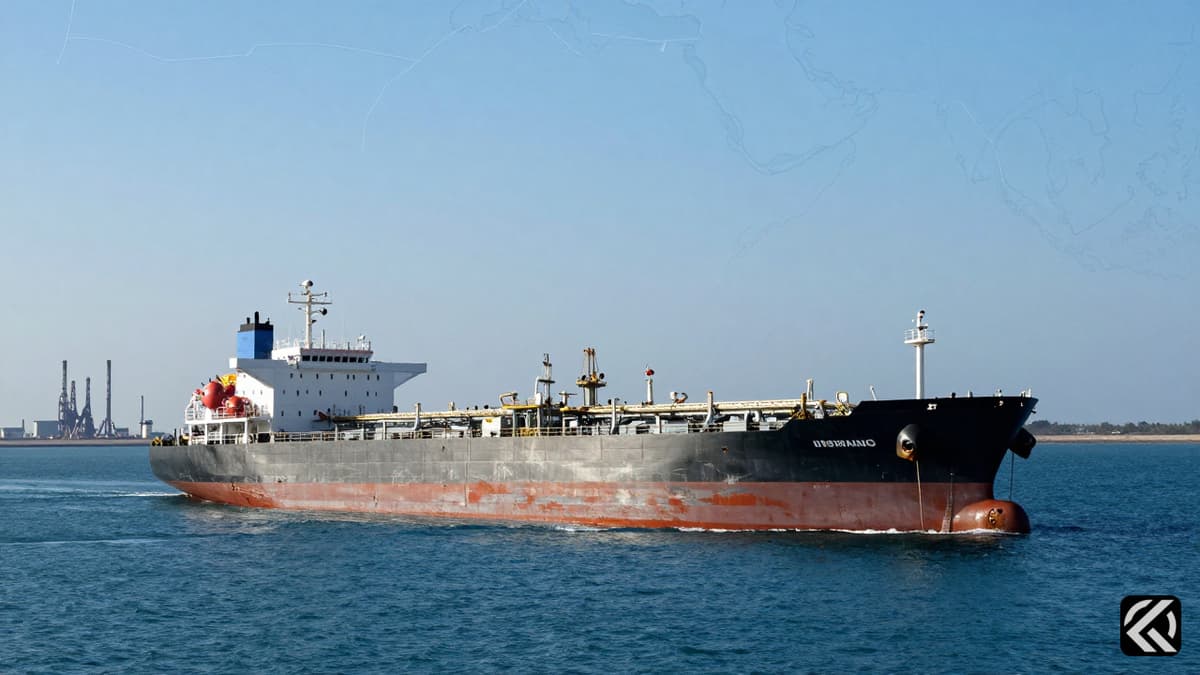
In a firm rebuttal to circulating rumors, the Ministry of Petroleum and Natural Gas confirms that Indian refiners continue to secure Iranian crude oil despite reports of payment issues.
The Ministry of Petroleum and Natural Gas (MoPNG) on Saturday dismissed allegations that an Iranian crude oil tanker was diverted to China due to payment issues, asserting that Indian refiners are actively securing crude supplies. This official statement, released via social media, directly counters the narrative that a specific vessel, the Ping Shun, changed its course after crossing the Strait of Hormuz. The Ministry emphasized that contrary to circulating rumors, there are no payment hurdles hindering the import of Iranian oil into the country.
Despite the lack of disclosed purchase quantities, the confirmation marks a significant operational shift, reversing the stance taken in 2019 when India halted purchases of Iranian crude following US sanctions. While marine logistics firm Kpler reported that the Ping Shun was signaling a destination change to China, the Ministry clarified that such changes are common in the global oil trade. Officials explained that bills of lading often list tentative discharge ports, allowing cargoes to be rerouted mid-voyage based on commercial considerations and operational flexibility.
MoPNG further noted that companies retain full flexibility to source oil from various geographies. The Ministry reiterated that India's crude oil requirements remain fully secured for the coming months, even as refiners look for opportunities to purchase additional cargoes on the water following a recent US sanctions waiver. This operational flexibility allows refiners to optimize trade routes and manage supply chains effectively, ensuring that the quantum of purchases does not become a point of contention in the face of external claims.
The situation regarding the specific vessel, the Ping Shun, which had been signaling a heading to Vadinar, India, for three days before signaling a course for China, has been contextualized by industry analytics as a standard procedural occurrence. The Ministry highlighted that claims of diversion ignore the fundamental mechanics of how the oil trade functions. Cargoes often change destinations mid-voyage to optimize trade and operational efficiency, a practice that has been observed in global markets without implying a failure in payment mechanisms or a breakdown in diplomatic relations regarding specific cargoes.
Historically, India has been a major buyer of Iranian crude, importing significant volumes of both light and heavy grades due to the strong compatibility of these grades with Indian refineries and favorable commercial terms. This legacy of trade is currently being maintained, with the Ministry asserting that refiners have secured their requirements amid Middle-East supply disruptions. The agency underscored that the import portfolio is diverse, with crude oil being sourced from over 40 countries, reducing reliance on any single geopolitical corridor while maintaining robust engagement with Iranian suppliers.
Beyond the scrutiny on crude oil shipments, the Indian port infrastructure is actively processing other energy imports. At New Mangalore Port (NMP), the motor tanker Aurora, recently renamed Sea Bird, has been discharging 43,910 metric tonnes of Liquefied Petroleum Gas (LPG) since April 2. Sources at the port indicated that the tanker, carrying LPG from Iran, arrived at the anchorage on March 30. This simultaneous activity of LPG unloading underscores the continued flow of energy products from the Middle East to India, even as discussions regarding crude oil routing persist.
In another concurrent development, the LPG tanker MT Al Ain, sailing from Saudi Arabia's Yanbu Port, has berthed at New Mangalore Port on Saturday. The vessel is set to discharge 23,000 metric tonnes of LPG for three public sector oil marketing companies (OMCs). Additionally, the MT Jag Vasant, currently located at Mumbai anchorage, is expected to arrive at New Mangalore Port on April 8. This vessel is scheduled to discharge a further 9,500 metric tonnes of LPG for the same three OMCs, further cementing the nation's ability to manage its energy imports efficiently.
The Ministry's firm stance highlights a strategic pivot where India leverages its position as a major refiner to maintain access to Iranian crude oil despite external geopolitical pressures. With the recent US sanctions waiver, refiners are positioned to secure additional cargoes, ensuring that supply lines remain open. The historical precedent of high-volume imports from Iran suggests that commercial viability will continue to drive procurement decisions. As the global oil trade relies heavily on flexible routing, the incident involving the Ping Shun is likely to be viewed as a routine operational adjustment rather than a systemic failure, allowing India to maintain its energy security while navigating complex international sanction landscapes.
Jun 8, 2026 02:17 UTC
Magnitude 7.8 Quake Shakes Philippines, Urging Immediate Evacuations
Join 50,000+ readers getting the global briefing every morning.
No spam. Unsubscribe anytime.
Jun 8, 2026 02:17 UTC
Magnitude 7.8 Quake Shakes Philippines, Urging Immediate Evacuations
Jun 8, 2026 00:51 UTC
Trump Claims Iran Nuclear Deal Imminent Despite Diplomatic Fractures
Jun 8, 2026 00:47 UTC
Iran Fires Missiles at Israel After Beirut Strike
Jun 7, 2026 22:38 UTC
Congress Party Claims Unity for INDIA Bloc Delhi Meeting


